Mojo Rigs for Summer Bass
Posted by M.L. Anderson on Jul 20th 2020
By M. L. Anderson
When you tie up a split-shot rig or a Carolina rig, or even a drop shot, how much thought do you give to the weight? Almost everyone has some kind of decision-making process when it comes to the size of the weight they choose, but what about the shape? Does that even matter? Actually, it does – different shapes move differently across the bottom and through the water, and choosing the right weight can make your bait both easier to fish and more effective.
MOJO MOVES
A Mojo weight is a cylindrical weight that is held to the line with a slender rubber strand that is threaded through the weight alongside the line with the help of a threading tool. Mojo weights go by a lot of different names, but for the sake of clarity, I’ll just call them Mojo weights throughout. The threading tool looks exactly like the needle threader your mom used to use, but it’s a lot longer. There are several advantages to this method. First of all, no knot means that there is no weak spot in your line. Secondly, because the line goes right through the center, you don’t get the line twist that you can get when the weight is all off to the side, especially with spinning gear. Also, because there is no knot, you can move the weight and change your leader length without re-tying.
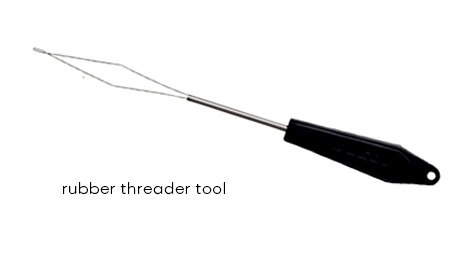
If you are having a hard time finding a threading tool, you can try rubber nails (Peg-Its) or you can use mono or fluorocarbon – just double a small piece of line over (the smaller the diameter, the easier this will be), put a piece of rubber strand (you can even use spinnerbait or jig skirt material) through the bend, then thread the line through your sinker, pulling the rubber through with it. Small rubber bands work very well for pegging too, because they don’t fall off the piece of line. You can also make a threading tool yourself just by using very thin wire bent over on itself, like the threaders they put on rubber bobber stoppers.
There are also advantages to the way the Mojo moves in the water. Slip one on and give it a go in a swimming pool. When you pull the rig, the weight picks up in the front – this angle means that it moves up and over rocks and stumps and other obstacles easily, with a more natural look. Round weights snag much more easily and tend to stop when they come to an obstacle, so you have to pull them up and over. In addition to this ability to clear obstacles, you can use the Mojo to make little right or left lateral movements just by twitching the rod tip a tiny bit – and those moves can trigger a strike. A Mojo weight will also glide right through a submerged tree, especially the smaller ¼-ounce Mojos.
MOJO FISHING
The Mojo rules when fish are on the bottom or in the weeds. They will slip right through the weeds even better than a bullet weight, especially on a split-shot or Carolina rig. One of the keys to fishing a Mojo rig is to trail a lot of line, especially in deeper water. Longer line lets the rig move more naturally. Having a lot of line out means that occasionally, especially on a busy summer weekend, another boat or two or four may motor right over the spot where your bait is working. Yamamoto Pro Staffer Marty Lawrence says don’t worry about that – the fish are used to it, and in fact stirring the water up a bit can actually turn the fishing on.
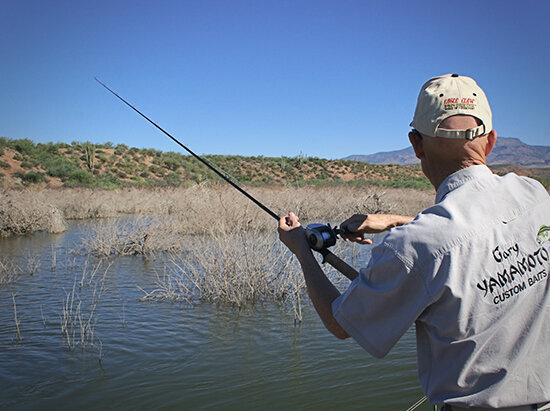
A Mojo weight slips through submerged brush and trees easily.
Some of the best spots for Carolina rigs or split-shot rigs can even be right in front of the ramp, where the bottom drops off. The fish that hang around there are accustomed to lots of boat traffic. There are two ways to get the bait down where you want it: drive over the spot, drop the rig over the side and let it fall; or make a super long cast. I tend to drop the bait, then just let it free spool while the boat moves away. Once the line goes slack, I know it’s on the bottom and I can close the bail and start fishing. If you’re holding on a spot (so easy with the new trolling motors), then you’ll need to sling it out there. Just make sure you wait until the rig hits bottom before closing the bail, or it will end up too close to you to fish. Just watch it until the line dips and goes slack.
When I’m split-shotting, I like to keep the spinning rod pointed right at the rig, and hold the rod very loosely so it can actually bounce a little in my hand. If you hold too tightly, you don’t give the weight the freedom to move over obstacles. Sometimes the bite is a good thump, but often it simply feels like you got stuck on a rubber band. If the fish takes it and runs right toward you, the line will just go slack and you’ll have to reel fast to catch up. You generally don’t need a major hookset with a split-shot rig, just reel while pulling the rod to the side. Those little split-shot hooks will just about set themselves. Because the weight is away from the hook it isn’t easy for them to shake the hook loose, but you do want to keep the line taut until they are safely in the net.
With a Carolina rig, I fish it a little differently. It’s not just a big split-shot rig. I use the fastest reel I have so I can catch up with the fish. They always seem to come right at you. A baitcasting rod with plenty of backbone helps too – the bigger hook and the amount of line you have out means that you need all the power you can get when it comes to hooksets. I hold the rod to the side and move the bait by pulling the rod back and to the side, then I reel up the slack as I move the rod forward again. The rod is almost always parallel to the surface of the water. When you feel a bite, swing the rod back hard while turning your body at the same time, and never stop reeling. Keep the pressure on until the fish is in the boat.
DETAILS
One of the reasons I like Mojo weights is that you can move the weight if you want to, so you can change the leader length very easily. However, if you don’t want the weight to move so easily, you can use two strands of rubber instead of one. Another trick is to pinch the line and the rubber strands on either side of the weight, using both hands. Then twist the rubber strands around in opposite directions to sort of spiral the rubber around the line inside the weight. Obviously, you need to do this before snipping the rubber off.
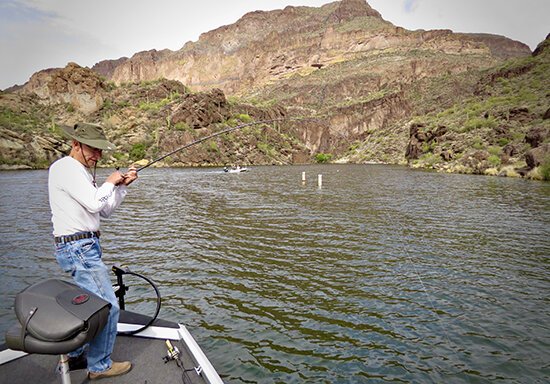
Keep pressure on the fish until you have it in the boat.
The tougher the fishing, the longer the leader – that’s the slogan of Carolina rig fishermen everywhere. Start off with about an eighteen inch leader, especially in the summer when the fish are active. You can lengthen the leader if they are being finicky. Also, sometimes adding scent makes a big difference, so keep a tube of Mega Strike on deck and re-apply now and then, even if it’s just to get rid of “people smell”.
For split-shotting, Kut-Tail Worms are the classic bait, but a Single Tail Grub can be killer as well – that waving tail is hard to resist, especially as it shimmies down the side of a big rock or a submerged tree. By the way, when you do feel your bait climbing up an obstacle, only keep the line taut until the bait reaches the top. When you feel it start to come down, give it some slack, even if you just push your rod forward. This will allow it to fall down right next to the rock or tree instead of swinging away as it falls.
For a Carolina rig, almost any of the Yamamoto Kreature Baits are perfect. I really like the 4” Kreature – there is so much movement in all those appendages. They move a lot of water and bass can home in on them easily even in deep water. When the fishing is very tough, such as in winter or during high pressure fronts, sometimes a more subtle approach does the trick. In that case, switching to a Sanshouo Salamander or a Cowboy might seal the deal. If you can actually find one of the crawfish that the bass are feeding on, you can try to match the color, but I usually just use a dark color that will show up well silhouetted against the bottom or the sky. Oranges and greens are classic crawdad colors. For split-shot rigs, I’ve actually had very good results with purples, reds, and greens.
Because you can have so much line out with either of these techniques, using braid can make getting a good hookset a lot easier due to the lack of stretch. Just make sure to use a nice long leader. If you don’t want the bait to sink so quickly, use mono instead. A swimming pool is the perfect place to try a combination out to see how it works. You can fine tune the sink rate and leader length until you get just the action you want. These two Mojo rigs aren’t just for deep water, either – try them for bass under the pads as well, or across a flat.
No matter how you peg it, next time you fish a Carolina rig or a split-shot rig, give Mojo weights a try.

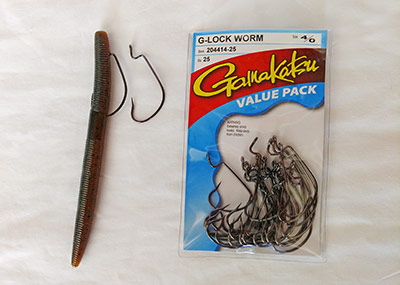

With six enticing appendages, a chunky ribbed body, and a unique set of twin flappers, the aptly named Yamamoto Flappin' Hog is a meal that bass simply can't pass up. For GYCB Pro Jay Yelas, the Flappin' Hog is an important staple in his tournament arsenal.