Luke Johns - Wild West Bass Angler of the Year
Posted by M.L. Anderson on Sep 23rd 2021
By M.L. Anderson
Luke Johns is a relatively new member to Team Yamamoto. He’s been fishing the Wild West Bass pro-ams, team events, and college events, and is now fishing the Pro-Ams and the Apex Tour. In the College Series he won entries into the Pro-Ams on the co side, and asked them if he could change to the Pro side, even though he wasn’t a hundred percent sure he was ready. It turned out to be the right move and he qualified for the Apex tour as well that year, which is invitation only. In the 2021 Wild West Bass Pro-Ams, he became the youngest angler ever to win the Angler of the Year title.
SHASTA
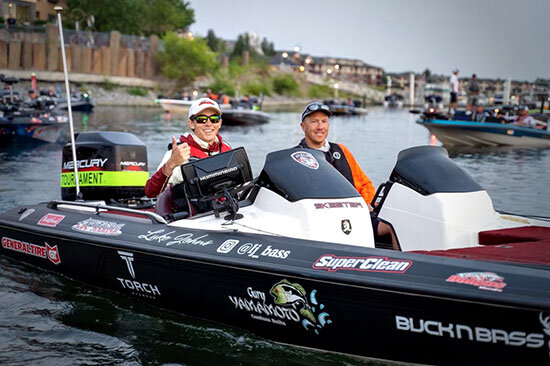
There were four events this year in the Wild West Bass Pro-Ams: Shasta, the CA Delta, Clear Lake, and the Columbia River. “All of my key fish in the four events were caught on Yamamoto products,” Luke says. At Shasta, it was the Diawa Neko, fished wacky or on a Neko rig. Luke targeted shallow bass on long tapering points from five feet deep to very deep. He used a weightless Senko, wacky rigged, for many of his fish, but his biggest took the Neko in green pumpkin with green and purple flakes. That’s also the color he used in the Senko.
Luke doesn’t do anything special when rigging a wacky Senko, he just runs the hook right through the bait. He feels he gets a better hookset that way. “When you’re fishing a Senko unweighted, it takes a while to get down there,” he says, “but patience is the key. The fall is what gets the bites.” He uses an Owner 1/0 Mosquito Hook. These little hooks have an offset super needle point and practically set themselves. He fishes the Senko on a Dobyns 702 spinning rod. He pairs the rod with a Shimano CI4, size 1000, spooled up with 15-pound-test Power Pro Super 8 Slick braid with a 10- to 12-foot leader of Seagar INVIZX fluorocarbon line in 8- or 10-pound-test, depending on water clarity.
This weightless, wacky-rigged Senko is one of Luke’s favorite baits and he throws it at every lake and in every kind of cover. It’s definitely his go-to bait. At Shasta he used the Senko on rock banks and standing timber. At Shasta, standing timber or small brush piles seemed to be key fish-holding structure, so he used his Humminbird 360 to locate them. Once he knew where they were, he could specifically target the key structure with the Senko, which saved him a lot of time. The fish would take the Senko on the fall: for instance, if he was in fifteen feet of water, the bait would just stop at five feet, or he’d see it go off sideways.
“There’s a learning curve with the 360 for sure,” Luke says, “especially for learning to tell how far things are from you. Once you master that, casting and hitting the target becomes so much faster and easier and you don’t waste time blindly casting around hoping to hit an underwater brush pile.” It also means you don’t have to put the boat over the structure to see it, and that is also a huge bonus, because there is always a risk of spooking the bass, especially in shallow water.
Johns uses a similar setup for the Neko bait, but he uses an O-ring and a small nail weight for the wack- rigged Neko. The nail weight tends to make the Neko bait tear more easily, he says, and the O-ring goes a long way toward preventing that. This is the bait he switches to when he is fishing deeper water, and at times he was fishing as much as fifty to sixty feet deep. That small nail weight helps the bait get down faster. “The Neko has a little bit different design,” he says, “so I just started using it because maybe the fish don’t see it as much.” The Shasta tournament was in January, so the bites on the Neko were just mush—like the bait got heavy.
He found that the fish at that Shasta tournament could be anywhere, shallow or deep. In one area he’d find them in 10 to 30 feet, and in another spot they’d be 40 to 70 feet deep. He’d find big balls of shad and just drop the bait down to them and shake it. At times he was catching a fish on every drop—a lot of one- and two-pound fish.
THE DELTA
Luke Johns is very familiar with the Delta, but the huge fishery can take more than one lifetime to master. “You can pull up on almost any bank at the Delta and catch fish, but finding the big ones is the thing,” he says. Here, the tide makes a huge difference. You can find nothing, then an hour later the fish are there. Here again, the weightless, wacky-rigged Senko was his weapon of choice. He fished an area with lots of docks and lots of grass, which meant bigger bass, but he still used only 10-pound fluorocarbon. He flipped the Senko to the edges of the docks, targeting each one with four or five casts, letting the bait sink. The fish were right under the docks, he said, so the Senko would go two or three feet, then get hit.
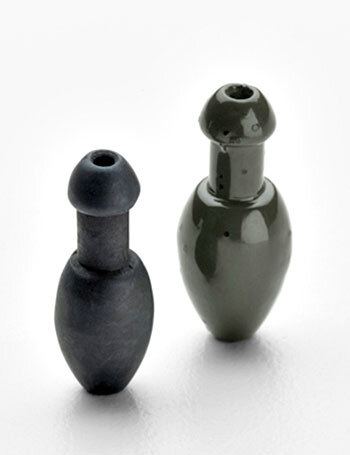
“I fish the Delta ten or fifteen times a year,” Luke says, “but it’s always different. You can’t really fish off your history there. You have to throw everything you learned last time out the window.” Besides the Senko, his other key bait there was the Yamamoto Flappin’ Hog. He was punching with that bait and caught his biggest fish of the tour on the Hog. He uses a 2-ounce tungsten skirt punch weight. (If you’re not familiar with these, they are nose-heavy weights that the line goes through, and they have a slender spot to hold a skirt.) While he was fishing the docks, he’d see an occasional small grass mat in the back. One such mat had half the grass dead and nasty and half green.
You need to get close to the mats—within five to ten feet—then sort of flip the whole thing until you get a sense of where the fish are, Luke says. This particular mat was small enough so that ten or twelve flips would cover the entire thing. “I threw into the crummy half,” he says, “and it was game on!” A seven and a half pounder grabbed the Flappin’ Hog and since the mat was between two docks, he had to sort of lead it out of there. Heart-stopping, to say the least. “Punching is like a jig bite on steroids,” says Luke.
After Shasta, Luke was in 23rd place, which he considered a good solid start. After the Delta he was in 4th place in the Angler of the Year stats. Next up: Clear Lake, which he wasn’t sure about.
CLEAR LAKE
Luke was unsure about Clear Lake because he considers himself more of a finesse fisherman than a power fisherman. The southern half of Clear Lake, he says, is deep and rocky, while the northern part is shallower, with more grass. So to begin with, he went to the south end and tried his finesse techniques, but he couldn’t find a reliable bite, so he went north and pushed himself out of his comfort zone. He threw a D-Shad, frog, an LD500 lipless rattling bait by Lucky Craft, and of course, a Senko.

He fished the D-Shad on much the same tackle as he used for the Senko, with a mosquito hook in the nose. He twitched it like a walking bait, but under the surface above the grass, working it over grass clumps and down lanes running through the grass, right on the edges of the grass line. It paid off for him, and after the Clear Lake tournament he had a slim 4-point lead in the AOY standings, and a month and a half until the last tournament at the Columbia River, which he had never fished before.
COLUMBIA RIVER
Practice, he says, went “ok” on the Columbia. It was his first time there and he found some fish but wasn’t totally confident. On the first day of the tournament, though, he went to his first spot and caught a limit in ten or fifteen minutes. There was a school of bass there just going crazy, he says. He stayed there for almost two hours of nonstop action and left that first spot with about thirteen pounds in the boat.
He upgraded his limit throughout the day catching very aggressive smallmouth bass, and ended the day with 14.73 pounds, good for 13th place. Then the guy who was right behind him in the AOY standings switched to the co angler side because of trolling motor problems. On day two he started off in the same spot as day one but couldn’t get it to go. He moved down the river and filled his limit, but it was only about ten pounds—not enough. As the sun started to get hot, he pulled up to another spot, picked up his Senko rod and cast out and let it sink while he pulled off his jacket. Suddenly, he saw his line running off, so he grabbed the rod and pulled in a three and a half—a huge upgrade. He kept fishing that point, finally got his long pants and his sweatshirt off, and the same thing happened. Another 3-1/2 took his line off sideways.
Those two Senko fish were the key fish in the Columbia tournament that clinched his AOY title. He ended up in 18th place for the tournament, and waited nervously for Ken Mah to weigh in before he knew for sure he’d gotten it. Luke has had a great year with Wild West Bass and is really enjoying the Apex Tour as well. He’s hoping to become a professional angler and do it from California, and the Apex Tour is hoping to provide that opportunity for all the top anglers out west. Luke Johns is an angler you’ll want to keep an eye on.
