Beatin' the Bank - Lessons Learned 2019
Posted by Bernie Schultz on Dec 22nd 2019
By Bernie Schultz
When Major League Fishing announced its new Bass Pro Tour in the fall of 2018, more than half of the Bassmaster Elite Series field decided to defect. Left behind were 42 anglers and I was one of them.
Picking up the pieces, B.A.S.S. reconstructed the field by calling up Bassmaster Nation and Opens anglers, while inviting a number of big names from the FLW Tour. As the season got underway, there was a 75-man field of anxious and mostly young competitors.
The following is a breakdown of each event from the beginning of the season, highlighting the good choices I made and the adjustments I failed to make. Hopefully, by reading this account, you’ll learn what to do and what not to do when situations call for a change.
St. Johns River

Although the St. Johns is within an hour of my home in North Florida, it’s hardly my favorite body of water. My results there have been mixed. The river is fickle and prone to shutting down during cold fronts.
Fortunately, for most of the field, a warming trend preceded the event and a massive wave of big spawners moved shallow. Realizing that, my plan was to sight-fish in the crystalline streams feeding Lake George. While that proved productive for the first two days, I eventually ran out of fish. Instead of returning for leftovers, I moved to the eastern shore, hoping to dodge a stiff north wind that had shown up the third morning.
After making a fruitless 4-hour pass in what I believed was the best areas, I headed to the north end to get out of the wind. When my day was done, I had only one small keeper to weigh. Meanwhile, others who stuck with the eastern shoreline reported big catches of quality bass, claiming the bite happened after I left.
Lesson Learned: If you know an area is holding fish and you have nothing better, it’s sometimes better to stick it out until they bite. At some point, they probably will … particularly during the spawn.
Lake Lanier
Immediately following the St. Johns, we headed straight for Lanier to begin practice. The same northern front that hit Florida had stalled and was dumping sleet and cold rains on North Georgia.
My plan was to fish deep docks over good structure on the lower end of the lake, then crank and flip shallow on the upper end. It was a good strategy, as I caught numbers of solid fish doing both.
When the competition began, I opted to start on the docks first — a game plan that ultimately produced throughout the day. After such a good start, I figured I could repeat the pattern and easily make it through the cut.
The next day, however, things changed. By late morning, I was in scramble mode. I eventually abandoned the docks and moved up lake to crank and flip shallow. That adjustment almost paid off, but after losing two key fish, my chances of making the cut were gone.
Lesson Learned: Had I left the docks earlier, I’m certain the shallow bite would have carried me through the cut. And that’s the hardest part of this game; knowing when to stay and when to leave. I had two solid patterns figured out, but a failure to switch off with enough time cost me.
Lake Hartwell
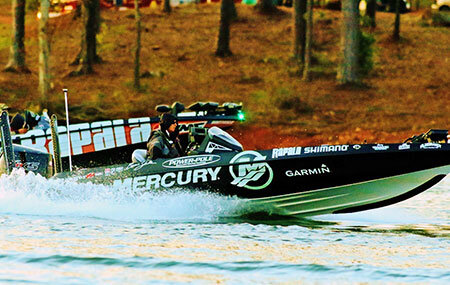
Every angler in the field knew this event would set up to be a sight-fishing fest. Two weeks of warm weather put the fish squarely on the beds, in just about every part of the reservoir.
Seeing too much traffic on the upper end, however, I decided to move south toward the dam. And there I found enough fish to do well.
On day 1, I caught a competitive weight and was solidly inside the cut and I had plenty of fish to return to. But that evening, steady rains fell and it made me second guess my game plan. Because of the cloud cover, I thought sight-fishing would be a challenge, especially early. So I decided to go with a topwater approach. I figured it would be the best way to get some bigger females to bite.
Man, was that ever a bad idea!
By 11 o’clock, with only three small fish in the boat, I aborted the topwater approach and resumed sight-fishing. And to my amazement, the beds were actually easier to see. I kicked myself for not checking sooner.
Having an early weigh-in time, I fished frantically, hoping to find something of quality. It never happened. I came in with a meager 9-pound limit and fell out of the money.
The Lesson: Rather than run point to point, I should have checked the bedding areas first. Although it rained all night, the water remained clear and the fish were still easy to see — even with dark skies.
Winyah Bay
Arguably one of the toughest venues on the tour, Winyah Bay is massive and difficult to navigate. When you find fish, they don’t always stay. In contrast, you might find very little in a given area, and that can later become the winning spot.
That’s precisely what happened in this derby. I visited an area where I had fished in a previous event and found fish there … just enough to make me want to come back. When the competition began, I ran straight to it, only to find a third of the field there ahead of me. Hoping to wait them out, I slogged along fishing leftovers.
Eventually, I felt I was wasting my time and I left. My backup pattern wasn’t great, but it did produce enough bites to get me through the first round. On day 2, I avoided the crowd altogether and returned to my backup area. Like Lanier, I lost key fish that would have made a difference. Worse than that, I later learned the tournament was won in the place I started in on day 1.
The Lesson: Timing is everything! You can be on the winning pattern — even the winning spot — but if your timing is off, you might as well be on a different body of water.
Lake Fork
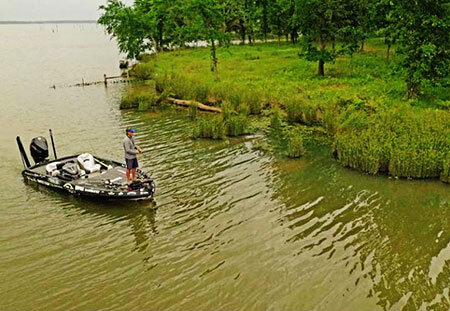
Texas Fest is a no-entry-fee event where every angler is guaranteed a check. It does count toward the Angler of the Year (AOY) standings, however, so there’s still plenty of pressure.
Known for its population of big bass, I knew this lake would require a solid performance to make it through to the final. And though it was late spring, I also knew there would be plenty of fish shallow — either schooling or guarding fry.
Every day of practice, I covered as much water as possible — marking beds and searching points for schooling fish. I found them, too. The schooling fish appeared to be a morning deal, while the fry guarders were easier as the sun got up. It was a one-two punch I knew would hold up. My biggest challenge would be percentages.
On the first morning of the competition, that proved to be a major problem. I lost the first three big fish I had on. It wasn’t until midday that I finally turned things around. And when I did, I gained momentum throughout the remainder of the event.
By combining the morning schooling bite with sight-fishing, I put together three solid days. Although I wasn’t able to make it to Sunday, I did finish strong while garnering some valuable points towards the AOY race.
Lesson Learned: When you know your patterns are solid, stay with them. You might have to change water to keep them producing, but if something’s working in one area, it’s likely to work in another.
Lake Guntersville
My record on Guntersville is solid. I usually do well there, regardless of the time of year. And after pre-fishing for this event earlier in the season, my confidence was sky high.
It was early summer and most of the fish had taken up residence along the edges of bars and flats adjacent to the main river channel. During practice, I discovered a topwater bite early, then a flipping bite afterward. Although I did try, I never developed a deep, structure bite. I spent part of each practice day trying, but when tournament time rolled around, I was fully committed to the shallows.
Each morning of the competition, I started with topwaters and swimbaits, then transitioned to flipping matted grass along the main channel. The bites were steady and through the course of the event, I filled out solid limits weighing 16 to 20 pounds. The result was another solid finish with more valuable AOY points.
The Lesson: Having confidence on any body of water helps. But if you match that confidence with a strong effort during practice, the outcome will usually be good.
St. Lawrence River
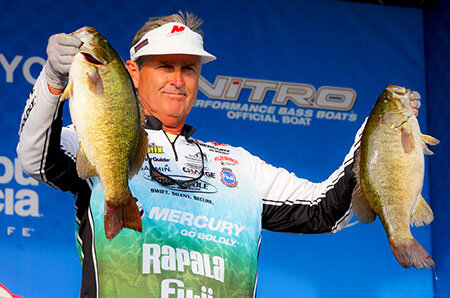
No venue gives me more confidence than the St. Lawrence River. I’ve won twice there, and I almost always make a check. This time, however, I found a way to mess things up.
Rather than go with my strengths, I tried to force a deep, finesse bite. Wherever I found fish concentrated deep, they were easy to catch. Too easy, in fact. Although most were small, I felt by staying with them I could cull to a solid weight each day. I was wrong!
By noon on the first day of competition, I was stuck with a limit of 2-pounders. I tried adjusting to a shallow bite, but I didn’t leave myself enough time for it to materialize. I was too far from check-in and had to leave enough time to get back. On the St. Lawrence, there’s no way to catch up. Nearly everyone will have 17 pounds or more.
Although I made a valiant effort on day 2, my twenty-pound weight wasn’t enough to get me even close to the cut. And worse, that finish killed the momentum I had established in the events prior.
Lesson Learned: Go with what you know! ...especially if you have a solid history on a given body of water. It’s fine to explore some options, but don’t turn your back on proven methods, especially when critical AOY points are on the line.
Cayuga Lake
Still licking my wounds, I entered the Cayuga event the following week, hoping for a strong recovery … and it happened!
By fishing healthy grass and isolated docks, I put together a game plan that carried me through almost to the final. I started on the grass early, then went dock fishing for the rest of each day. Neither option was fast, but both were steady and reliable. Soft-plastics proved to be the best baits for both patterns, as well.
Lesson Learned: The only thing I would have done differently is try some new docks on the weekend. The best stretches I found received considerable pressure, but I was too hardheaded to give them up. Taking a gamble on some less pressured docks might have paid off heavy.
Tenkiller Ferry Lake
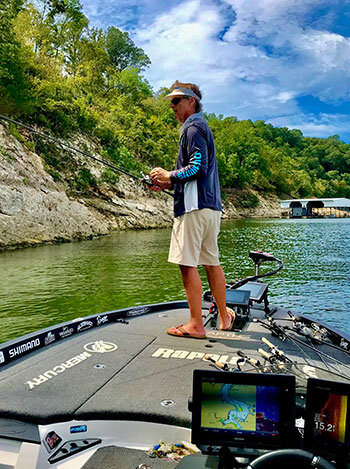
Serving as a makeup for the cancelled Fort Gibson event, Tenkiller sounded like a good alternative. I had never seen it before, but I liked everything I found out about it doing a Google search.
It looked like it would fish the same as any other highland reservoir, and in the end, it did. What caught me off guard was the 16-inch size limit for largemouth and smallmouth. Although spotted bass could measure 12 inches, their average weight was so low they hardly made a difference.
For three long days of practice, I tried to find a reliable bite from bigger fish but struggled miserably. To make matters worse, when the competition began, I got beat to my best spot and had to watch as another angler put three quality largemouth in his livewell. It was the start of a long day that never really improved. It seemed the harder I tried, the worse things got.
In the end, I blew the event and my season. I missed the AOY Championship by a mere two points — 51st, one shy of the cut.
Lesson Learned: I’m not sure there’s a lesson here. I caught nearly every fish that bit, and I was in good areas. Guys around me, fishing the same patterns, did well. I can only blame a late draw in the take-off sequence; otherwise, I would have had better control on the outcome.