Beatin' the Bank: 2020 B.A.S.S. Elite Series Preview
Posted by Bernie Schultz on Feb 6th 2020
By Bernie Schultz
Soon, another season of the Bassmaster Elite Series will begin. And with it will come plenty of excitement and anticipation for the 88 pros who are participating.
Each has his strengths and weaknesses, and this schedule is sure to put them to the test. From shallow to deep, natural to man-made, each waterways will present its own unique challenges.
With that in mind, here is a preview of each upcoming event.
St. Johns River
Arguably one of the most challenging rivers to fish, the St. Johns is massive and diverse. It flows some 300 miles northward on Florida’s east side, merging into the Atlantic Ocean at Jacksonville.
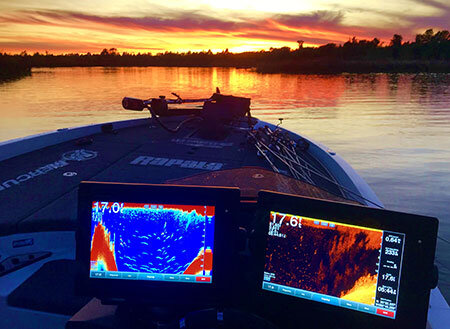
Usually the competitors are permitted access to Rodman Reservoir, but not this time. Rodman is under a drawdown with an imposed catch-and-release mandate. So, with that eliminated, the field will concentrate its efforts on the main river with its many creeks, canals and connecting lakes. Among them are Crescent, Dexter, Woodruff and George — each uniquely different in how they fish.
With the loss of lush eelgrass beds along the river and on Lake George, normal spawning areas no longer viable. The only remaining vegetation consists of lily pads, dollar weed, hyacinths and scattered cattails. As an option, there are numerous canal systems and the clear water streams for the fish to spawn in.
If they’re not on beds, then watch for docks and offshore shell bars to produce the better catches.
Lake Chickamauga
Some would question why B.A.S.S. scheduled this event in early February, but don’t let the timing fool you. Chickamauga harbors huge bass and plenty of them, and they can be caught at this time of year.
Expect vibrating jigs, jerkbaits and various crankbaits to be common selections, as well as various soft-plastics. Some fish should already be shallow, but weather could dampen that bite if a severe front rolls in.
The heaviest bass of the year could be caught here. Florida-strain bass are thick in numbers and they grow really big on this healthy Tennessee waterway.
Lake Eufaula
Bordering southern Alabama and Georgia, this 45,000-acre reservoir is home to largemouth, spots and shoal bass. Although largemouth will constitute most of the catch, don’t be surprised to see some trophy sizes shoal bass too. They can grow to five and six pounds.
There could still be some spawning activity, but my guess is that most of the fish will be done and moving away from the bank. Look for giant lotus pads, stumpfields, brushpiles and submerged hydrilla to draw those fish.
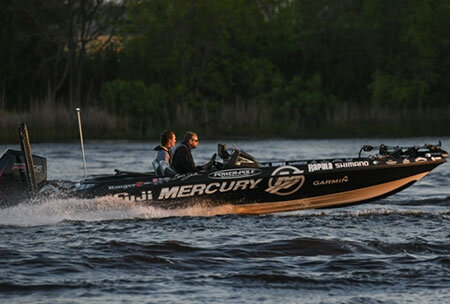
Everything from topwaters to deep-diving crankbaits could play, and I’m sure the field will take full advantage of this very fertile fishery.
Santee Cooper Lakes
Speaking of big largemouth, these lakes have their share. Connected by the what’s referred to as the Diversion Canal, lakes Moultrie and Marion are both healthy fisheries. Combined, they cover more than 170,000surface acres and feature docks, cypress trees and a wide range of aquatic plant life.
Scheduled for mid-April, weather shouldn’t be a factor. The only real concern will be navigating safely through fields of submerged stumps and cypress knees. Strike one of those and your day is done.
Expect reaction lures and a wide range of soft-plastics to be in play during this event. In fact, it will likely require a variety of lures and techniques to amass the winning weight over four days of competition.
Sabine River
Separating the southern portions of Louisiana and Texas, this coastal waterway is one of the toughest on the schedule. To say it’s stingy on bass would be an understatement.
To make matters worse, the anglers will be restricted to Texas waters only. That cuts out what many consider to be the most productive part of the system.
Nevertheless, someone will take home the blue trophy in this event … and with it, $100,000 in cash.

Among the more popular lure choices will be hollow-body frogs, topwaters, shallow-running crankbaits and Texas-rig soft-plastic worms. Converting every bite will be critical, as many in the field will be short of their five-bass daily limit.
Texas Fest at Lake Fork
Accepted as a true trophy lake, weigh-ins on this storied body of water are certain to turn some heads.
The lucky angler who wins this event will pocket bundles of cash and punch his ticket to the Bassmaster Classic. And the angler who catches the heaviest fish for the event will be awarded a brand new Toyota Tundra 4-wheel-drive truck.
To secure any of these prizes, that angler will have to beat out 87 other pros.
Topwaters, spinnerbaits, vibrating jigs, swimbaits and crankbaits will all get their share of playtime, but it will come down to the guy who’s able to convert the most strikes, on the best average fish, that will take home the trophy.
St. Lawrence River
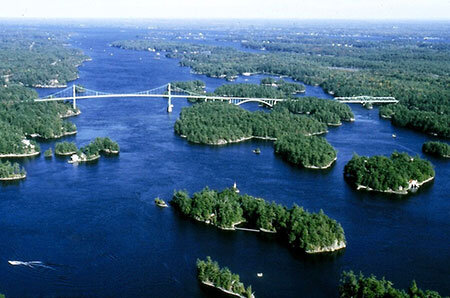
Flowing from Lake Ontario 70 miles northeast to the Massena Dam, the St. Lawrence serves as a natural boundary between New York and Ontario. And it’s home to some of the best smallmouth fishing in the world.
Depending on the amount of flow or the mood of the fish, they could be caught shallow, deep or at various depths in between. A 4-day, 20-fish limit weighing 100 pounds is definitely possible, and a similar weight could result if the largemouth are on.
The smallmouth are usually found on shallow flats and shoals, or along deep current breaks. The largemouth relate more to docks and thick grassbeds, which are abundant throughout the river and its many bays.
Finesse tactics, as well as a power approach, will yield plenty of action. So expect tubes, drop-shot rigs, spybaits, swimbaits, jerkbaits and maybe even topwaters and frogs to be productive lure choices.
Lake Champlain
Massive and beautiful, Lake Champlain divides the Green Mountains of Vermont from the Adirondacks in New York. It’s like a picture postcard. But don’t let that beauty fool you. Champlain is like a sleeping tiger. When the wind blows, its waters become treacherous and nearly unnavigable.
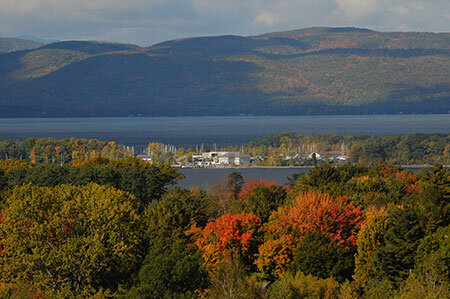
Both smallmouth and largemouth thrive there, and either could dominate the catch.
Frogging and flipping tactics usually produce the best largemouth catches, while any number of methods can yield quality smallmouth. The angler who best manages his time and fish, and is able to reach his areas all four days is likely to win.
Lake St. Clair
Another fabulous fishery, Lake St. Clair can produce huge catches of smallmouth and perhaps a few stringers of big largemouth.
Positioned between Huron and Erie, St. Clair is round and unusually shallow compared to its larger neighbors. It averages only 11 feet in depth. Most of it is clear, but there are stained areas, particularly when the wind kicks up. Then it takes on a chalky appearance.
Unlike most smallmouth fisheries, St. Clair’s brownies respond aggressively to deep-diving crankbaits. Watch for those as well as spybaits, swimbaits, tubes and jigs to yield the biggest stringers.
2020 Summary
When the tour winds down, only the top 40 anglers will advance to the AOY Championship, and that site will be announced at a later date.
Until then, the entire field of anglers will be working hard to earn their spot … me included.