Card Ready to Play His Classic Hand
Posted by David A. Brown on Mar 2nd 2020
By David A. Brown
Brandon Card knows what he wants from the Bassmaster Classic, but he also knows the importance of approaching this event with an open-minded flexibility. Making his third Classic appearance, the Elite angler from Knoxville, Tenn. knows is well aware of spring’s fickle nature; nevertheless, he’s betting on a shallow game.
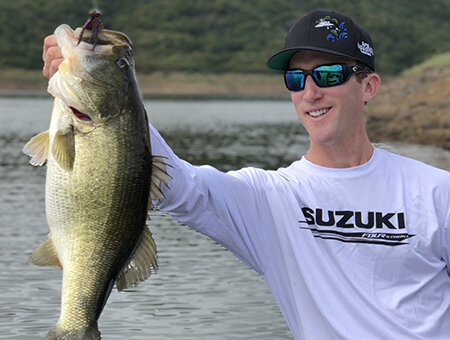
“It could be really close to the spawn, like a week or two away; or we might have really cold weather and find that we’re a month away from the spawn,” he said. “I definitely think that, even if it’s cold, I think it’s going to be won in 10 feet or less.
“I don’t see somebody finding a bunch of fish out deep and catching them for three days straight. I feel like those fish want to be moving shallow because the days are getting longer and they know it’s time to start moving toward the spawning areas.”
Essential to this scenario, Card said, is vegetation. Guntersville has long been known as a “grass lake,” but it’s not necessarily what Card considers his preference.
“I really like milfoil because I feel like I really understand how it lays out,” he said. “I like milfoil best, I like hydrilla second and I would say eel grass is farther down the list because, being from Tennessee, I’ve never been around it. The only time I’ve fished eel grass is down in Florida.
“Now that the dominant vegetation on Guntersville is eel grass, it kind of throw a monkey wrench into the whole game plan. That’s because I know what baits to throw in milfoil and hydrilla, but you can’t throw those same baits in eel grass.”
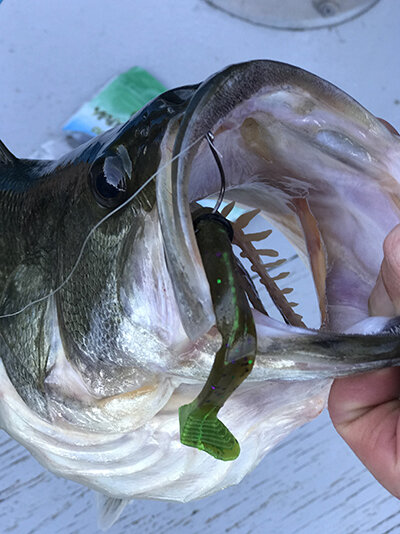
Part of his affinity for milfoil and hydrilla is its first quarter development. Card explains: “Early in the spring, like the first of March, it tends to grow clumpy. That lets me fish high-percentage areas. If you have a thick patch of it up shallow and then it gets clumpy out in 3 feet of water, I know that’s where they’re going to be.
“It’s almost like flipping bushes where fish sit around the outsides of the bushes. If I’m fishing a milfoil clump, my confidence goes up so I can slow down and fish those clumpy areas thoroughly.”
Realizing that Gunterville’s grass complexion may seriously upset the traditional prespawn grass fishing game to which he’s become accustomed, Card said he’ll look for his preferred habitat, but arrive ready to get the job done regardless of what he faces.
The Elites visited Guntersville in 2019 and, while that June event presented a completely different seasonal makeup than the Classic field will find in MID March, Card said that regular-season tournament afforded him some reconnaissance. Talking mental note of habitat particulars, he said, provided fuel for forthcoming calculations.
“The cool thing about the Classic is that we have three practice days, then two days off, another practice day and then a day off before the tournament starts,” Card explained. “Really, that first day or two of practice, you really don’t have to be fishing. In a tournament like this, if you just say ‘I’m going to take that first day or day and a half and just go around looking, that could be the most beneficial thing you can do.
“The grass growth from when the lake went off-limits (December 31) versus in March will be totally different. That’s why I didn’t go down there and pre-practice — I wanted to have an open mind of where the grass was when I launch my boat on that first practice day.”
THE HARD WAY
Complementing the shallow vegetation, Guntersville offers a very different, but also seasonally relevant habitat feature — riprap. Card’s keenly aware of how important the manmade rock reinforcements can be, so he’s keeping this in his playbook.
Who can forget Randy Howell’s Day 3 miracle at the 2014 Classic, which saw the Alabama pro intercept a group of fish that had moved to the Spring Creek Bridge riprap? The thing here is that, while grass levels vary, riprap remains constant.
“When (Howell) won, everybody was thinking that you couldn’t win on the riprap because it gets so much fishing pressure and then he goes and wins on it,” Card said. “Even with as much pressure as the fish on those causeways get, the fish are continuously moving toward those rocks and this year’s Classic could easily be a repeat of what he did.”
HIS GAME PLAN
Depending on what his practice reveals, Card will have a strategic bait arsenal for any habitat he needs to fish. Here’s his preliminary thought:
Eel Grass: A 1/4- to 1/2-ounce swimming jig with a Yamamoto Paddletail Zako trailer or a Texas-rigged Swimming Senko will top his choices, as they traverse this snag-prone vegetation well.
“The baits that I’d use for milfoil or hydrilla, you can’t fish through that stuff,” Card said.
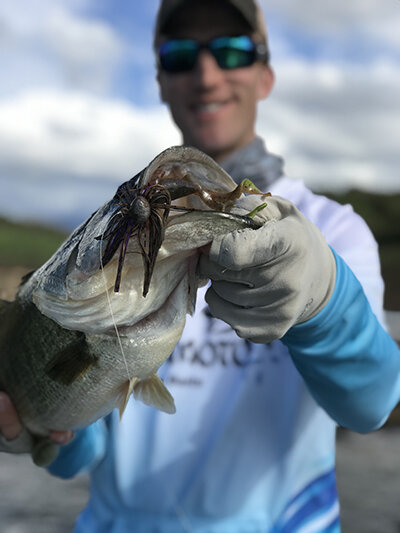
Milfoil/Hydrilla: If Card can find his favorite vegetation types, he’ll throw a vibrating jig with a Zako trailer (straight tail and paddle tail)
“That’s how I really want to catch them,” Card said. “I feel like the vibrating jig is one of the best prespawn baits out there. We saw that with Paul Mueller catching a 32-pound bag on that bait (2014 Classic) and even Randy Howell caught a few key fish on it.”
RipRap: If he feels the need to sample the rocky stuff, Card will alternate between a flipping jig and a football jig with a Yamamoto Mermaid trailer.
“I’d fish that from a foot down to 10 feet on the riprap because they can move around by the day,” he said. “Some days, they’re going to be deeper and some days, they’ll be right up on the bank.”
MILESTONE MOMENT
Dialing in the details is always the tournament angler’s objective, particularly in the Bassmaster Classic. This year, that goal is even more important, as the opportunity to participate in the 50th Bassmaster Classic is an incredible opportunity. The historic nature of this upcoming event is undeniable, but Card has an interesting take on the timeline.
“It’s awesome to be a part of history, but it’s interesting because 50 years is not that long,” he said. “I’m 30 now and I just picture bass fishing as being around for hundreds of years, but when you think about it, our sport is relatively new. It’s kind of cool to see how far we’ve come in the first 50 years and I think the next 50 years will see the biggest growth.”
Card laid the foundation for his professional career by competing in the college fishing circuit as a member of the University of Kentucky fishing team. In his view, the growing emphasis on youth programs will directly impact future Bassmaster Classic fields.
“The high school and college fishing programs have just exploded,” Card said. “The sheer number of experienced anglers that we have across the country is really going to take bass fishing to the next level.”