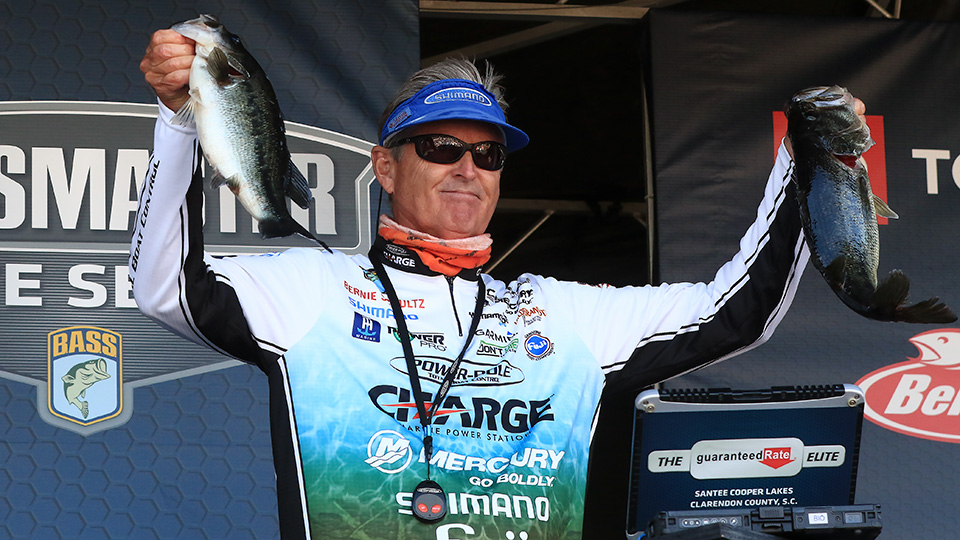
2022 Lake Chickamauga B.A.S.S. Elite
Posted by Bernie Schultz on Apr 18th 2022
Lake Chickamauga is one of the best fisheries in the country. And for good reason. It offers more than 36,000 surface acres of prime bass habitat, much of which produces consistently throughout the year.
However, that wasn’t the case during our event. Confronted with low water and unseasonably cold temperatures, what should have been a springtime bonanza turned out to be a late winter nightmare.
Normally, Tennessee River reservoirs are at full pool by mid-April. But not Chickamauga. Not this year. The lake was more than four feet low. To make matters worse, a brutal cold front blasted the region just as we arrived. Adding a 15-inch length requirement for largemouth and spots, 18 inches for smallmouth, made the challenge even tougher. Compounding the problem was the number of recreational anglers also using the lake.
Factoring all of this in … well, let’s just say the “Chick” got pretty stingy.
Practice Begins
On the first day of practice, I launched at Chester Frost Park in Dallas Bay. My plan was to test the clearer waters on the lower end of the lake first, and, hopefully, locate a productive grass bed or two, then perhaps find a few bedding fish.
Confronted with water temps in the 50s, however, I wasn’t sure what I would find.
My first stop was on a main river grassbed that produced for me the last time the Elite Series visited the lake. Using a Shimano World Minnow jerkbait, I quickly connected with a number of school size bass. Unfortunately, none would reach the 15-inch minimum size requirement.
After a couple of hours there, I decided to check some nearby pockets for bedding fish.
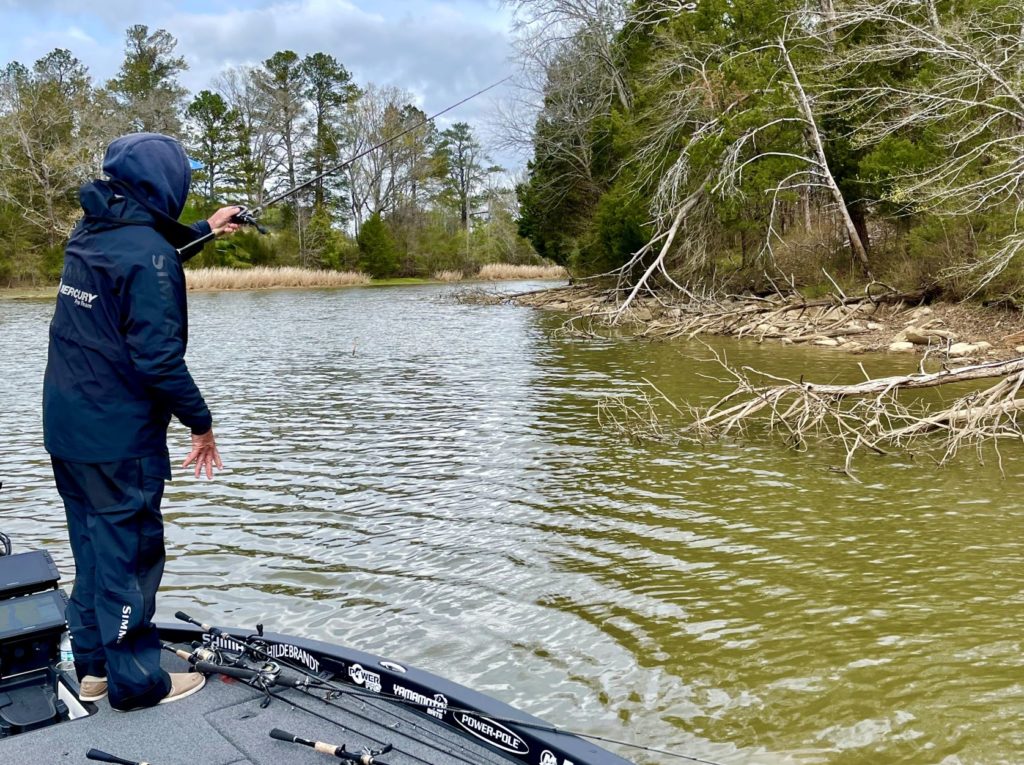
By then the wind was picking up and, in spite of the cold, I found male bass on beds in nearly every pocket I checked. The only problem was size; only a handful met the 15-inch requirement.
After recording the exact locations of the better fish, I headed further south to Harrison Bay. That’s when the wind began to gust over 20 mph. It was brutally cold, too. Wanting some relief, I motored into Wolftever Creek — which is where I spent the remainder of the day.
On day 2, I returned to Chester Frost Park to give the main river one more try. But after an hour of testing several grassbeds with zero results, I abandoned that and resumed the search for bedding fish.
In the next few hours, I located two key stump fields. Both were super shallow, yet it seemed there was a bass holding on nearly every stump. Though most were small, enough were of a size to make me want to return.
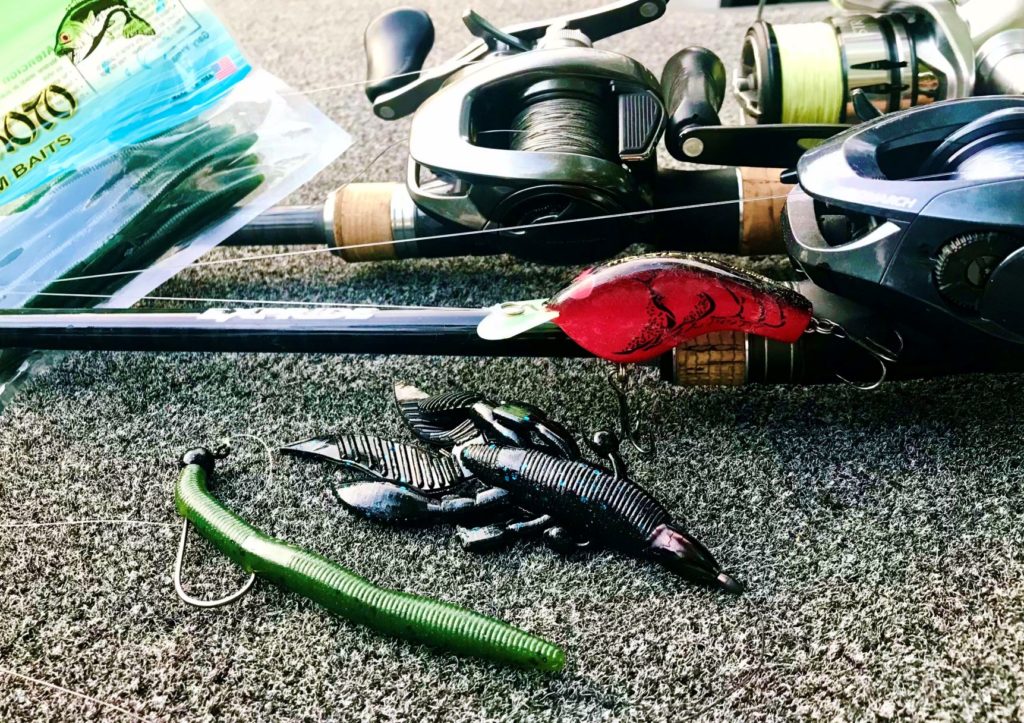
On day 3, I launched at our official take-off site in Richland Creek and ran straight to where the Hiawassee River enters the reservoir. Cranking a Shimano Macbeth Flat 57F in red craw, I ran a variety of banks hoping to get a few reaction strikes. The pattern quickly proved itself, too. In numerous pockets, I connected with 15-inch keepers and one big fish weighing better than six pounds.
In that part of the lake, the water was colder and more stained. And by mid-morning, rain showers had started to fall … which seemed to explain the feed.
Not wanting to sore-mouth anymore fish, I switched to a ½-ounce, Texas-rig Yamamoto Flappin Hog, and pitched to every piece of wood in my path. By day’s end, I knew I had a backup to the bedding fish down lake.
Competition Time
Drawing boat No.8 in the take-off sequence, I exited Point Park in Richland Creek and headed south to the better of the two stump flats I found in practice. When I arrived, the area was void of any local traffic.
Surprised by that, I dropped the trolling motor and went to work.
Detailing each visible stump with a 4-inch Thin Senko rigged on a 1/8-ounce shaky head, I caught short fish after short fish. Finally, an hour in, I boated my first keeper — a solid 3-pounder. An hour later, I scored another bare keeper.
Believing I had exhausted the area’s potential, I pulled the trolling motor and headed to my other stump flat across the river. That’s when I encountered other competitors.
Seeing a vacant section toward the back of the pocket, I made a move there … and that’s where I caught my next two keepers.
As the wind picked up, more competitors found their way into the same leeward cove. Feeling boxed in, I decided to run back toward check-in and try to fill out my limit there.
It never happened. Eventually, the clock ran out and I was left with four fish weighing 9½ pounds — nearly four pounds beneath the cutline.
On day 2, I decided to stay in the upper section of the reservoir and take my chances there. The day began with light rain, just like the third day of practice. I knew the fish would bite as a result.
In the first pocket I entered, I scored a 3½-pounder by flipping the Flappin Hog into a submerged treetop. On the opposite side of the cove, I caught another 3-pounder the same way. By then, the rain had turned to sleet. Two hours later, I lost a keeper on a snag. Then came a flurry of short fish.
With the clock ticking, I backtracked to a large, brushy tree that failed to produce earlier. That’s when my tournament took a turn for the better.
Pitching repeatedly through the tree’s lower branches, I finally got a bite. But when I set the hook, the fish tore drag and wrapped itself in a submerged branch. Having no other option, I plowed the trolling motor directly into the tree and began digging through the brush.
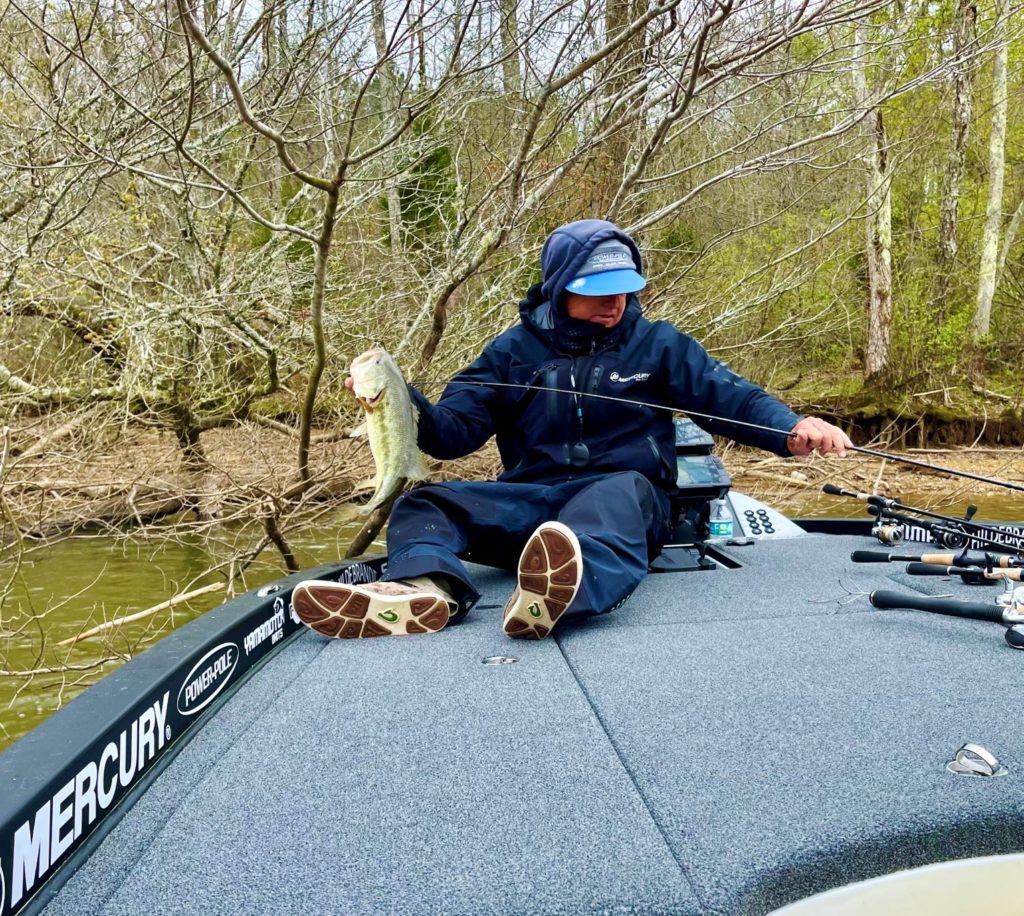
Finally, after what seemed an eternity, I got my hands on a fat 4-pounder and swung it aboard. I told my marshal we were back in the game. I just needed two more to close the deal.
I then pulled the trolling motor and ran upriver to another pocket full of stumps and laydowns. In the first tree I came to, I stuck another 3-pounder. Thirty minutes before check-in, I got my last bite of the day … another pushing three pounds.
Back at weigh-in, I registered a weight of 16½ pounds — more than enough to make the cut to the weekend round.
Fishing on Saturday
Although a win was out of reach, I was looking forward to the opportunity of gaining a few spots on the leader board. I just needed to capitalize on any opportunities provided and everything would take care of itself.
That was my logic, anyway.
As the day unfolded, it became obvious the bite was off. I struggled even to catch short fish.
Alternating the Macbeth Flat and Flappin Hog, I managed to coax three keepers weighing nearly eight pounds, which was enough to move me up three places in the standings and add some valuable AOY points in the process.
Next is Lake Fork in May — a definite big fish derby. Stay tuned!