2022 Lake Oahe B.A.S.S. Elite
Posted by Bernie Schultz on Sep 11th 2022
As the Bassmaster Elite Series entered the final leg of the season, I couldn’t help but think of what was at stake. New York was good, but not great. And, as a result, I was hovering just outside the qualification cutline for the Bassmaster Classic.
I needed a strong finish, and I believed Lake Oahe could give me that opportunity.
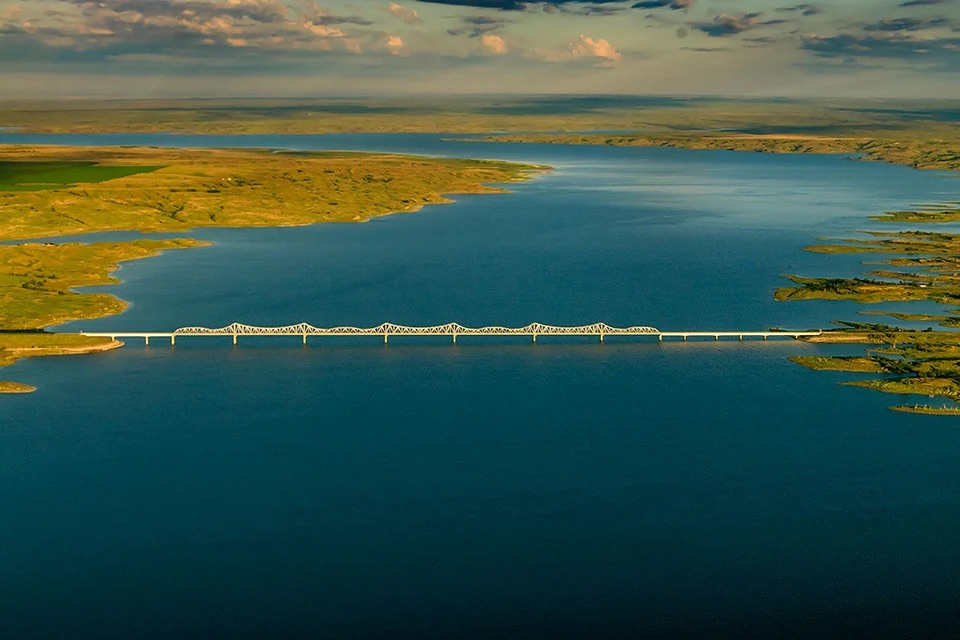
Although the Elite Series visited the South Dakota impoundment back in 2018, we were based 100 miles farther north this time — in the Town of Mobridge. Effectively, it was a new body of water.
Formed by the Missouri River, Oahe is huge. It ranks among the largest playing fields I’ve competed on. More challenging is the fact that much of the lake looks the same, which presented the problem of where to start.
Follow along as I share my approach to finding and catching Oahe’s smallmouth — the predominant species of black bass in this massive and mysterious fishery.
Practice Begins
On day 1, I launched at the official take-off site near Mobridge, South Dakota. From there, I traveled south to try a number of long, flat points.
Although it took some time, I slowly pieced together a shallow water pattern by using a Hildebrandt Drum Roller swimbait and a Yamamoto D-Shad, fluke-style rig — both in baitfish-matching patterns. Most of the fish I caught were small and lean, but occasionally I would connect with a solid keeper.
As the day wore on, the winds began to increase. Surrounded by rolling hills and few windbreaks, Oahe can get rough in a hurry. So most of my afternoon was spent fishing the lee banks, pretty much to no avail.
On day 2, I traveled south to launch at Whitlock Bay — a large creek that feeds the lake just above the Hwy 212 Bridge. This area served as the northern boundary in our previous event, and I thought it might fish more to my preferences.
Starting on the first major bend in the river, I found shallow, submerged grass lining the secondary points and pockets of several coves. Using a white Chatterbait with a Zako trailer, I began to score. None of the fish were big, but they were keepers. And it appeared as if there were plenty of them. I added some protective tubing over the hook point so that I wouldn’t sore-mouth any of the fish. Still, they hung on as if it were live bait.
After spending half the day expanding the pattern, I eventually moved to some deeper structure to try a drop shot Shad Shape Worm. Again, I caught fish. But none that were any larger than those caught from the bank.
On day 3, I returned to the launch at Mobridge … this time heading north.
My first stop was to a massive, shallow flat running along an inside bend of the river. At its end was a gravel point with a few scattered boulders. There, I got several bites with the D-Shad.
Filing that away, I then moved to the bridges crossing the river north of Mobridge. On a single pass down each side of the riprap, I connected with a number of smallmouth. Most were short of the length requirement, but a few were not. Those few ranged from two to three pounds apiece.
From there, I ventured farther upstream to try a series of small rocky points. All seemed to hold fish. But, again, most were too small to matter.
After 13 hours on the water, I returned to the ramp and headed to the nearest gas station — fully expecting to make a long run south the following morning.
Tourney Time
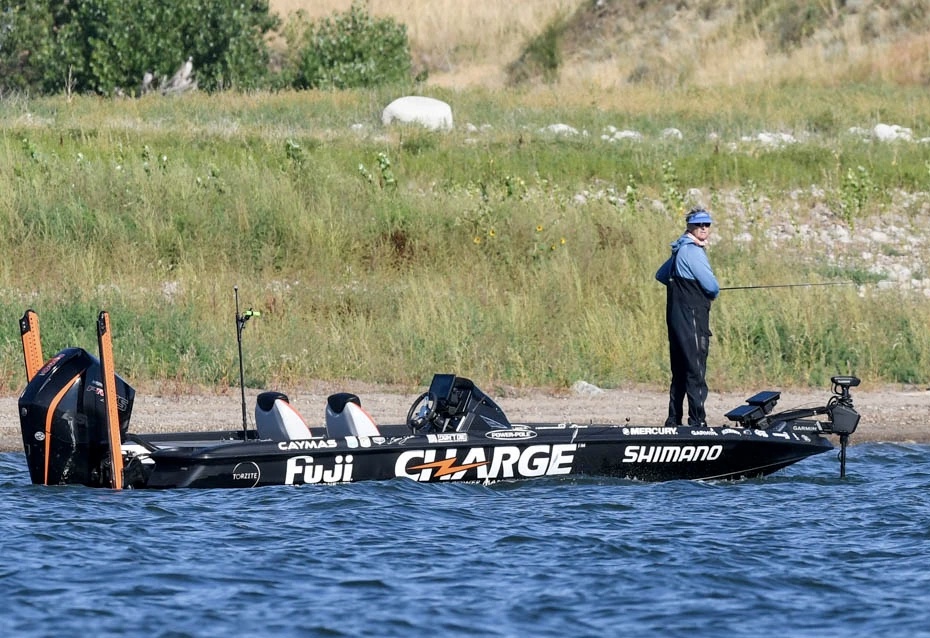
Upon arrival at the official launch site, I noticed the wind had picked up significantly. The projection was that it would reach 30 mph by noon.
Hearing that, I decided to abort the run south and maximize my fishing time in the areas near Mobridge — making my start on the riprap along the railroad bridge.
Once the trolling motor was in the water, I made my first cast to the corner of the bridge. And instantly, I hooked my first fish of the day. Unfortunately, it was just shy of the length requirement … as were the next few.
Eventually, I scored a couple of bare keepers, but it was clear the better fish were no longer present. Seeing that, I decided to run to the series of small points upriver.
On the point, I caught another keeper. And no sooner did I place that fish in the box when an entire school erupted near the boat.
On consecutive casts, I finished my limit and began to cull. The gains were mere ounces, however. Each fish was of the same year class. Rather than wear them out, I decided to leave them for the next day and press on to the next point.
By days end, I had covered all the areas on my checklist near Mobridge. And though I caught fish throughout the day, my stringer was weak. It seemed like an exercise in futility. Nearly every keeper I caught weighed the same. At the scales, I posted a 5-fish limit of less than eight pounds.
On day 2, I decided to try the bridge once more, then run directly to the schoolers to get a quick limit. When I arrived at the bridge, another competitor was sitting on the sweet spot. Frustrated by that, I left the bridge and headed directly to the schoolie hole.
When I reached the side of the small point, I could see things had changed. The wind was no longer from the south and a mudline had moved into the key area. Realizing that, I began to probe the entire point … hoping to relocate the school.
I never did. The easy bite was gone. Now I would have to work for them.
As the morning progressed, I kept moving from point to point — picking off random smallies as I went. At each stop, it seemed the wind’s velocity increased. By late morning, it was howling. And by early afternoon, most of my water was completely trashed.
Just before weigh-in, I made a final stop on the small gravel bar I found on the final day of practice.
In minutes, I was connecting with solid-sized smallmouth. But as quickly as I hooked them, they somehow found a way to free themselves. It was like Groundhog Day all over again — exactly what I experienced on day 2 at Lake Fork and day 3 of the St. Lawrence River. Nice fish connecting with my lure, only to come unbuttoned during the fight.
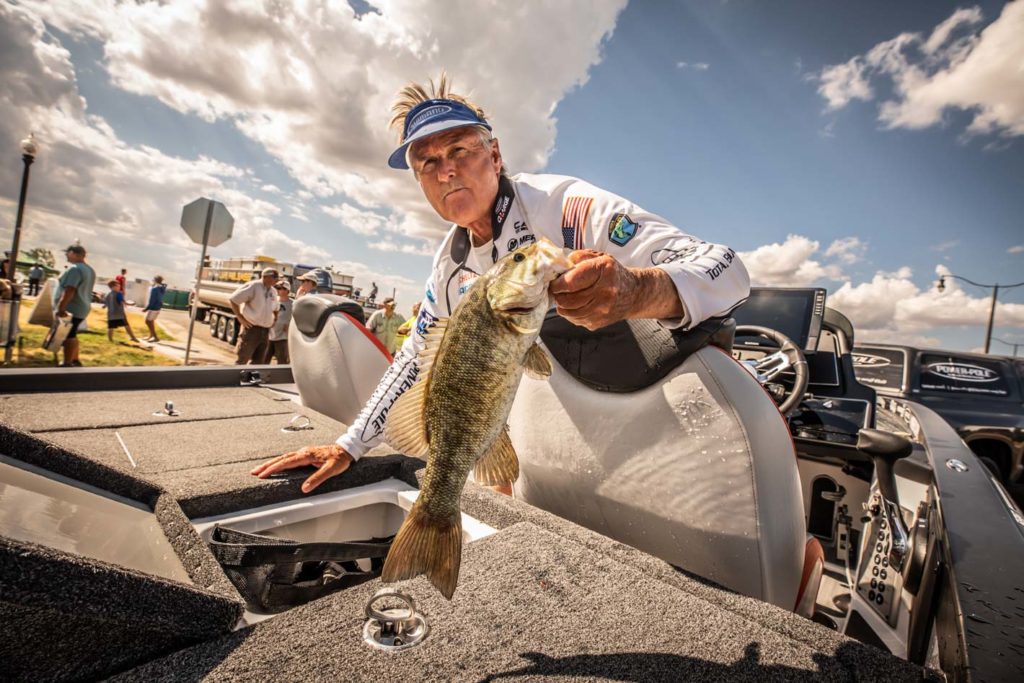
With only minutes to spare, I hooked up with a big smallmouth. The fish engulfed my Drum Roller swimbait and the battle was on. And this time, I won the battle… and swung a solid 4-pounder over the gunnel.
At weigh-in, I posted a weight of 10 pounds. Although not enough to make the cut, it felt like a moral victory after losing so many fish.
Next is the Upper Mississippi at La Crosse, Wisconsin. Stay tuned…