2023 Sabine River B.A.S.S. Elite
Posted by Bernie Schultz on Jun 20th 2023
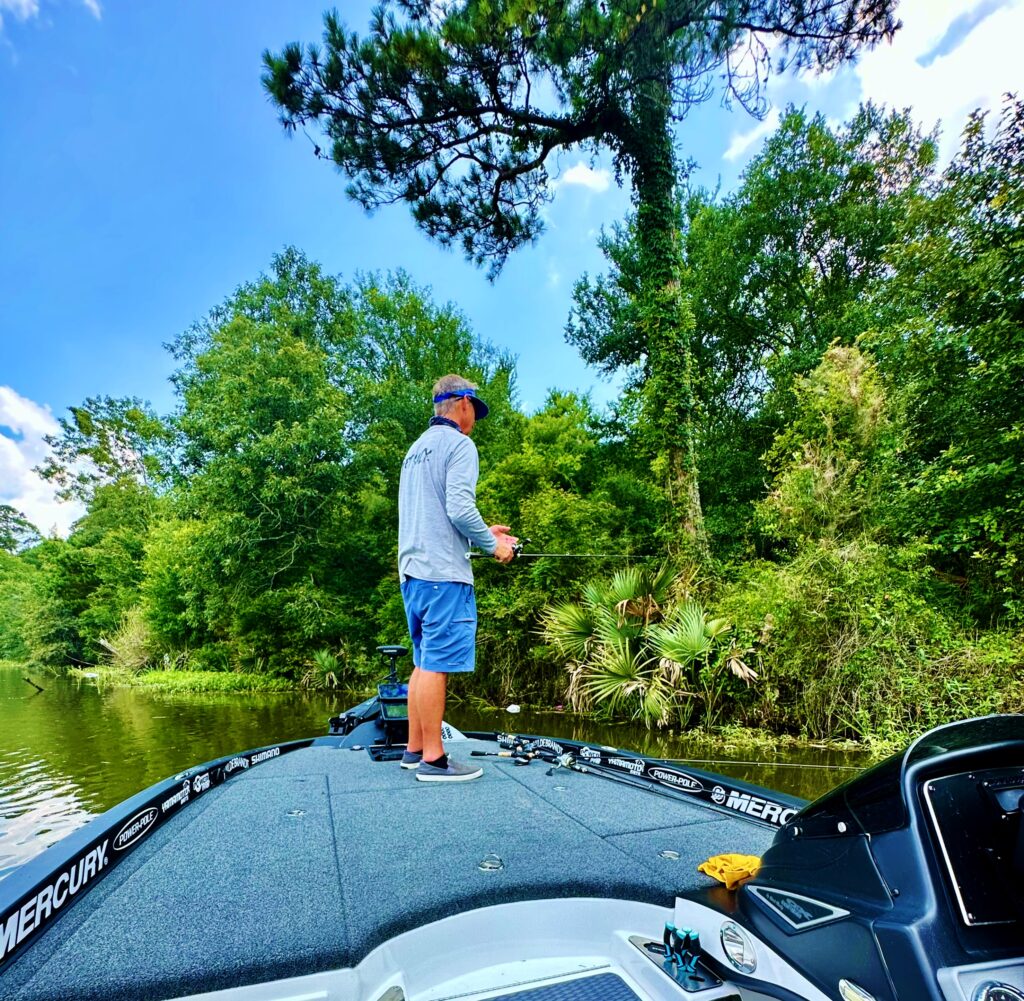
The Sabine River features one of the largest playing fields on tour. It stretches along the Texas Gulf Coast, from the Louisiana state line to Houston and miles inland. Yet, with all that water, the anglers tend to congregate in small areas.
There are countless canals, ditches and bayous to explore, with no lack of cover for the bass to relate to. The system is full of cypress trees and various manmade structures, including piers, seawalls and riprap. There are also lily pads and other forms of vegetation in certain parts. But finding enough bass that will hold in any given area for several consecutive days — especially to yourself — is extremely difficult. They continually reposition themselves according to the tide and available cover… at least in the lower regions.
Another challenge is finding the right size fish. The estuary supports decent numbers of bass, but most run between 10 and 14 inches in length. Three pounders are considered a bonus.
Having only three days to search through hundreds of miles of water, I chose three different tributaries — the Sabine River proper, Taylor Bayou and the Neches River. All of them have produced winning weights in the past, so they were my focus.
Practice Begins
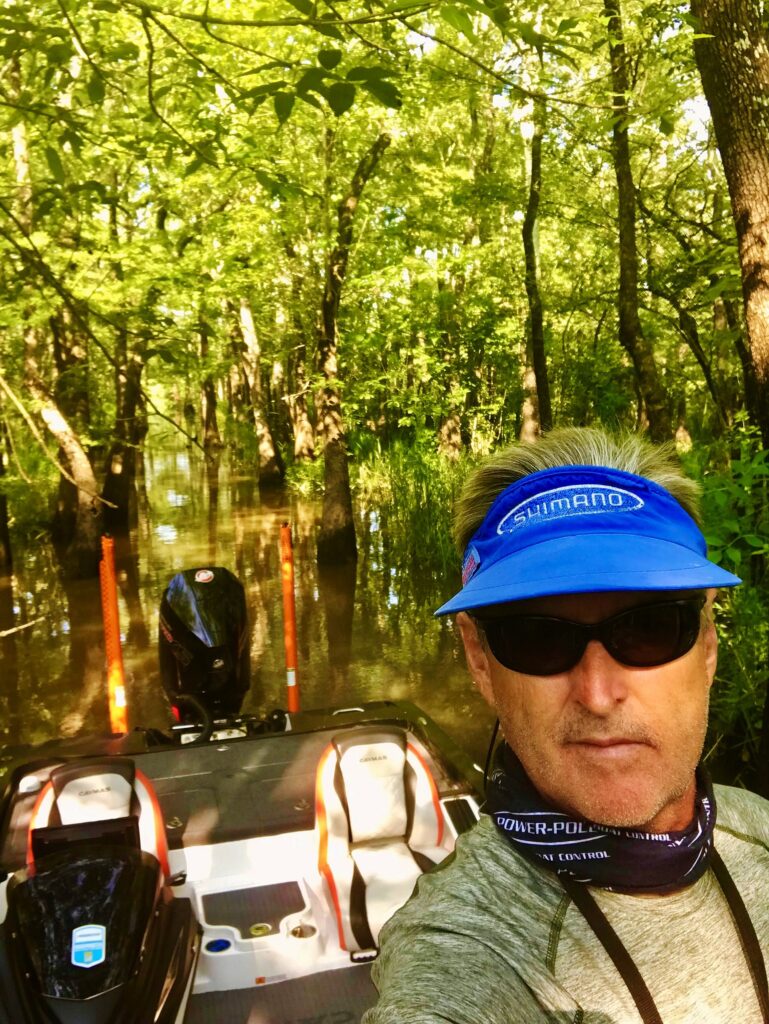
At sunrise on day 1, I launched above the lock in Taylor Bayou. From there, I crossed into Big Bayou — a shallow backwater area known for healthy vegetation. But as I navigated through its winding channel, almost no vegetation was visible — only small rafts of gator weed blown against a shoreline terrestrial grass.
When I reached the very back of the bayou, however, I found fields of giant lotus pads. They looked ideal. But after an hour of throwing a frog and a Yamamoto Speed Senko, it was obvious no bass were using the area.
From there I moved into Hildebrandt Bayou, to try several oxbows featuring large stands of cypress. That’s when I got my first few bites. And though it was encouraging, I knew others would fish the same area. So I pulled the trolling motor and headed farther upstream. That’s when I found what I was looking for.
On several key stretches of bank, I connected with the right size fish. Most fell for a Shimano Macbeth 50F crankbait in sexy shad, or a green pumpkin, blue glitter Yamamoto Flappin’ Hog rigged for pitching.
On day 2, I launched at Sabine Riverfront Park — our official headquarters for the event. From there, I ventured upstream to a series of main river bends. In each, I caught non-keepers by pitching the Flappin’ Hog.
Writing that off, I moved further upstream into a large drainage ditch where, toward the back, I found a pipe pumping out water. On repeated casts with a drop-shot-rigged Shad Shape Worm, I caught numerous 12- to 13-inch bass. But, again, the spot was too obvious.
Next, I tried several oxbows thick with large cypress trees. In one, I got the right bites. But all were on the deeper, most obvious trees. By day’s end, I felt less confident in the Sabine than I did in Taylor Bayou.
On day 3, I launched on the Neches River. Seeing almost no current, I felt like I was wasting my time. Still, I sampled numerous ditches and small creeks. And though I caught a few fish, none made me want to return.
Tournament Time
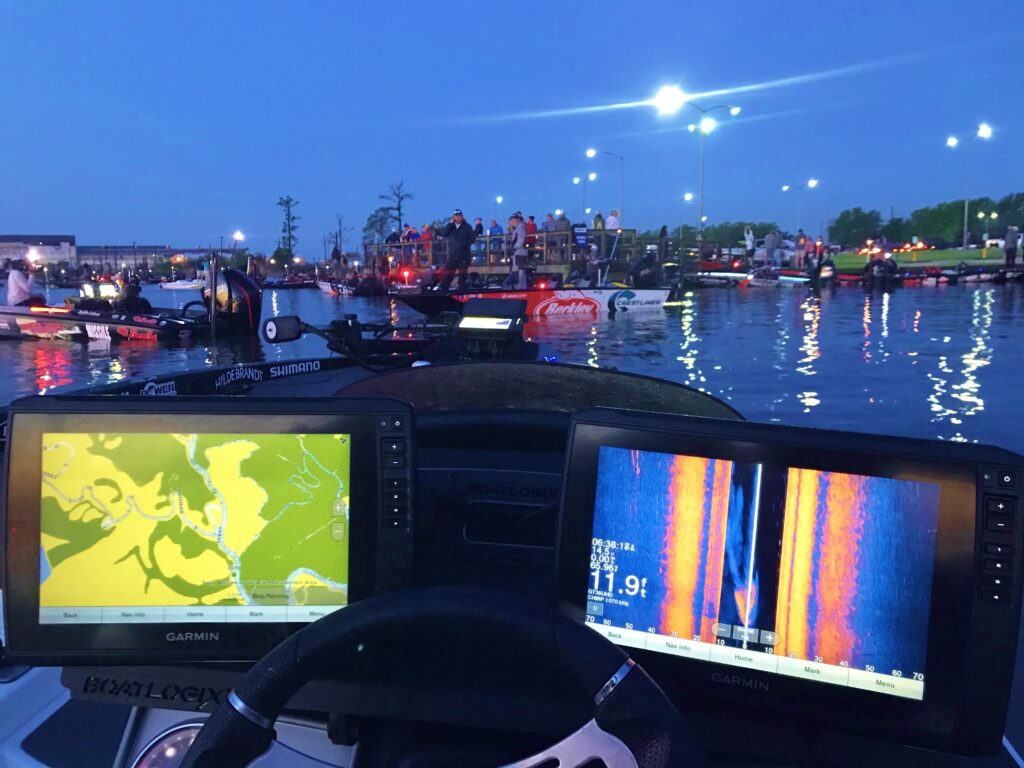
Fully committed to Taylor Bayou, I sat patiently in the take-off line, waiting for my number to be called. When my turn came, I exited Sabine Riverfront Park and began the hour-long journey west across Sabine Lake into the Intracoastal Waterway.
After passing Port Arthur, I turned into Taylor Bayou and entered the saltwater barrier. From there I ran north to the Hildebrandt arm. Along the way, I noticed a number of competitor boats. It seemed half the field made the same run. Concerned if I would get enough water to myself, I kept running beyond the crowd — eventually settling in on the stretch that yielded my better bites during practice.
In no time, I hooked up with my first bass — a solid 2-pounder. But the fish jumped and threw my crankbait. Minutes later, the same thing happened again. Besides myself, I switched to the Flappin Hog and finally boated my first keeper.
More than an hour passed before I finally got another bite. Unfortunately, that fish grabbed the back half of the bait and escaped. Minutes later, the same thing happened. I pulled both fish to the surface, only to watch them tear off and swim away.
Frustrated and angry, the losses kept coming. Several more quality keepers managed to pull off or jump and throw the hook. When time expired, I had only three fish to show for my efforts.
On the long run back to check-in, I pondered what I could have done differently. My hooks were needlepoint sharp. My reaction time and hooksets felt spot on. Still, I lost fish after fish.
When I reached the weigh-in line, I heard others complaining about the numbers of fish they lost. Apparently, I wasn’t alone. Determined to improve my percentages on day 2, I re-rigged all my tackle and headed for the nearest gas station.
One Last Try
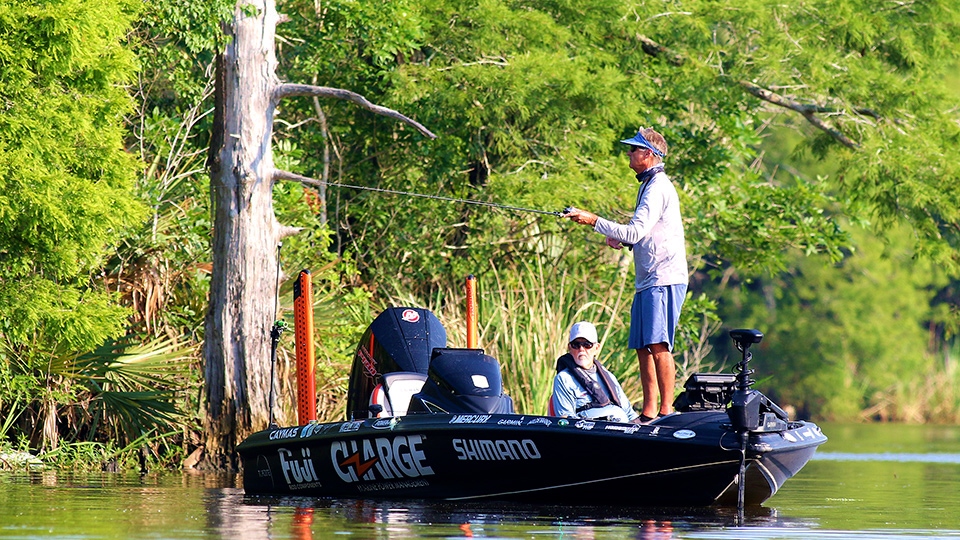
The next morning, I returned to my best stretch of water in Taylor Bayou without interference.
Contemplating the many lost on day 1, I decided to start with the Macbeth crankbait … thinking if they swatted at the lure, I would still have a chance of hooking them.
In minutes, that logic paid off. My first fish was a solid 2-pounder. The next was a bit smaller, and then I hit a run of non-keepers. An hour later, I finally boated my third fish. Then a run of bad luck set in.
Just like day 1, I missed several quality fish in a row. Some darted off the bank, only to swipe at the lure; others had it for a second but managed to pull free on the hookset. It was so discouraging. My hook points were perfect. My reaction time, spot on. But, for whatever reason, the fish managed to escape.
Early in the afternoon, things turned and I finally finished my limit. Then the clock ran out.
As I ran back to weigh-in, I couldn’t help but replay each missed opportunity in my head. I told my marshal I would rather not get bit at all, than lose so many fish.
Back at the scales, my 7-pound limit raised my overall weight to just under 12 pounds. The money cut was 13 pounds. Knowing I was so close to having a good event stung. But at least I salvaged a few points and kept myself in decent shape for the northern swing — the part of the schedule I look forward to most.
Stay tuned…