2024 Bassmaster Elite Series: The Road Ahead
Posted by Bernie Schultz on Jan 29th 2024
At first glance, this year’s Elite Series schedule looks very familiar — many of the same lakes, same rivers, and same number of miles to travel. What’s different, however, is the timing of some of these tour stops.
Normally we begin in Florida and then work our way north. This year, however, B.A.S.S. decided to launch the tour on the Texas-Louisiana border in February, which could mean coping with extreme weather conditions.
What’s more, we wait a month before the tour restarts with two back-to-back events in Florida. Following those are two less familiar stops in Alabama. So it’s a schedule with some uncertainty and one that’s sure to create challenges for the entire field.
With that in mind, here’s a forecast of what to expect from each of these unique fisheries.
Toledo Bend
Once considered the greatest bass lake in America, Toledo Bend has suffered from some down years … mostly due to the depletion of its aquatic vegetation. But that’s now changing, and the grass is making a comeback in certain parts of the lake. As a result, the fishing is improving dramatically.
Expect everything from moving baits to slow-probing soft plastics to play in this derby — including jerkbaits, crankbaits, bladed jigs, spinnerbaits, weightless and Texas-rig worms, and flipping jigs.
If the weather cooperates, the catch rates should be strong. But if the wind howls and the temperatures plummet, watch out! It could be one of the toughest events of the season, especially if the water level is low.
Lake Fork
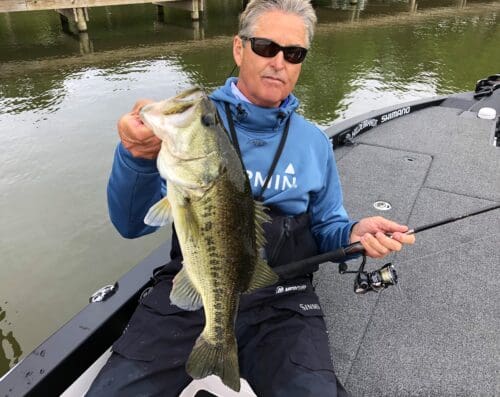
Immediately following Toledo Bend, we move to Lake Fork — one of the more familiar stops on the schedule. How the field approaches this target-rich fishery in February will depend again on water level and the prevailing weather.
Should a series of cold fronts force water temperatures into the 40s, expect fewer fish to be caught … especially if the wind blows. If the conditions remain stable, however, the action should be fast and steady
Plan on plenty of jerkbait, swimbait, jig, and crankbait action, combined with the use of forward-facing sonar. A few double-digit bass should be caught, and multiple hundred-pound, four-day creels are also possible.
Harris Chain
One of Florida’s most consistent producers, the Harris Chain is comprised of eight primary lakes — any of which are capable of producing the winning catch.
In an April post-spawn event, expect everything from topwaters to bottom-probing soft plastics to account for the numbers. What it takes to trigger the bigger fish is anybody’s guess. The hardest part will be eliminating nonproductive water and zeroing in on the best areas.
Both bank and offshore targets should work, and it may require a combination of the two to excel … or even survive.
St. Johns River
April on the St. Johns can be a challenging time. Most of the bass are in a post-spawn phase and scattered from shallow to deep. Docks, lily pads, and wooded banks will account for much of the shoreline bite, while bars and shell beds provide the offshore action.
Topwaters, jerkbaits, crankbaits, swimbaits, and a plethora of soft plastics will provide plenty of action, and it’s likely some combination of these will produce the winning catch.
St. Johns River bass are notoriously fickle, and known for shutting down or moving … even when conditions are right. So the angler with the most consistent catches is likely to be your champion.
Lake Murray
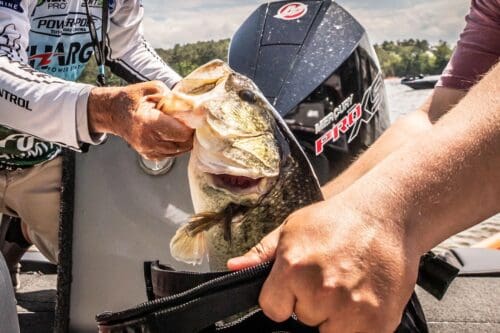
One of the best schoolie lakes in the country, South Carolina’s Lake Murray boasts a huge population of shad and blueback herring, and both serve as primary forage for the lake’s countless numbers of largemouth bass.
Points and docks will be key targets, and both will hold quality fish. Which is better, however, could come down to timing.
Past tournaments have shown that topwaters, jerkbaits, crankbaits, swimbaits, and various bottom-probing soft plastics tend to be consistent producers. And you can bet forward-facing sonar will factor into the outcome of this derby.
Wheeler Lake
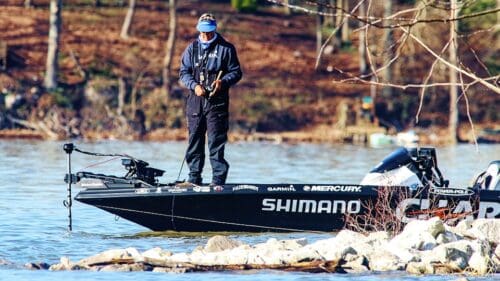
It’s been years since the tour visited this Northern Alabama reservoir, and many things have changed. Once a salad bowl of mixed vegetation, most of it was eradicated through intensive spraying. But like Toledo Bend, the grass is now making a comeback, and the fishing is improving as a result.
The main lake bite could be dependent on water movement. If the TVA maintains a steady generation schedule, the catch rate should be strong. Even without it, the bite should be good in the grass and on wood cover found throughout the lake.
Topwaters, crankbaits, swimbaits, shaky heads, and Carolina rigs have been strong performers there in the past, and I look for them to produce again this year. It’s just a matter of when and where to apply these various lure choices.
Smith Lake
Deep and clear best describes this Alabama fishery. With 500 miles of shoreline, there’s plenty of room for the anglers to spread out. Even better is the fact that both largemouth and spotted bass are prolific throughout the lake.
The most obvious targets are docks and brush piles, and they will definitely factor in. Schooling bass, too, will play — whether they are on the surface or deep.
Most likely, this one will be won by targeting spotted bass with forward-facing sonar and small, soft-plastic rigs. But don’t expect big weights at that time of year. The average spot on Smith Lake is under two pounds.
Lake Champlain
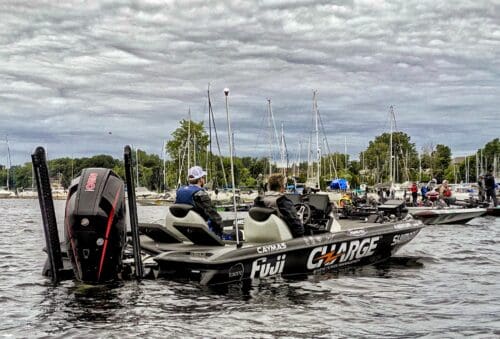
One of the country’s premier smallmouth fisheries, Champlain is also home to a healthy population of largemouth. And most years, it requires a mixed bag to do well.
The largemouth tend to concentrate in the extreme southern and northern reaches of the lake, while the smallmouth dominate the rest.
You can bet most of the field will be applying forward-facing sonar in search of the smallies, and their lure choices will include drop shots, small swimbaits, and hover-jigs. For the largemouth; hollow-body frogs, swim jigs, bladed jigs, pitching and flipping jigs, and various worm rigs.
Expect a winning weight of 80 to 90 pounds.
St. Lawrence River
A favorite stop on the Northern Swing, the St. Lawrence supports a tremendous population of trophy-size smallmouth bass. And they bite, too!
This year, the event is based well to the northeast, in the town of Waddington, New York. For those wanting to fish Lake Ontario, they’re looking at more than an hour run each way … with at least one fuel stop. And that’s if the wind and boat traffic are minimal.
Drop shots and forward-facing sonar will likely dominate the catch but don’t discount jerkbaits, swimbaits, and topwaters. Those, too, will produce good catches of smallmouth. As for the largemouth, bladed jigs, hollow-body frogs, swim jigs and Senkos will do their share of damage.
Expect record numbers of 20-pound bags with at least one angler eclipsing the 100-pound mark after four days.