2024 St. Lawrence B.A.S.S. Elite
Posted by Bernie Schultz on Sep 26th 2024
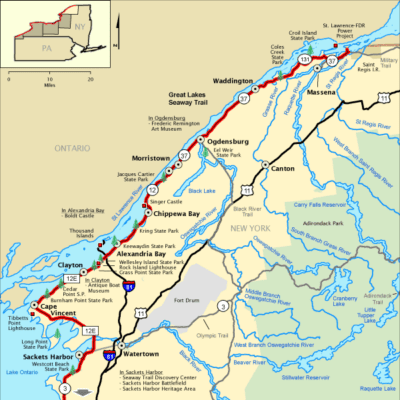
By far, my favorite destination is the St. Lawrence River — particularly where it forms at Lake Ontario. It’s a place where I’ve enjoyed considerable success. And in the simplest of terms, it’s a fun place to fish.
Although both largemouth and smallmouth thrive in the St. Lawrence, nowadays it’s brown fish that account for most tournament wins. Knowing that, I still try to dedicate a small part of practice looking for green fish.
Because of a postponed competition day during the previous event on Lake Champlain, B.A.S.S. decided to shorten our practice period to just two days at the St. Lawrence. When you consider the river stretches 100 miles to the lock at Massena, then add the entire eastern basin of Lake Ontario, two days is nothing.
Realizing the limited amount of scouting time, most of the field dedicated themselves to the lake. I chose to search both.
Practice Period
On day 1, I launched where the river meets Lake Ontario. From there, I headed downstream to try a familiar, shallow flat. Two hours later, I moved to an area closer to the mouth. But in neither place did I see any cruising fish.
Disappointed with that, I decided to make a long run to the False Duck Islands — a place where I’ve caught good numbers of big smallmouth in years past.
Upon arrival, I found Cory Johnston and Gerald Swindle, each working different areas. I went up shallow at first, but found no signs of life. I then worked my way to a 20-foot drop where good numbers of fish lit up my Garmin LiveScope.
In just one drift, I connected with a number of solid 3-pound brownies using a Ned Senko. Logging their locations on the GPS, I moved to another nearby drop.
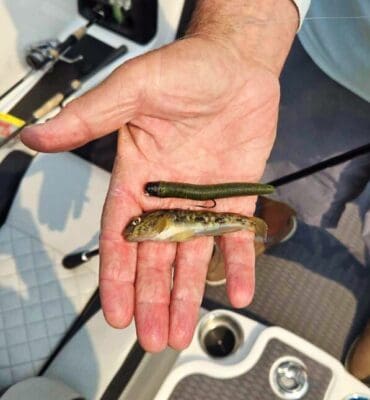
Soon, the wind started blowing. Concerned that it might get rough, I pulled the trolling motor and ran back to the islands at the mouth of the river on the U.S. side. There, I spent the rest of the day charting and casting to cruising fish.
On day 2, I moved down river to Chippewa Bay to try some docks and isolated grassbeds for largemouth. After that, I ran to a number of shallow sand flats that usually hold big, cruising smallmouth. But by noon, I had nothing to show for the effort.
Growing concerned, I started running a series of rocky shoals. My lure choices included a Shimano World Pop, Hildebrandt Drum Roller swimbait and a drop-shot Yamamoto Shad Shape Worm.
In two locations, I found small groups of fish that were the right size. But that was it. The rest of the day proved nonproductive, so I exited the river at dusk and drove to the nearest fuel stop, then back to the rental house to prepare my tackle.
Competition Time
At dawn the next morning, I made a quick stop to buy some ice, then drove 40 miles to our official launch site in the Town of Waddington.
Once in the water, I waited patiently — knowing the take-off sequence would be determined by the Angler-of-the-Year standings. Having had such a bad year, I found my place at the end of the line.
When they finally called my number, I advanced through boat check then began the long run to the shoals near Chippewa Bay.
On arrival, I started with the World Pop first — hoping a big brown would crush it on sight. It never happened. Next, I tried the Hildebrandt swimbait. Still nothing. Next, the Shad Shape Worm. Again nothing. At that point, I decided to move up shallow to see if the fish were still there. That’s when I realized they were gone … as if they were never there.
Disappointed, I moved to the next rocky shoal hoping for a better result. That’s when I caught my first fish — a fat 4-pounder. Then a 2-pounder came aboard. Both fell for a Ned Senko in green-pumpkin, watermelon laminate.
Seeing no more action there, I decided to move to a third shoal, where I caught another 2½-pounder. Then it, too, died.
Weighing my options, I decided to move farther toward the lake and revisit a couple of places that had produced for me in years past. But in just a few hours, I realized it was a bad choice. So I decided to backtrack to my starting areas and hopefully fill out a limit, then cull to some bigger fish.
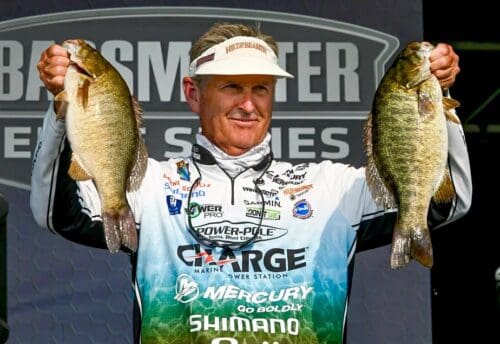
As the time passed, I did manage a limit. But the two big bites I got threw the hook and escaped. With an average sack of brown fish to show for the day’s effort, I crossed the stage, then loaded my boat and headed to the closest gas station.
A Bump in the Road
The next morning, I repeated the stop for ice and the long drive to Waddington. Once in the water, I greeted my marshal and performed some last-minute prep.
Knowing the take-off sequence would be reversed, I took my position at the head of the line. After the daily prayer and anthem were performed, my number was called and I exited the landing at Waddington.
I felt good. I was boat number 1 with nothing but open water ahead of me. As I reached the Iroquois Lock &Dam, I came off plane and plowed through the floodgate with massive amounts of water rushing by.
When I started to plane off, I felt a heavy thud. Wondering what I could have hit in 40 feet of water, I kept my foot on the accelerator to reach planing speed. That’s when I felt the engine beginning to shutter. Once on plane, the vibration worsened.
Thinking perhaps something had wound itself around the prop; I pulled over to a slack water area to check.
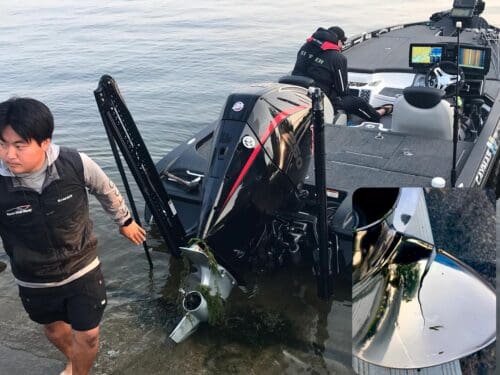
With a stream of competitor boats whizzing by, I raised the outboard and discovered one of the prop blades was cracked. Having replaced a damaged prop the week before at Lake Champlain, I was now on my spare and had no choice but to return to the ramp for help.
Ten minutes later the service crew came to my aid and within an hour, I was once again racing toward Chippewa Bay.
A Last Gasp
When I reached the first shoal, I repeated the same sequence of lures and presentations as I did on day 1. Unfortunately, the result was the same … nothing.
At the next shoal, I caught a couple of 2-pounders, but that was it. By the third stop, it was obvious my game plan wasn’t working. At that point, I told my marshal I was going to roll the dice and try the lake.
Together, we prepped the boat for the long, rough ride. When I reached the mouth of river, I ran to the closest marina to refuel. After wrestling with the pump for several minutes, a dockhand showed up and said the card reader was down and to go to the next marina at the back of the bay. There I purchased 150 dollars of marine-grade fuel, then exited and raced to the first major point on Grenadier Island.
Once on my numbers, I boated another 2-pound smallmouth. Then another.
Knowing my only hope was to find bigger fish, I pulled the trolling motor and ran farther into the lake, where I spent the next few hours hopscotching from spot to spot. The more I searched, the farther I got from take-off. When I finally realized the distance I had traveled, I knew I wouldn’t be able to reach weigh-in on time.
Stowing my equipment, I began the long run back … only to reach check-in 32 minutes late.
Knowing my weight wouldn’t count, I tossed the fish and trailered the boat back to the rental house — the whole way contemplating the many poor decisions I had made throughout the year. The season was bookended by mechanical issues, and there were countless lost fish and missed opportunities in between. It was the worst performance of my Elite Series career and I was glad it was over.
Next year will bring new opportunities and renewed hope. Maybe then, things will be different. Stay tuned…