Beatin' the Bank - 2021 Sabine River B.A.S.S. Elite
Posted by Bernie Schultz on Apr 22nd 2021
By Bernie Schultz
Among the most challenging fisheries in the country is the Sabine River, particularly where it meets the Texas Gulf Coast. Although the estuary is vast and intricate with ditches, bayous and canals, it supports a meager population of black bass.
Therein lies the problem; catching enough keepers to survive what is always one of the most brutal venues on the Elite Series schedule.
Our playing field included all connecting waterways from the Louisiana state line, west to Galveston Bay. Yet, zeroing in on the most productive areas proved to be daunting … at least for me. And as you read further, you will see how I overlooked the most obvious places.
Practice Begins
On day 1 of practice, I launched at Sabine Park where the river merges with the Intracoastal Waterway. It would serve as our headquarters for the event.
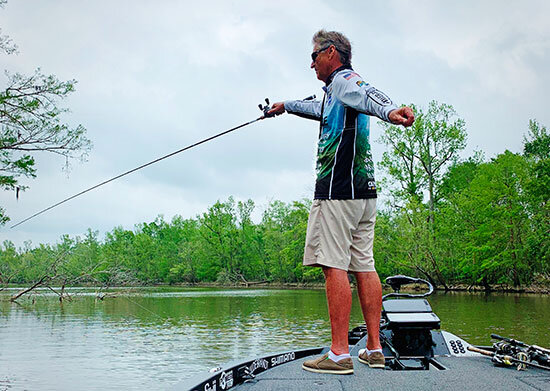
Cypress-lined riverbanks are abundant on the Sabine, yet most are unreliable.
My first stop was to a nearby backwater, where I targeted cypress trees and lily pads clumps with a variety of lures and presentations. Although I got a few bites, none were of any consequence.
From there, I ran further upriver to a long drainage canal. And over the next hour or so, I got two keeper bites on a topwater popper. Nothing else.
My next stops were back on the main river, cranking and pitching to isolated cypress trees and laydowns … none of which produced a single fish. Overall, the day was a waste.
The next morning, I drove to the freshwater lock on the Neches River. My objective was to check the deeper cypress trees lining the riverbank above the lock.
And though they produced a few bites, the boat traffic was too busy. So, I moved below the lock to several narrow ditches nearer to the Intracoastal.
The first produced nothing, but the second held some small keepers that bit a 4-inch Senko and Fat Baby Craw in a blue glitter pattern. Both were Texas-rigged on 12-pound fluorocarbon with 1/8- and 3/8-ounce tungsten weights respectively. My rod and reel setups included 7-foot medium-heavy Shimano Exprides with Metanium MGL III reels in the 7:1 ratio.
I spent the rest of the day trying to duplicate the pattern, but time ran out before I found anything meaningful.
On day 3, I drove an hour west to access Taylor Bayou — a major feeder system that produced victories for former Elite Series pros Todd Faircloth and Chris Lane.
To me, Taylor’s offers the best habitat on the entire Texas Gulf Coast. It features an abundance of hyacinths, lily pads and other forms of vegetation with plenty of isolated cypress trees. It’s is a lazy river with less tidal influence than other parts of the estuary, and it looks very similar to the tidal waters I’m used to back home.
Starting in the marsh, I spent a few hours throwing a frog and Swim Senko to the edges of shallow vegetated banks, none of which produced. From there, I ran upriver to a small backwater slough. In a matter of minutes, I had numerous bites. Most of them were small, but three were nice-sized keepers.
My next stop was at Hildebrandt Bayou, a major tributary to Taylor Bayou. I probed several adjacent canals, then fished the main waterway itself. I never caught a keeper bass, and that killed my confidence in making the long trek back during the competition. Having no backup, I didn’t feel Taylor’s was worth the risk.
The next day, I went to Cow Bayou. Starting in a small canal system, I found several seawalls holding fish. They seemed reliable. Yet, again, there was significant traffic from other competitors.
My last stop in practice was to a small canal back on the Sabine. In a single pass, I got four good bites by pitching to isolated laydowns. I knew then, it would be my starting spot for the event.
The canal was lined with cypress trees, and its average depth exceeded five feet. I believed the fish I shook off would stay and others would show up by tournament time. But I soon learned, it was not to be.
Competition Time
Having an early draw, I advanced through boat check and headed upstream to the small canal, wondering the whole way if another competitor might get there before me. When I arrived, I had it all to myself.
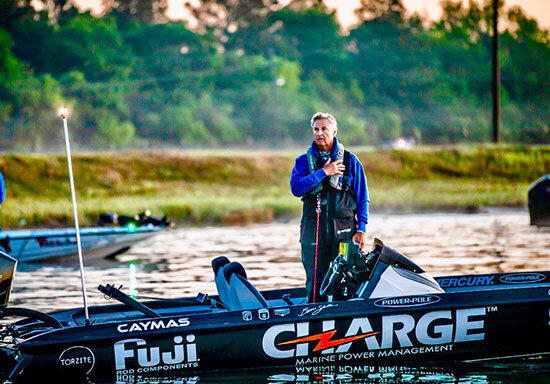
Standing for the National Anthem was about the only thing I got right during this event.
My first fish was an 11-inch non-keeper. Then another. After that came a flurry of mudfish. I began to second-guess my decision to start there rather than Cow Bayou. Early draws aren’t something you want to waste, and I was worried that I had done just that.
Finally, 45 minutes later, I scored a solid keeper. Then another lull set in. Rather than run any distance, I opted to try the small bayou back near the ramp. The tide was right, and there were only a couple of other boats present when I got there, so I committed to it.
Again, I caught non-keepers. And before I knew it, the day was slipping away. I made one last move, but never got another bite. When it was time to check in, I had only a 1½-pound fish to show for my efforts.
That night, I contemplated my options. I knew attempting a comeback in Cow Bayou wasn’t realistic. It had already been pounded and the fish there were just too small, so I decided to gamble. My plan was to try the small canal once more — make a quick pass — then run upriver to some less pressured backwaters.
Basically, I was going for broke.
The next morning, I reached the small canal only to find Todd Auten already there. It was deflating, but I entered and fished behind him anyway. When he came within range, I asked him how he was doing. He said he had only one keeper and was leaving. I finished my pass, catching several shorts and a few mudfish in the process, then pulled the trolling motor.

Man-made structures abound on the Sabine, and some hold fish.
Thirty minutes later, I entered a small backwater about 20 minutes upriver. It looked great, and there were no other competitors in sight. After making a nonproductive lap around the best part, I pulled the trolling motor and headed further upstream to the next oxbow.
This one was bigger and it looked perfect. Two hours later, however, I had only a couple of 11-inchers to show for the effort. Again, I pulled the trolling motor and headed further upstream.
My next stop was to a narrow side channel with lots of current. Although the water was slightly more stained, it looked ideal for a big bite. I targeted every visible current seam with a ½-ounce Hildebrandt Tin Roller spinnerbait or Lucky Craft 1.5 square bill crankbait. An hour later, with no action, I relocated to another section hoping for better results.
Still nothing, and before I knew it, the day was done.
This event ranks as one of my worst ever. Watching B.A.S.S. Live the next two days showed me how careless my approach had been. I literally drove right past the fish every day. Numerous anglers made the Top 10 by fishing the Intracoastal and its adjacent tidal ditches. I was so fixated on finding sweet water habitat with “better” cover, I had overlooked the places that were holding the real numbers of keeper fish.
After blowing two events in a row, it’s essential that I do well the rest of the season. I can’t afford any more mistakes or my chances of qualifying for the Classic will be done.
Stay tuned…