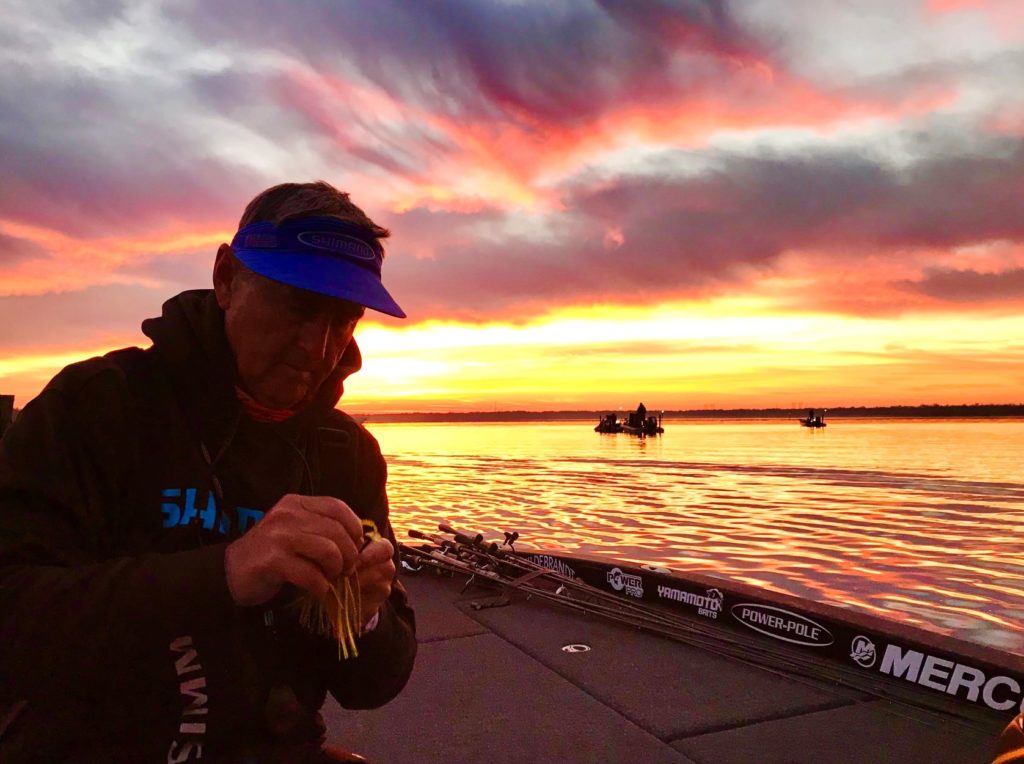
Beatin’ the Bank: 2022 St. Johns B.A.S.S. Elite
Posted by Bernie Schultz on Feb 27th 2022
In recent years, B.A.S.S. has kicked off each season of the Bassmaster Elite Series on the St. Johns River in Palatka, Florida.
Although the river is within an hour or so of my North Florida residence, I hardly consider it my home water. In fact, I have a love-hate relationship with the St. Johns. The river can be extremely fickle and unreliable. And with the passing of a major cold front, this event would prove to be just that for many of the competitors.
Fortunately, I avoided being a part of the group that faltered. Here’s how.
Practice Begins
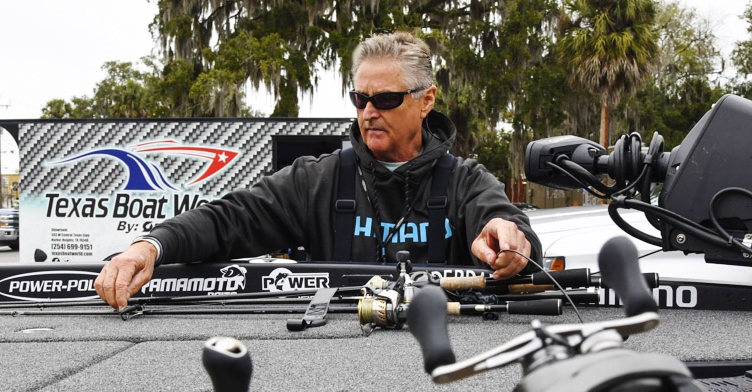
When official practice began, I accessed the river south at the Town of Astor — a part of the river that features an abundance of shallow cover and manmade features, like canals with seawalls. There, too, are several adjoining lakes — including lakes George, Dexter and Woodruff.
I started at the mouth of Lake Dexter, on a bank of lily pads lining the main river channel. And after cycling through a series of lures and presentations, I finally got a bite on a black and blue Chatterbait with Yamamoto Zako trailer. The fish weighed more than 8 pounds. But that was the last bite I got in more than two hours of trying.
From there, I headed back north to try some canals. In the first two, I noticed an abundance of empty beds. Apparently, a passing cold front had discouraged the spawn and all that remained were a few buck bass roaming the bank.
My next stop was to the spring-fed streams on Lake George — Florida’s second-largest lake. In one of the stream mouths, I found a number of bass trying to spawn. Some were big, too. I recorded their locations with my Garmin GPS and kept moving, never lifting a rod.
On day 2, I launched at Rodman Pool — a small reservoir that connects to the St. Johns just south of Palatka.
In one particular area, I found numerous bass relating to lily pads and shallow wood. They were easy, too. Most fell for a wacky-rigged Thin Senko in green pumpkin, watermelon laminate.
Finding that, I then moved to the “Stump Field” to try jerkbaits and lipless crankbaits in deeper water. Again, I found fish. But not in any concentrations. The day passed quickly, and soon it was time to head in.
On day 3, I opted to return to Rodman and work farther upstream into the Ocklawaha — the river that flows onto Rodman and the lower St. Johns.
There, too, the shallow patterns proved productive. And after realizing their consistency, I decided to commit to Rodman for the start of the tournament.
Competition Time
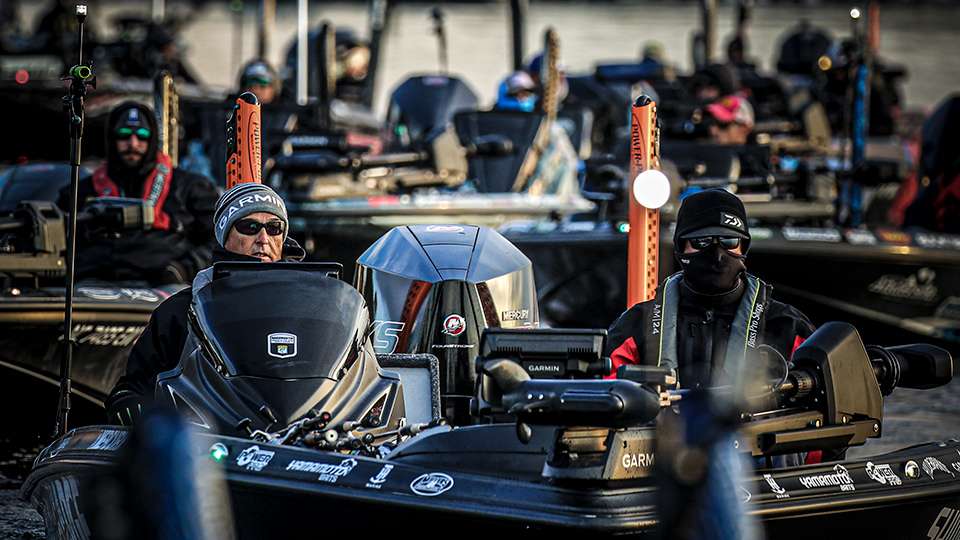
Drawing out in the third flight, I wondered if I would make the designated lock time into Rodman. At top speed, the locks are about 15 minutes from Palatka. If you miss them, the next opportunity is a full hour later.
Fortunately, there was no delay in the take-off procedure and I easily made the first lock. Inside, I counted another 22 competitor boats. That constituted a fourth of the field, and it made me wonder if I’d get any of the key areas to myself.
When the gate opened, it was a full-on boat race three miles down the barge canal — dodging floaters and rafts of hyacinths. When I reached my starting area, I noticed two other boats dropping off the pad beside me. Rather than jockey for position, I decided to settled in and fish what was in front of me.
In no time, one of the boats left. Soon after, the other also departed. The little flat was now all mine, and that gave me added confidence. Over the next few hours, I pieced together a modest stringer weighing approximately 10 pounds.
Most everything bit the wacky-rigged Thin Senko. Just before locking time, I culled a couple more times, bringing my overall weight to just under 13 pounds — slightly above the day 1 cutline.
On day 2, I raced once more to the Rodman lock. Inside, I noticed fewer boats. Apparently, Rodman had been stingy, and those anglers who had struggled decided to try other parts of the St. Johns.
That was good news to me; fewer boats meant less traffic in the areas I wanted to fish.
After reaching my starting spot, I began probing each pad clump with the wacky rig. And though the bite was slow, I gradually put some keeper fish in the boat.
Knowing the bite was off, I soaked the Senko for as much as a minute or two without moving it. It paid off, too. On several occasions, my line would go tight with a fat 2-pounder tugging on the other end.
Just before it was time to leave, I moved to the far end of the flat and stuck two more solid keepers — culling to a total near 12 pounds. I knew I had enough to make it through to the weekend. It was now just a matter of making it through the lock and back to weigh-in on time.
Fishing on the Weekend
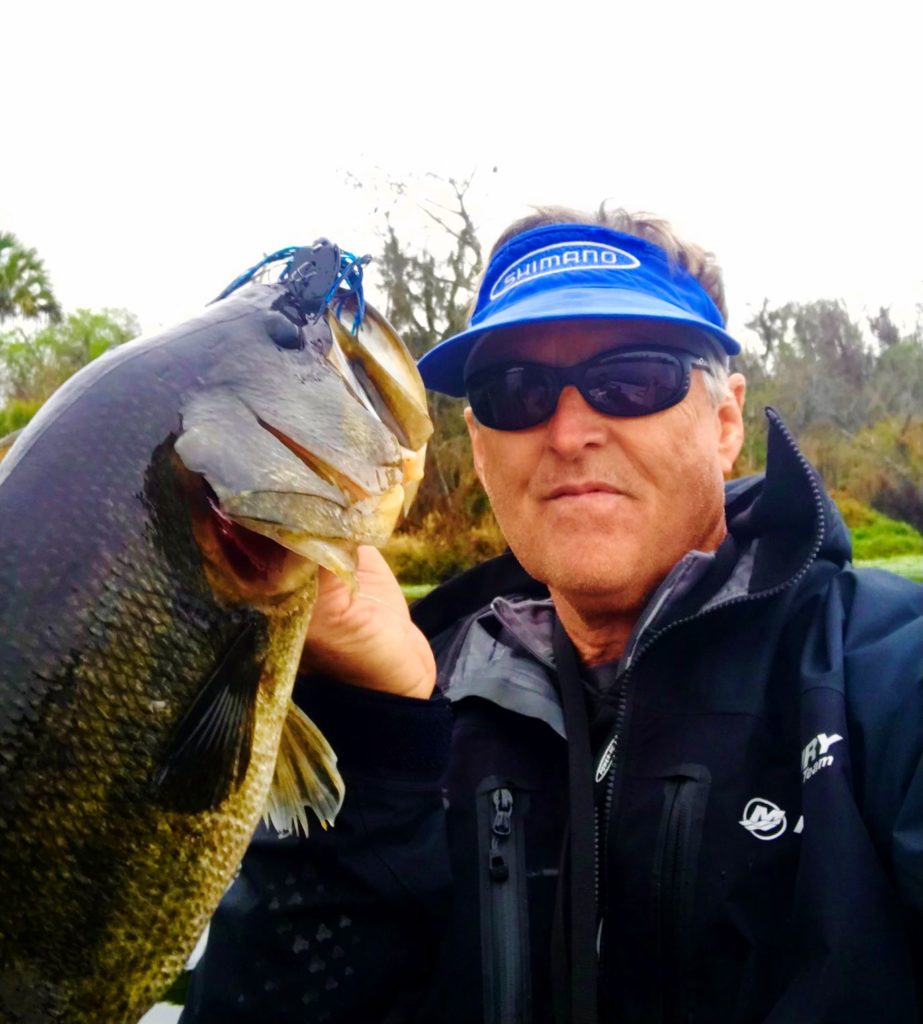
Anytime I make it through the cut, I fish more freely. Sure, there’s still some pressure. But, for the most part, it’s a more relaxed day. Having that check in hand frees me to try different things, and I like that.
Saturday morning — as I awaited take-off — all I could think of was the fish I saw in the clear spring-fed streams on Lake George. I knew I had pounded my areas in Rodman, and I wanted a change of scenery. So, I set my focus on the spawning fish I found on day 1 of practice.
When tournament officials called my number, I proceeded through checkout and began the 50-minute trek to the southwest corner of Lake George. Along the way, I noticed the wind was relatively calm and the sky clear. I felt the conditions were playing right into my hands.
As I approached the main entrance to the stream, I decided to idle well beyond to the area that held the biggest fish in practice. I knew the chances of them still being there five days later were slim, but I had to try them anyway.
On arrival, I quickly realized both beds were barren. The fish either left or someone had beat me to them.
When I tried backtracking to the mouth, I noticed another competitor boat had already set up in that area. Worse, he was catching fish. At that point, I knew I would need to find something fresh and untapped. I raised my trolling speed and cruised through the pad field in search of some locked-down spawners.
In one corner, I found a 3½-pound male guarding its nest. It took a few minutes, but I finally got it to bite a Texas-rigged Fat baby Craw. That fish calmed my nerves.
A few minutes later, I caught a glimpse of a bed in the shadows of a brushy bank. One pitch with the wacky worm and a 2-pounder inhaled it.
From there, I moved into a secondary ditch lined with lily pads and scattered wood. On one clump was a pair of big fish actively spawning. The male was easily 4 pounds, and the female twice his size. I dropped the Power-Poles and began a 2-hour battle with my nerves and those two fish … neither of which would ever bite.
Nearby was another pair. Teasing them with the Fat Baby Craw, the male quickly bit. Knowing time was slipping away, I decided to put him in the boat — a move that often discourages the female from holding on to the nest. And that’s precisely what happened; she left never to be seen again.
Once more, I tried the big spawners I had found earlier. But they, too, were gone. Where to? I had no clue. But they both had clearly abandoned the bed.
Back in search mode, I eventually found another decent male. One pitch with the Fat baby Craw and he, too, was in the boat.
That was my last bite of the day — four fish weigh a little over 9 pounds.
As a result, I fell out of the top 20 to 31st place. Although the money was the same, giving up the points was a bitter pill to swallow. Still, on the strengths of a steady soft-plastics bite, I had survived another challenging St. Johns tournament. And now it’s on to the next stop.
Stay tuned!