Beatin' the Bank - Lessons Learned 2020
Posted by Bernie Schultz on Dec 28th 2020
By Bernie Schultz
There is zero doubt that this past year was one of the worst in history. The pandemic that swept the globe even found a way to impact fishing.
Sure, more people fished than ever before, and that is good. But when it came to sponsorships and competitions, the virus wreaked havoc. There were countless postponements and cancellations at every level of competition. But through it all, B.A.S.S. found a way to complete its full schedule of nine Elite Series events.
Here’s an account of the past season and how I fared in those tournaments.
St. Johns River
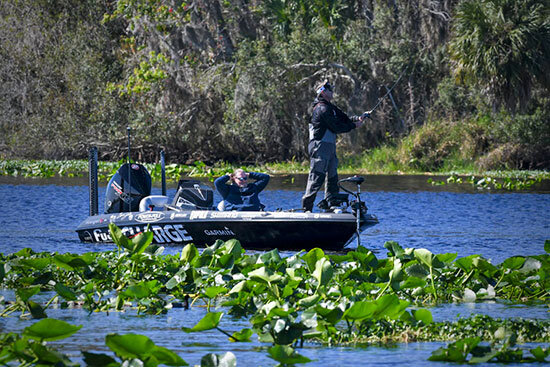
To me, the St. Johns is one of the most unpredictable fisheries in Florida. No matter how rock solid your pattern may seem, there’s a good chance things will change. Compound that problem with the depletion of grass along the river, and you’re looking at an even tougher challenge.
Going into the event, I thought I had found two key areas that would hold up … even if the conditions changed.
The first was a bedding area in a spring-fed run. The other was a schoolie hole, full of keeper-size bass. But after a two-day delay from a severe cold front — when the competition finally got underway — the water level dropped dramatically. When I arrived at the bedding area on day one, the water was so low, I could barely access it. Apparently, the stiff north winds that had blown for two days backed the river up and when they eased, a falling tide sucked the water out.
Thinking I could save myself on the schoolies, I went there only to find them gone as well. From that point on, I was reduced to junk fishing.
Lesson Learned: Never discount the tide. Dramatic fluctuations in water levels will definitely move fish, even when they’re locked on their beds. When things appear stable, plan for the worst.
Lake Eufaula
When this lake was announced, I decided to spend some time scouting it well in advance. Adding the three days of official practice to that effort, I felt I was in good shape.
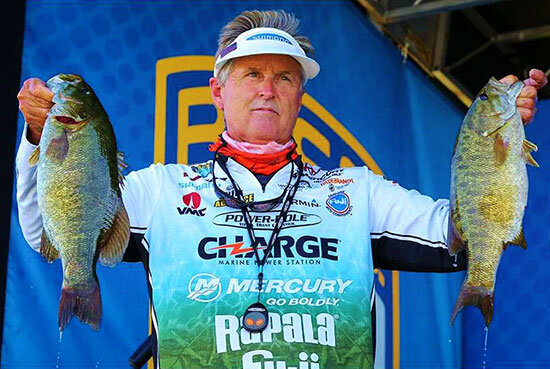
I dedicated most of my time searching ledges for brushpiles and probing long stretches of emergent grass — two very different patterns, but both capable of holding quality fish at that time of year.
When tournament time came, I concentrated on the brushy ledges first, then moved to the mats once the sun got up. Although I caught a good number of fish — some of which were over four pounds — I fell just short of the cut.
Lesson Learned: In retrospect, I should have reversed the order in my approach. The deeper bite was so easy it sucked me in. I knew I was working against the more normal, shallow-to-deep approach, but I thought it would pay off. Unfortunately, I came up a bit short.
St. Lawrence River
This river is almost always good to me, and I couldn’t wait to get there.
Practice went extremely well. I found numerous schools of big smallmouth, as well as a concentration of quality largemouth. I was confident of a top-10 finish. As the competition played out, however, missed opportunities took that away.
For inexplicable reasons, too many key fish came unpinned. Over the course of three days, several jumped and threw the hook, a couple tore free and one broke my line. All of them were over five pounds!
It was exasperating. Even with those losses, I mustered a 15th place finish.
Lesson Learned: To win or even finish high, it’s essential to capitalize on every bite…especially when it comes to big fish. Those are the difference makers. We all lose fish, but sometimes luck goes against us on the ones that matter.
Lake Champlain
My history on Champlain is mixed. Any time I’m on a strong largemouth bite, I do well. Only twice have smallmouth played out well for me. I was determined to change that this trip.
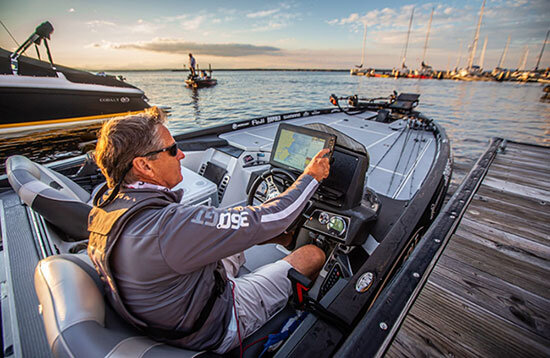
After dedicating nearly all of my practice time looking deep, I eventually located the right school of fish. Although it wasn’t a winning school, it was solid nonetheless. And as the event progressed, my weights got stronger.
Using a drop-shot Shad Shape Worm, I coaxed enough fish to make the cut and gain some badly needed AOY points.
Lesson Learned: Commitment and hard work are everything. I spent 12 to 13 hours a day looking for obscure schools of fish and once I found them, it was only a matter of finding the right lure to make them bite.
Lake St. Clair
Another great northern fishery, St. Clair’s smallmouth can be caught shallow or deep … big ones, too. With that in mind, I set out to find the right areas to capitalize on both patterns.
The shallow fish weren’t nearly as easy as years past. The size was there, just not the numbers. Thankfully, however, the deep bite was much more reliable.
Again, I used a drop-shot Shad Shape Worm to connect with enough smallies to easily make the top 10. Unfortunately, I lost several key fish on the way to the boat and ended up in the twenties — including several between five and six pounds.
Lesson Learned: Again, making every fish count is key. I had the bites, but for various reason, too many of the right fish escaped. Playing some of them longer with a softer touch might have made a difference.
Lake Guntersville
This venue served as the makeup for a previously postponed event, and though I was happy to be back on Guntersville, having it in the fall definitely created some challenges.
During practice, we experienced light winds and I was able to locate several schools of fish in deep grass on the main lake. My backup patterns were a morning topwater bite and some schooling fish on a shallow flat, inside a creek. When the competition got underway, strong winds quickly eliminated the topwater bite and my open water spots.
With those gone, I went to the schoolies and filled out a decent limit. On day two, I scrapped the main lake and went straight to the schoolies — thinking more time dedicated there would yield a better weight by day’s end.
I couldn’t have been more wrong!
Although the fish were still there, their average size was much smaller. I caught more than I could count, but only two met the minimum 15-inch size requirement.
The Lesson: Sometimes you need a third backup pattern, and I didn’t have one for this event. I tried many things, but was never able to dial in on anything additional that gave me confidence. Still, I should have kept looking.
Santee-Cooper
Based on a history of strong finishes, I had confidence going into this event. And after just a few hours of practice, I felt I had figured out the right pattern.
By skipping wacky-rigged Senkos to isolated cypress trees, I could almost call my shots. It worked just about everywhere I stopped, and I couldn’t wait for the actual competition to begin.
As things progressed, I easily made the cut. On day three, we awoke to morning rain showers. Seeing that, I decided to try a buzzbait on a nearby field of lily pads. And that’s when I caught my biggest bass of the competition — a six pounder. That fish helped propel me to a top-10 finish.
Lesson Learned: Keep an open mind. Even if your pattern is rock solid, don’t be afraid to mix things up. By trying something different, you can quickly separate yourself from the rest of the field.
Lake Chickamauga
The “Chick” is a great fishery — full of big Florida-strain bass — but due to rescheduling, we were dealt a very tough fall bite. Adding a 14-inch minimum size limit only made matters worse.
I worked hard and tried to remain hopeful, but after a nonproductive practice, I was reduced to just a couple of areas that held a few keeper-sized bass.
Each day I had to scramble just to put a few fish on the scales. It was a miserable tournament, and it cost me dearly in the points race.
Lesson Learned: As it turned out, the event was won fishing a frog super shallow. Although I tried a frog repeatedly, apparently I didn’t fish it shallow enough.
Lake Fork
The last time our tour visited Lake Fork, I had a solid finish. But that was in the spring. This would be our last event of an extended season, in mid-November — following the turnover.
I tried fishing deep and shallow, and I caught some decent fish using both approaches. The problem was timing. In several areas, I could roll up and get a few bites, but trying those same spots at other times yielded nothing. I never felt comfortable with anything I found.
Add to that several lost fish, and the entire event became an exercise in futility.
The Lesson: Make every fish count. And try to control the outcome by staying calm and collected. There’s no doubt I fell apart mentally after losing a couple of key fish. It happens to the most seasoned anglers, trust me.