My Senko Story
Posted by Mark Fong on May 17th 2022
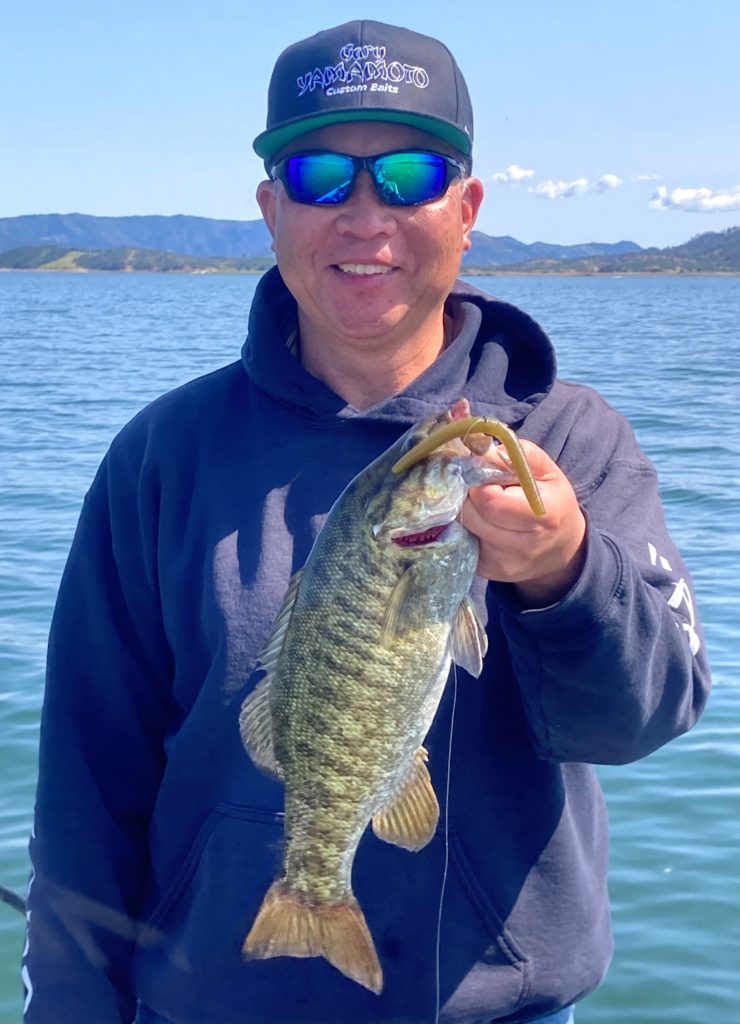
My first encounter with the Yamamoto Senko came many years ago. I was fishing as a AAA at a Clear Lake WON Bass Pro-Am Tournament and at this time, the Senko was just taking off on the West Coast. It was a spring event and since the tournament was a shared weight event, my Pro partner handed me a bag of hard-to-find 5” watermelon (042) Senkos. He told me to Texas rig the Senko weightless on a 3/0 Gamakatsu offset worm hook and to pitch it to the edges of the tulles clump and along the grass lines. He instructed me to let the Senko fall on a slack line otherwise it wouldn't properly shimmy as it sank in the water column.
At the end of the day, I was amazed at the quality of fish the Senko put in the boat.
Since that memorable first day, the Senko has been a staple in my bassin' arsenal and is one of my all time favorite spring time baits for not only locating fish but catching them as well. While a Texas rigged Senko still gets plenty of use in my boat, I find myself favoring its wacky rigged sibling more often than not as it just has more action.
I typically opt to start the day with a wacky Senko on the deck, but if I find myself getting hampered by snags, I'll switch to a Texas rig. Here in Northern California, the lakes I frequent: Oroville, Bullards Bar, and Pardee to name a few, are largely devoid of snaggy cover, making them ideal for a wacky Senko.
Easy Riggin'
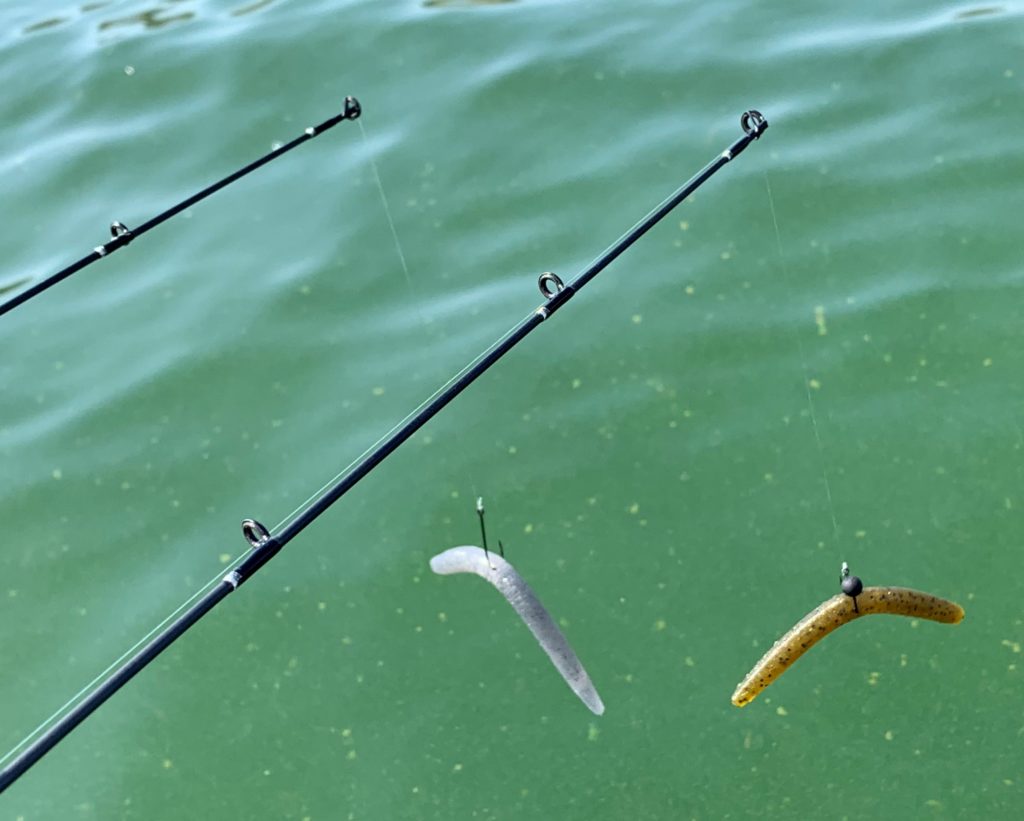
I will start out by running a 1/0 Gamakatsu G Finesse Stinger Wacky Hook through the egg sack of a 5” Senko. I know that many anglers prefer to rig the Senko with an O-ring, but doing so effectively changes the angle of the hook relative to the body of the bait and I prefer the way the Senko falls better without it.
I always fish a wacky Senko with spinning gear because it allows me to make super long casts which is extremely important. The farther I can stay back off them, the better my chances are of getting them to bite.
A longer rod such as a 7'3” or even a 7'6” medium action rod with a light tip and plenty of backbone helps to maximize casting distance. I'll pair the rod with a 3000 series spinning reel which I like for its ability to manage line twist and wind knots. Finally I'll spool up with 15lb high visability braid and an 8lb fluorocarbon leader.
For the most part I like to keep my color selection simple. My top choices probably won't surprise most. I like subtle natural colors: Green Pumpkin Black Flake (297), Fading Watermelon (042J), Baby Bass (305) or Natural Shad (306). On the occasions where I want to be able to see my bait (ie fish on beds) I will go with Bubblegum (229).
Let's Go Fishin'

Spring is truly a magical time to be on the water. With fish in the prespawn, spawn, and post spawn, the majority of bass in the lake will be shallow at some point in time and a Senko will catch them. Bass like to relate to structure near the bank whether it be a stump, lay down, boulder, clump of grass or a dock. I'll use my trolling motor to quietly move down the bank looking for these key pieces of structure. Shallow fish are typically spooky fish and a stealthy approach is important so I will be extremely careful to remain inconspicuous and to stay way off the fish.
When I find a promising target, I'll make a long accurate cast, letting the Senko free fall on a slack line. If the area is target poor or the visibility is limited, blind casting can be also be very effective. I catch a lot of fish this way just going down the bank and covering water. The key to working the Senko is to allow it to fall on a slack line as this will allow the bait to perform its signature shimmy.
Before closing the bail on my reel, I'll pull out a couple of extra feet of line so that it lays on the surface of the water. As the Senko falls, I'll watch my line for any indication that a bass has picked up the bait, this is where using a high vis braid really comes into play as it makes it much easier to detect visual bites.
Most bites come on the initial fall. If I don't get bit, I'll let the bait soak for a bit, then twitch it a few times before reeling in and making another cast. When I do get bit, I'll reel into the fish instead of jerking on them.
Reel setting has substantially increased my hook up ratio.
Small Adjustments
If the water is ultra clear or if the fish are especially finicky or pressured I won't hesitate to down size to a 4” Senko. Also, if it is windy or if I want to fish the bait a bit deeper in the water column, I will change to a small weighted wacky jighead. Adding a nail weight to the Senko can change the orientation of the the bait. Using a wacky jighead will not change the horizontal attitude of the Senko as it drops in the water column. Here in Northern California, the water can be ultra clear and the spotted bass often spawn deep on canyon style reservoirs like Oroville or Bullards Bar.
A 4” Senko rigged on a 1/16 oz wacky jighead can be deadly under these conditions.
Whether you are adding a chapter or just starting your first, it's the perfect time to get out on the water and work on your own Senko story.