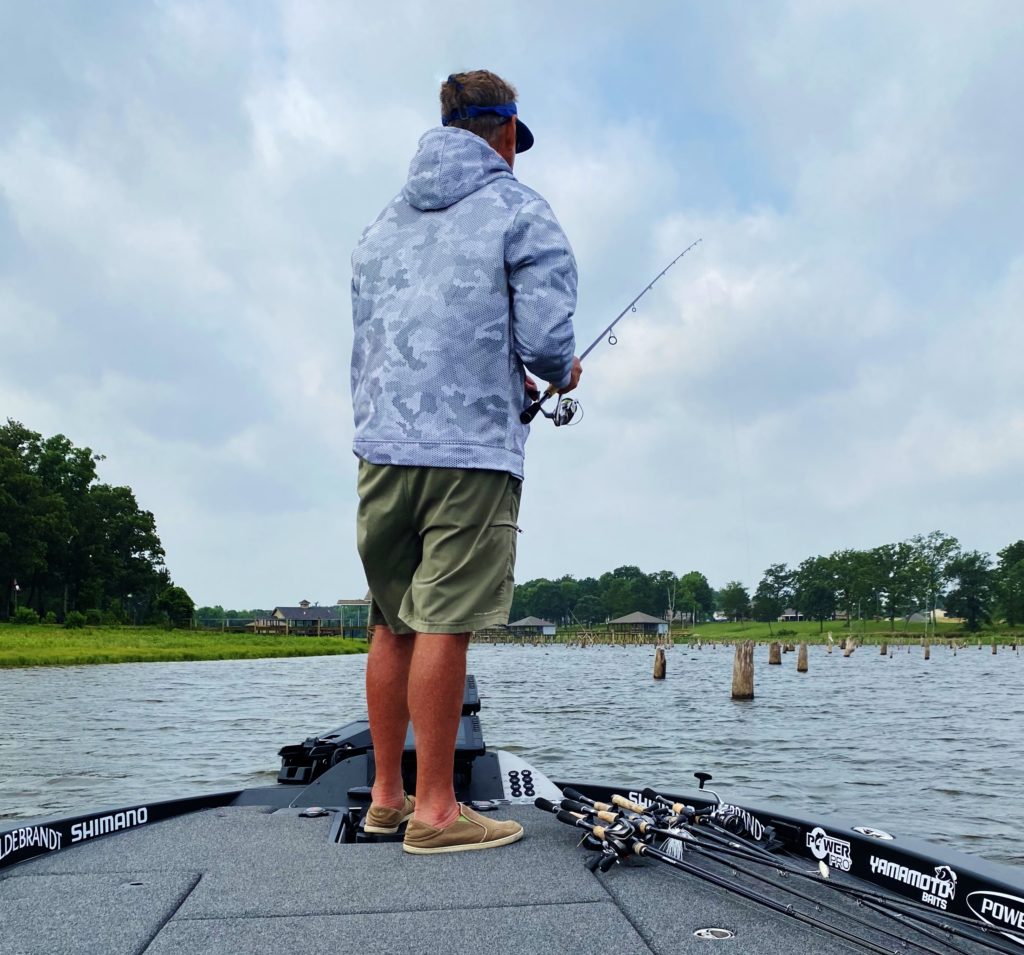
2022 Lake Fork B.A.S.S. Elite.
Posted by Bernie Schultz on Jun 9th 2022
Each year, the Bassmaster Elite Series finds its way to Lake Fork … and for good reason. At just over 27,000 surface acres, the East Texas reservoir is an absolute big bass factory.
Numerous victors have recorded 100-plus-pound stringers in our events there. Just making the money usually requires a daily average of more than 17 pounds for five fish. And that’s catching them!
This year was a bit of a question mark, however. Because of repairs needed on the dam, the Sabine River Authority drew the lake down more than six feet. And that changed the landscape dramatically. Places that produced in years past were suddenly 30 yards up on the bank. With that, much of the lake’s submerged timber was now exposed — which created navigational challenges for the anglers.
Here’s how I approached the event.
Practice Begins
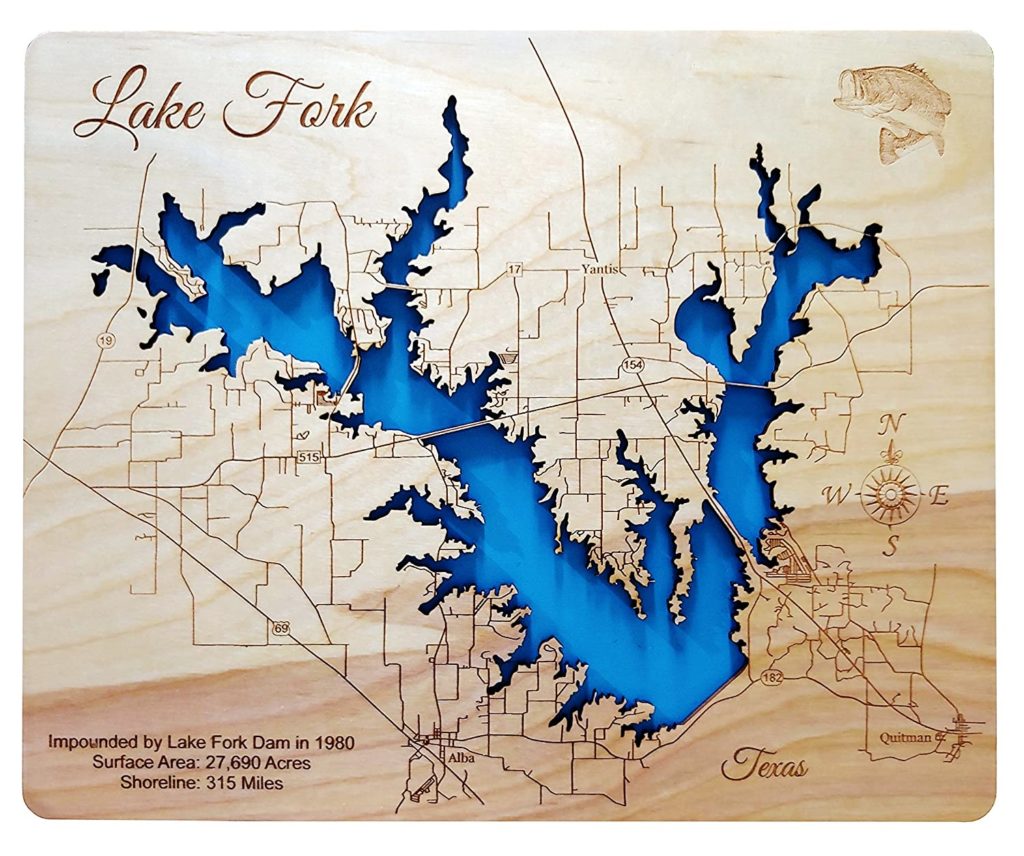
On day 1 of practice, I launched at mid-lake on the western fork. My first stops were too shallow, flat points extending out into the main lake.
By walking a large surface lure, I was connecting with quality fish in no time.
After recording the locations of several productive bars and points on my Garmin GPS, I then started probing shallow timber with an array of baits. My selection included a Shimano Macbeth 63F square bill in chartreuse, a white-on-white ½-ounce Z-man Chatterbait with Swim Senko trailer, and a 1/2-ounce brown jig with Yamamoto Twin Tail trailer in green-pumpkin.
As I scanned gradually sloping points near deep water, I could see schools of quality fish moving about. Their numbers were few, however, and they seemed to be steadily on the move. Dealing with that and a stiff breeze, plus an overwhelming amount of standing timber, made connecting with those schools a challenge. The rest of the day was pretty much a bust.
On day 2, I resumed the topwater effort early. But that yielded only a few boils behind the plug — no commitments. After my fill of that, I decided to try the shallower stumps with a Texas-rig Kut Tail worm in a plum color. Nothing happened at first, but when I lightened up on the pound rating of my line, the bites started to come.
In two separate creeks, I caught several quality bass and shook off countless others. The pattern proved consistent as I moved to other similar areas. I was beginning to feel good about things.
On day 3, I tried the topwater once again, but to no avail. Still, I felt it should work.
When the sun got higher, I moved back to the timber — scouring the stumps in several small creeks. And, again, I got a number of bites in the 5 to 8-foot range. I felt that if I combined the stump pattern with a good morning topwater bite, I would survive what was sure to be a slugfest.
Competition Begins
On the first morning of competition, we were greeted by 20 to 30mph winds from the south. That eliminated most of the lake for any type of topwater bite.
Factoring that with a late draw in the take-off order, I knew getting any of the preferred spots was highly unlikely. And I was right. As I made my way up the lake, I could see boat after boat stationed on the better points and bars.
Finally, halfway up the western arm, I found a spot that was unoccupied. But after flogging its shallows repeatedly with the walking bait, I had nothing to show for the effort. Disappointed, I pulled the trolling motor and continued working my way north.
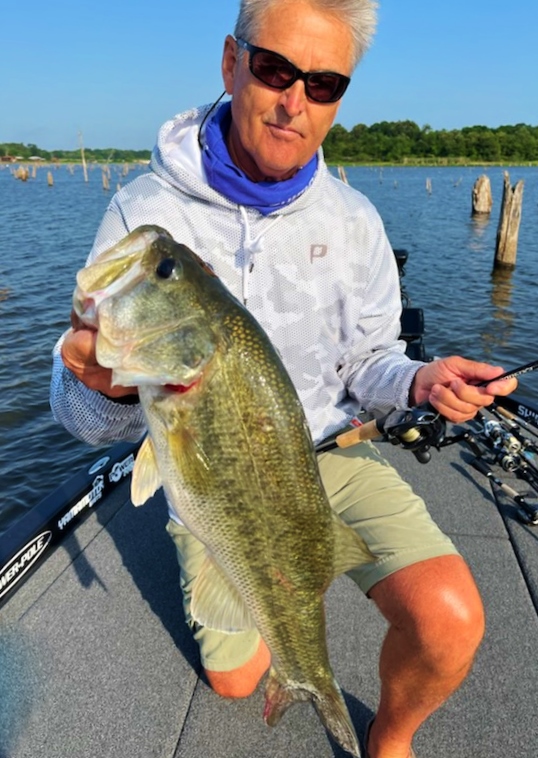
An hour later, on a flat point at the mouth of a major creek, I got my first topwater bite — a solid 3½-pounder. A little later, I scored one close to five. Then a 2½. But just as I thought things were progressing, the action stopped.
Instead of moving to another area, I decided to switch patterns and move to the adjacent stumpfield. And by late morning, that yielded a number of keepers — which brought my total weight to 16 pounds. Although it felt good, I knew I needed more.
By mid-afternoon, I decided to work my way back down the lake and try one of the creeks I scouted during practice. And though I caught several other fish there, I was never able to improve my overall weight.
When time ran out, I headed to check-in to sign my weigh slip, then back to the hotel to regroup.
Another Shot
Having an early take-off number on day 2, I decided to try a section of the dam.
Starting on the riprap adjacent to the floodgates, I threw the walking bait directly to the water’s edge — walking it repeatedly away from the bank into deeper water. Finally, after 20 minutes of trying, I got a strike. And when the fish broke water, I could see it was big … really big!
The fish jumped two more times, pulling drag between each breach. Then — on the final jump — my line went slack.
In horror, I retrieved what I assumed would be a broken leader. But to my amazement, the line was not broken. My loop knot was as perfect as when I tied it. Apparently, the line-tie on the lure had broken loose, which freed the fish. And, of course, it was the only lure of its kind that I had.
Substituting it with another make, I frantically retied and began casting to the same stretch of bank. But, after pounding the spot repeatedly, I only managed another fish in the 2-pound class.
A half-hour later, I told my marshal to pack his gear, we were running north to where I caught them the first morning.
Once we reached that location, I resumed casting the replacement topwater. But after a thorough effort, it was clear the previous day’s school was either gone or wouldn’t respond to the backup lure. Rather than pull the trolling motor and head to another location, I decided, once again, to move into the trees and pick up the Kut Tail worm.
The action was much slower than the day before. And though I got a number of bites, my percentages were disgustingly poor. I boated only two more fish in the 2-pound range. The rest were lost in multiple ways. Some broke off in the timber. Others pulled off. Still, others jumped off. It was the worst hook-to-landing ratio I can recall in my 35-plus years of competitive fishing.
As was expected, Lake Fork produced countless quality stringers. The eventual winner, Lee Livesay easily eclipsed the 100-pound mark. My hats off to him, too. He won the same event in a similar fashion the previous year.
Next is Pickwick Lake in Northern Alabama — an event I need to do well in. Stay tuned!