2025 Lake Hartwell B.A.S.S. Elite
Posted by Bernie Schultz on May 6th 2025
Following the Pasquotank River event in North Carolina, the Elite Series moved to Lake Hartwell in Andersen, South Carolina. Considered one of the best fisheries in the country, Hartwell boasts 56,000 acres of prime bass habitat, thick with forage — including herring, shad and a wide variety of sunfish.
Because it supports a healthy population of both largemouth and spotted bass, multiple strategies can apply.
My record there is mixed. I’ve had some solid finishes, as well as some that were not so good. But because of the timing for this year’s event, I believed my chances were strong. All I needed was to put myself in the better areas and fish to my strengths.
Practice Begins
On day 1, I launched at our official take-off site at Green Pond, which is located near the mouth of the Tugaloo and Seneca Rivers. I chose the Seneca to start.
My first stop was to a large marina, where I hoped to find quality bass chasing spawning shad and herring beneath moored houseboats. Seeing no results there, I then moved to the shoreline to scout for a shallower bite. Still nothing.
Next, I headed upriver to several shoals and points where I caught a mix of small spots and largemouth. My lure selection included a wacky-rig 5-inch Senko in green pumpkin-watermelon; Shimano World Minnow and World Pop; homemade 4-inch swimbait and a white Whopper Plopper.
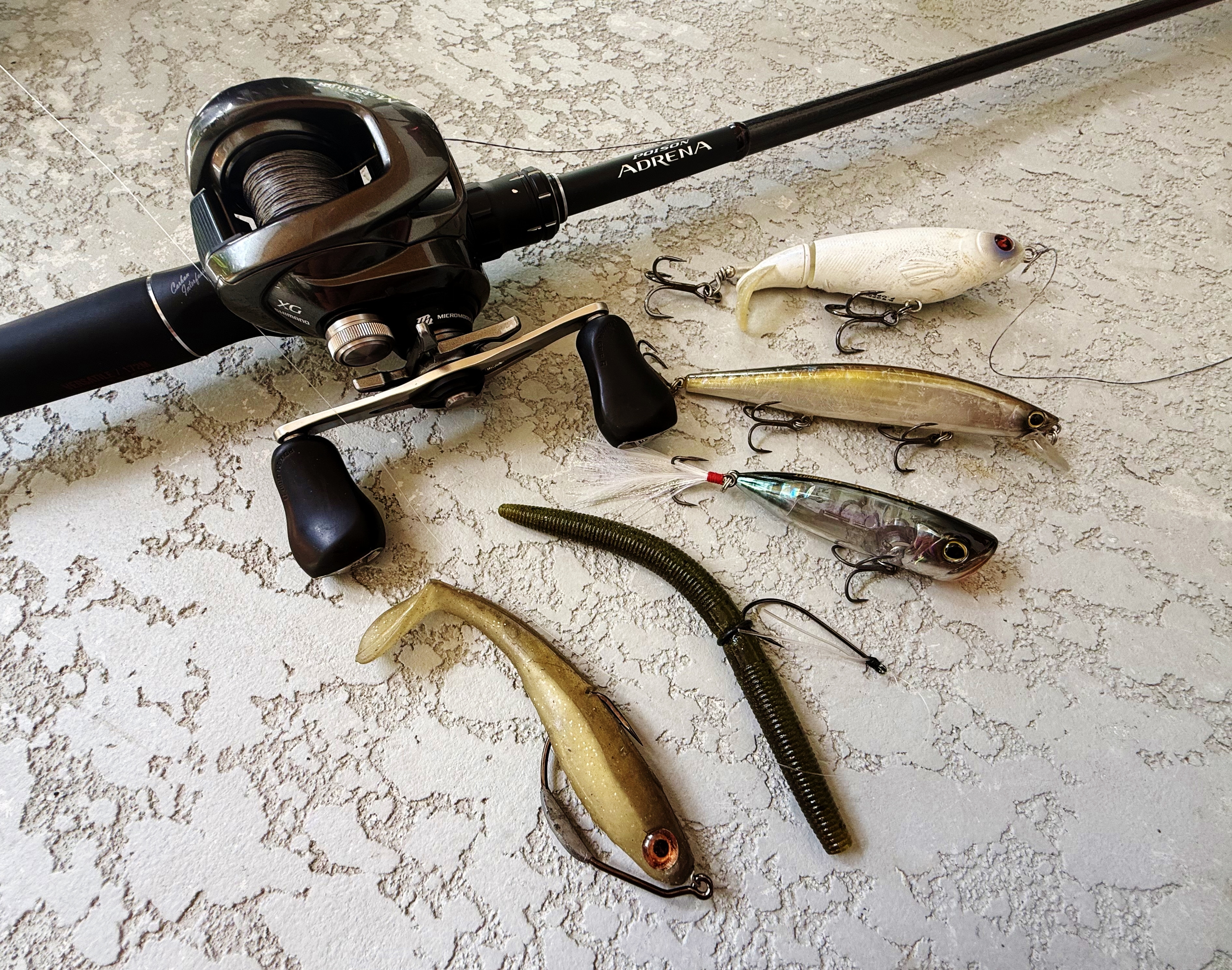
From there, I moved to the shoreline where I found large numbers of male bass in the shallows — some with established beds, others just beginning to stake their claims. Seeing that, I committed the remainder of the day to scouting the bank, recording the coordinates of any fish over two pounds.
On day 2, I headed to a mid-lake section of islands and shoals. My plan was to test the herring bite up shallow, then move deeper when the schooling stopped.
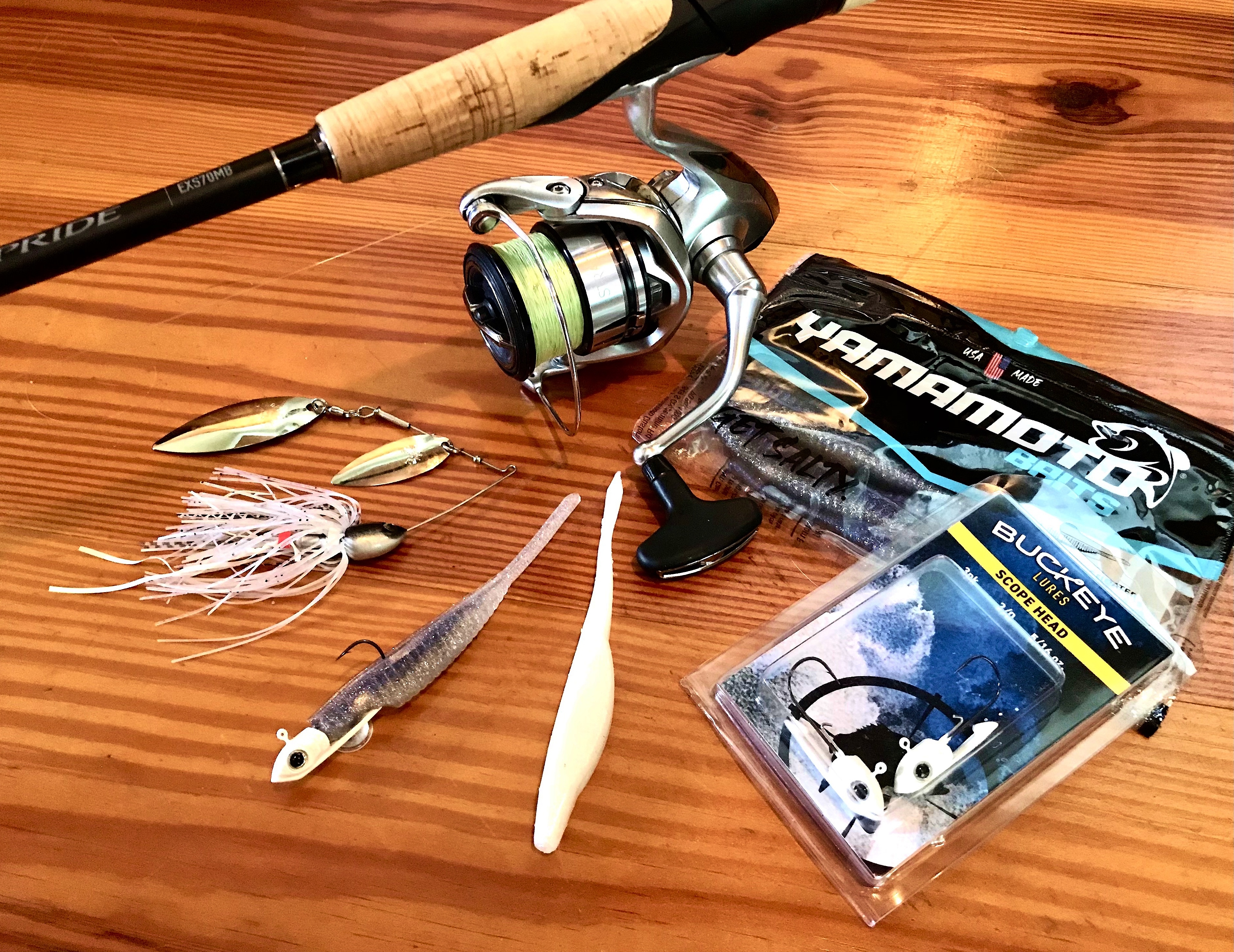
On one particular shoal, I discovered a mix of spots and stripers schooling together. On another, largemouth and spots. Fooling them wasn’t easy, but they were the right size to compete. Best lures were a Yamamoto D-Shad rigged weightless and 4-inch Shad Shape Floater on a 1/2-ounce Buckeye Scope Head Jig. If I delivered either lure when the fish were actively schooling, the bite was instantaneous. If I was late or misjudged their direction, nothing resulted.
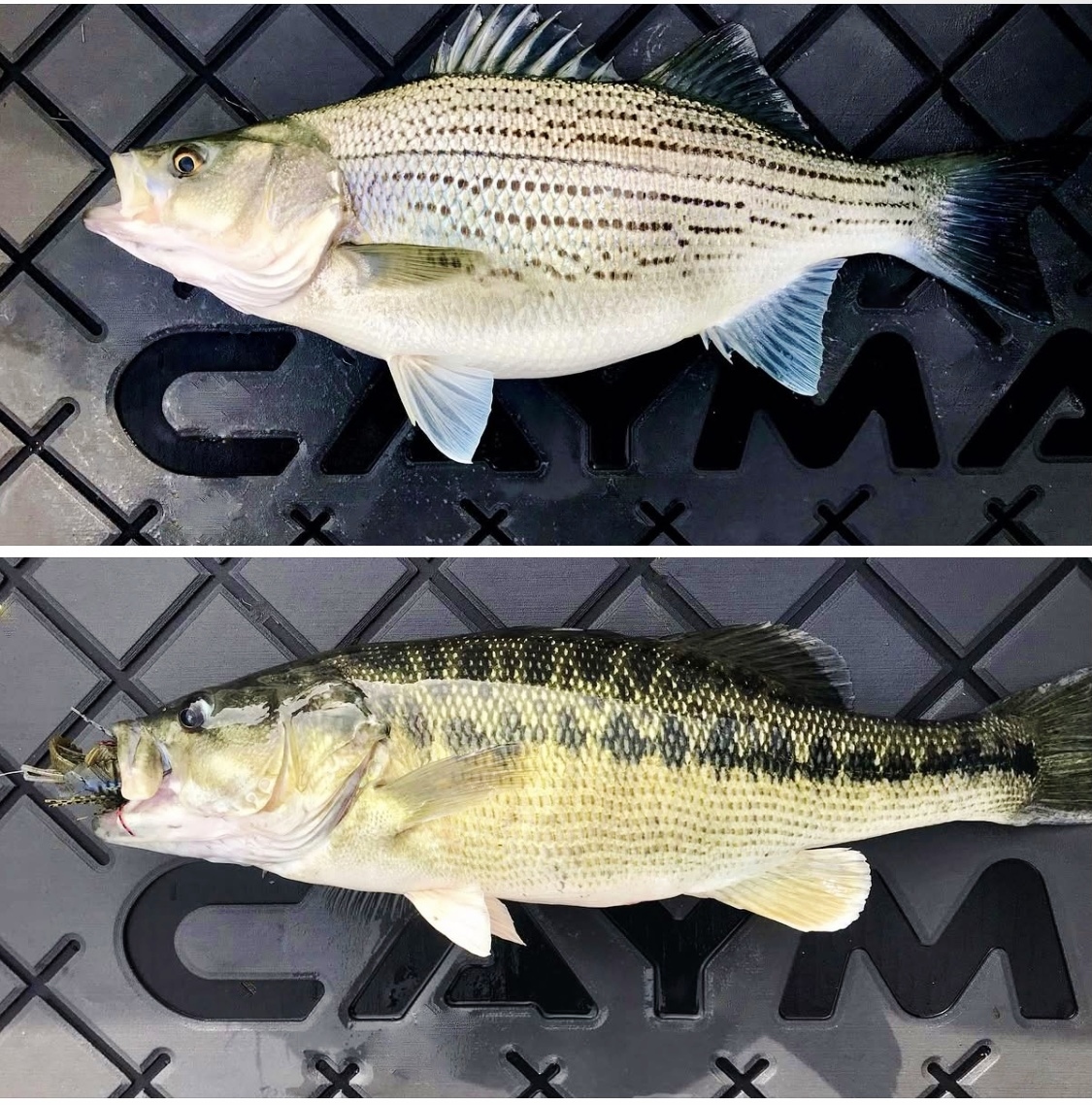
When the schooling stopped, I tried fooling any remaining stragglers. Unfortunately, most of them moved into deep water where they disappeared. As the sun got higher, my attention returned to the bank — searching for key docks and more bedding areas.
On day 3, I decided to test the waters near the dam. In one particular creek where I had caught them in the past, I found numerous bedding fish. Unfortunately, about the time I circled the creek, more boats had shown up … all looking for the same thing.
Before leaving, I tested some floating docks with a 1/2-ounce Hildebrandt Tin Roller spinnerbait. On one large commercial pier, I watched as what appeared to be a 4-pound spot chase my lure from beneath a moored houseboat. I quickly took the lure away from the fish and filed it to memory. On the next dock over, I watched as three big spots follow my lure to the boat.
The rest of the day was spent checking more floating docks. Around 5:30 p.m., I headed for the ramp to prepare my equipment for the competition ahead.
Tourney Time
Having a late draw in the take-off order, I watched as a stream of boats headed out into the main lake. Very few went in the direction I wanted, and when my number was called, I raced away from the launch site.
My first stop was to the small point where I found big spots and stripers actively feeding on the surface in practice. But as I as I made my approach, things looked different. There was zero surface activity.
Questioning my choice, I decided to test the area anyway. But after a good try, all I boated were two small keeper spots. From there I ran to a nearby schooling spot, only to find another competitor reeling in a nice fish. With the sun rapidly rising, I figured the schooling would end soon anyway, so I started running pockets where I had marked multiple bedding fish.
To my surprise, they were gone.
Did last night’s electrical storm push them off their beds? Or perhaps it was because of receding water levels? Perhaps both? I wasn’t sure of the reason, but they were no longer where I found them in practice.
The next two stops revealed more of the same. Finally, in my fourth area, I found several largemouth still holding. Two bit immediately, but the others were too skittish. So I decided to make a move to the lower section of the lake to finish my limit. Unfortunately, nothing I caught there exceeded two pounds.
Desperate for a bigger bite, I remembered a pair of largemouth I had marked closer to weigh-in. Hurriedly, I lifted the trolling motor and raced there with the hope of making a substantial upgrade.
When I arrived, the pair were still there, pacing in the same manner as when I first found them. Neither would lock onto the bed, but I kept trying anyway. The male was a solid 3½ pounds, the female twice his size. But after working them for nearly an hour, I was out of time.
Disappointed, I headed back to weigh-in with a mere 11-pound limit.
Another Chance
The next morning, as I waited in the line to launch, I pondered my options. Should I try the same schooling points, or move to another section of the lake?
When my number was called, I exited take-off and raced directly to the schoolie spot that was occupied the previous morning. When I pulled in, things looked promising. But as I began casting, another competitor came off pad near me. It was Bill Lowen. Apparently he was the angler I saw on day 1. Even worse, he was among the leaders.
Out of courtesy, I decided to yield the spot to him and try another area.
Moving to a nearby point, I found stripers and spotted bass breaking on the surface.
In minutes, I captured a limit. But none were bigger than 2 pounds. I told my marshal we were headed toward the dam, to fish the commercial docks where I saw the big spots in practice.
Twenty minutes later, I pulled up to the first row of houseboats and, on my second cast, hooked up with a 4-pounder — the same fish that chased my spinnerbait from beneath a houseboat during practice. Feeling better about that one, I prayed the others I saw would also bite. But as I completed the rows of docks, all I caught was one other small fish.
Moving to a small pocket nearby, I looked for some bedding bass I had marked during practice. Unfortunately, they too were gone. Opting to fish new water, I eventually finished my limit and headed back to the big pair of spawners I tried on day 1.
As I rounded the corner into the pocket, I noticed another boat with its Power-Poles deployed. It was Cory Johnston. Seeing that, I aborted and moved closer to weigh-in. There, I ran several pockets until time ran out.
At the scales, I weighed another 11 pounds of spots and largemouth. That moved me up a few places in the standings but, overall, it was a weak finish. The cut averaged 13 pounds per day, and I was well off the pace.
Looking back, I believe my misfortunes resulted from the electrical storm that moved in the night before competition began and receding water levels. Another factor was the amount of angling pressure in the areas I chose to fish. It was nearly impossible to find anything to myself.
Next is Lake Fork in Texas. Hopefully that event goes better than the last two.
Follow Bernie Schultz on Facebook and Instagram, or through his website.