2025 Lake St. Clair B.A.S.S. Elite
Posted by Bernie Schultz on Sep 4th 2025
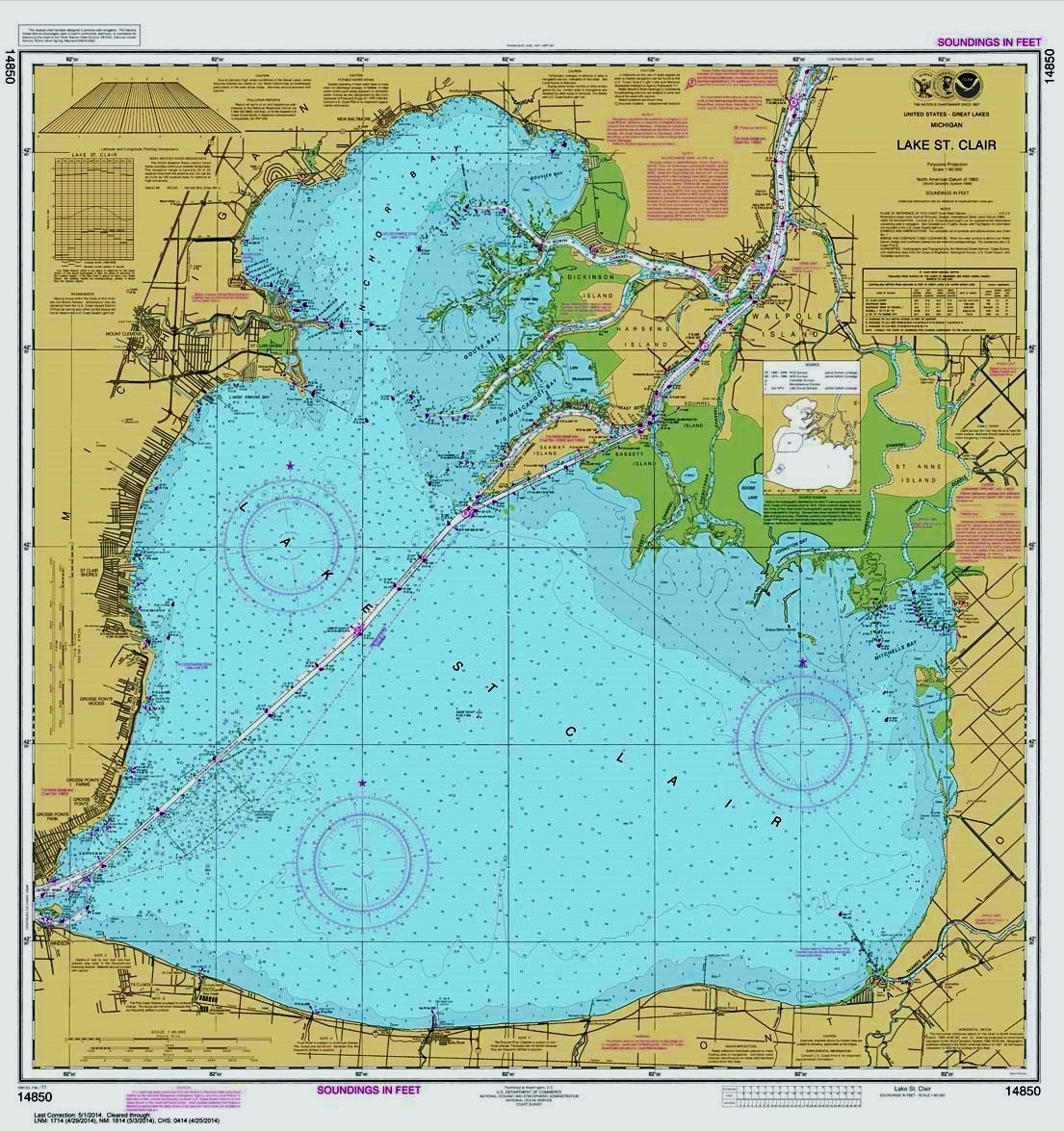
Lake St. Clair is a key part of the Great Lakes system. It lies between lakes Huron and Erie, and separates Michigan from Ontario, Canada.
At approximately 275,000 surface acres, it’s about the size, shape and average depth of Lake Okeechobee. And most of the lake is productive for smallmouth and largemouth bass. In fact, it may be home to more bass per acre than any of the big lakes in the system.
Flowing into the lake in the northeast corner is the St. Clair River, which forms a large delta with multiple feeder streams. It’s also where the main shipping channel is dredged. At its southern most end, the lake drains into the Detroit River, which flows directly into Lake Erie.
In all, it’s a massive playing field — one that the anglers can spread out in.
Having had such a rough season, my hope was that Lake St. Clair would provide an opportunity to right the ship.
Practice Begins
On day 1, I launched at our official take-off on the north shore of Anchor Bay. From there I ran to several shallow sandy flats extending out into the lake.
Almost immediately, I connected with some smallmouth using a Hildebrandt Drum Roller swimbait. Unfortunately, none were the size required to compete. St. Clair is an absolute fish factory, and 20 pounds per day is what it takes to survive in most derbies.
From there, I moved to the delta where the St. Clair River feeds into the lake. Again, I caught fish, but only a couple were in the 4-pound class. The rest were too small to matter.
My next stops were to several seawalls in the river.
Rotating a Yamamoto Ned Senko in green pumpkin with a black marabou jig tipped with a small Shad Shape Worm, I caught fish after fish. But all were sub-size largemouth. So, by early afternoon, I aborted and returned to Anchor Bay to test its deeper waters.
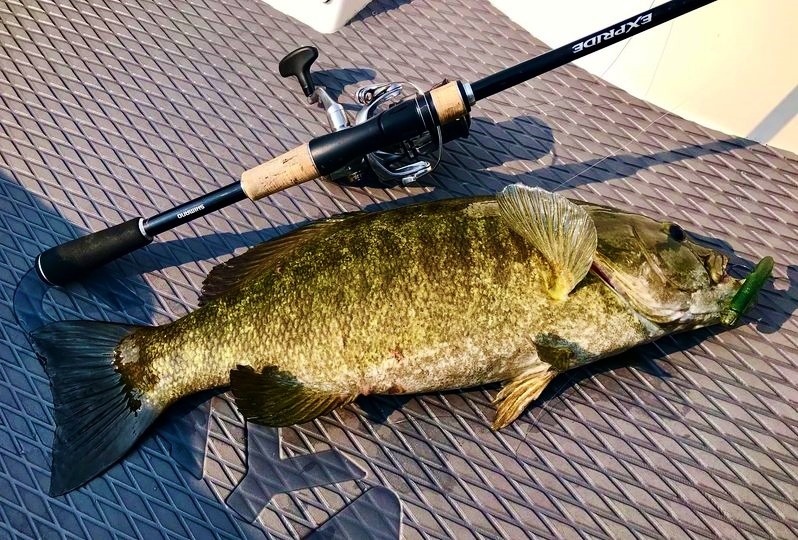
Switching to a 3/8-ounce Buckeye Lures jig tipped with a Yamamoto Scope Shad, I targeted cruising smallmouth throughout the water column. When one refused the minnow, I followed up with either a Shimano World Minnow jerkbait or a Shad Shape Worm rigged on a drop shot. I caught plenty of fish, too, but couldn’t seem to dial in the bigger bite.
On day 2, I returned to the same launch site and motored south to Walpole Island — a massive shallow flat located on the lake’s eastern side. Starting adjacent to the shipping channel. I scoured the shallows with the Hildebrandt swimbait. When the sun got high enough, I then targeted shallow cruisers with a barbless Ned Senko or marabou jig.
It was fun, as I connected with numerous quality fish … shaking them off, one by one.
By afternoon, I decided to move offshore and try some deeper spots along the shipping channel. Again, I found fish, but not the size to come back to.
On day 3, I decided to spend the entire day fishing offshore.
Using the Scope Shad and Shad Shape Worm, I targeted rogue smallmouth with my Panoptix Live Scope … knowing, full well, that was how the tournament would be won.
When the day wound down, I trailered the boat, refueled and headed for the cabin to prepare my equipment.
Tournament Time
The next morning, the temperature had dropped into the low 60s. The air was crisp with a light breeze from the south.
Having a late draw in the take-off order, I watched as each competitor boat filed through checkout and into open water. Eventually my name was called and I followed suit.
My plan was to start the day shallow, then work my way deeper if needed.
My first stop was to a flat on the delta, near the mouth of the St. Clair River. And in minutes, I was catching fish. But just as it was during practice, all were three pounds or less.
Finally, two hours into the day, I scored my first 4-pounder. A little later, I caught another — both falling for the Ned Senko.
Having maxed out the area, I decided to move to the flat at Walpole Island. But when I arrived, I found John Cox sitting on the juice. Unsure of what to do next, I decided to fish a hundred yards downstream from him … hoping he would eventually leave.
Thirty minutes later, he pulled his trolling motor and moved on. Seeing the opportunity, I jumped to the driver’s seat and fired the big engine. But before I could get on plane, Jeff “Gussy” Gustafson showed up and took John’s place directly on the sweet spot.
Seeing that, I returned to the bow and watched as he caught and culled several fish.
Over the next hour, I added a couple of 3-pounders to the livewell. Eventually, Gussy moved toward me. When he got within range, he asked how I was doing. I reported an approximate weight of 16 pounds. He said he had about 18.
As he moved past me, I accelerated my trolling speed to reach the best area … what I considered the sweet spot. And by the time the clock ran out, I had upgraded to 18 pounds.
Back at weigh-in, I learned I was 1½-pounds off the pace. To make the weekend cut, I had to do better.
Another Chance
On day 2, the flights flipped and I had a much earlier draw.
Because I had fallen behind by fishing shallow, I decided to commit to the deeper bite offshore. When my number was called, I exited take-off and headed to a series of waypoints saved during practice.
Upon arrival at the first set of numbers, I noticed the wind was blowing from an entirely different direction than during practice. To hit all my waypoints, I would have to run the trolling motor. And I did just that. But after a short time, I realized it wasn’t the most efficient way to cover the area. So I changed my tactics to incorporate a controlled rift. That’s when I started catching fish.
Throughout the morning, I threw to smallmouth after smallmouth, only to watch most of them run from my lures. It was so frustrating … as if they were trained to avoid any type of presentation. The only fish I managed to fool were in the 3-pound class.
The afternoon was no better. And by weigh-in time, I was stuck on 16 pounds … too far off the pace to make the weekend final.
Dejected, I trailered the boat and headed for the cabin. Wondering where I went wrong.