2025 Lake Tenkiller B.A.S.S. Elite
Posted by Bernie Schultz on Jun 24th 2025
Located in southeastern Oklahoma, Lake Tenkiller is considered a highland reservoir. It features steep, limestone bluffs as well as chunk rock banks that transition to pea gravel. When the water level is high, shoreline buck brush comes into play.
There are numerous large marinas located throughout the lake, as well as residential docks. Sunken brush, too, is abundant.
With all these targets, finding active fish usually isn’t a problem. But at 13,000 surface acres, the reservoir is quite small by comparison to other Elite Series venues. Nonetheless, it’s chock full of fish. Three species in fact — largemouth, smallmouth and spots. And having a reduced length limit to 12 inches for this event put all three in play.
Although productive, what makes Lake Tenkiller so challenging is its fluctuating water levels. During heavy rains, the pool can rise several feet within a day. It can also fall just as quickly. And that is precisely what we dealt with during this seventh stop on the Bassmaster Elite Series.
Practice Begins
On day 1 of practice, I launched at Cherokee Landing State Park, which is located at the upper end of the lake. Confronted with high water, muddy water, I decided to check a nearby feeder creek for better clarity.
Once there, I began catching fish within minutes. I started with a 3/8-ounce white Buckeye Swim Jig with matching Yama Craw trailer. As a complement, I rigged a Reed Runner hollow-body frog, Whopper Plopper, Hildebrandt SqueakEasy buzzbait and Shimano Macbeth flat-sided crankbait in a shad pattern. All but the Plopper produced.
From there I moved further upriver to other backwater areas. But like the river, they too were flooded and heavily stained. Seeing that, I decided to run back below the launch and finish the day by pitching to flooded bushes in random areas with good water quality.
On day 2, I launched at Sizemore Landing. From there I entered a nearby marina to fish the floating docks. As soon as I got set up, however, two other boats filed in behind me. One other was already ahead of me. Seeing that, I figured all the marinas would be equally pressured, so I wrote them off.
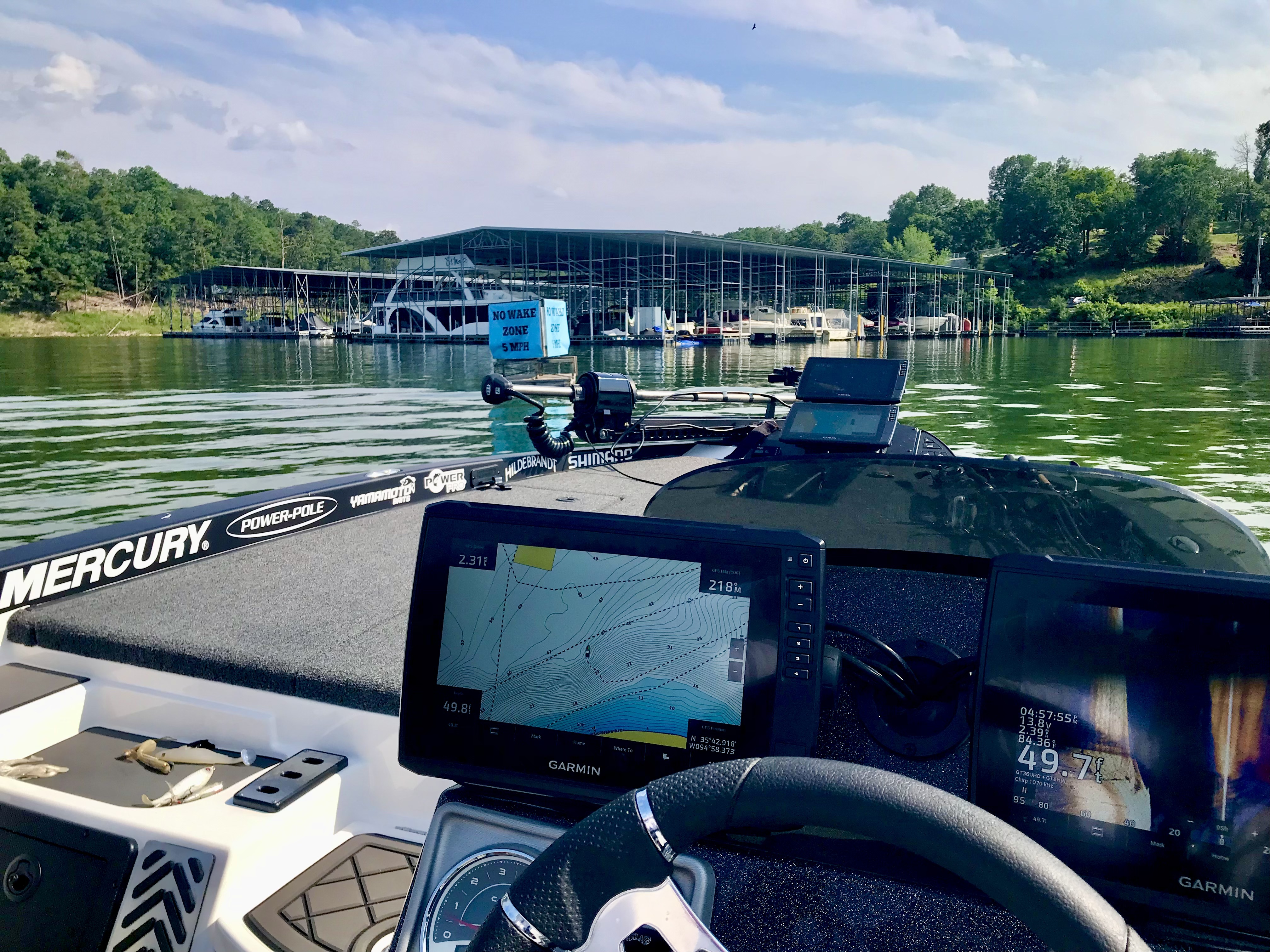
In retrospect, it was a huge mistake.
After leaving the marina, I hit a series of nearby pockets — all of which produced numerous bites by pitching to flooded bushes along the shoreline. Although I didn’t swing on any of the fish, several felt heavy.
My next stop was to a large flat down the lake, where I tried fishing deeper with live sonar. Although Garmin PanOptix enabled me to see countless fish, feeding them was another matter. Each time I made what I felt was a good presentation, the fish either ran or showed zero interest.
Discouraged with that, I returned to flipping bushes in other areas.
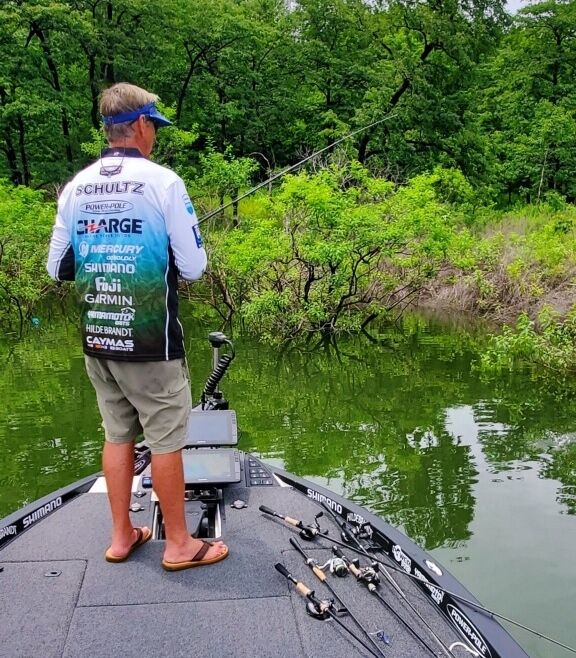
On day 3, I spent the morning swimming a jig shallow and then moved off the bank to scan for brushpiles. In several locations, I discovered active piles at depths ranging from 12 to 25 feet. Each appeared to be holding quality fish. After sticking a 3-pounder and shaking off others, I spent the remainder of the day scanning and marking deeper brush.
Throughout practice, the lake was falling as much as a foot per day. And with a day off before the actual competition, I wasn’t sure what to expect. Making matters worse, I noticed a steady increase in the number of anglers fishing shoreline bushes.
Concerned, but out of time, I trailered the boat to prepare for the competition ahead.
Tourney Time
Drawing out in the second flight, I wondered how many anglers would beat me to my starting spot. I figured I would be looking at leftovers. To my surprise, however, there was only one other boat when I arrived, and he was headed away from the best stretch.
Immediately, I dropped the trolling motor and picked up a swim jig, then went to work.
Within minutes, I had two bites. But both fish just swatted at the bait, neither getting the hook. Still confident, I decided to make a pass through the entire 100-yard stretch. My plan was to pick off any aggressive fish, then double back and pick it apart with a flipping bait. Unfortunately, by the time I reached the end and ran back to the starting point, Chris Johnston had moved in. Even worse, he was catching and culling quality fish in the best part of the stretch.
I tried slowing down and making the most of what was left. But it was like fishing behind a seine. Finally, I gave up and moved to another area.
Although it produced numerous bites, all of the fish were under two pounds. I spent the day culling mere ounces to reach a grand total of 9 pounds, 10 ounces.
One Last Try
The morning of day 2, I decided to start in a completely different area. Using a swim jig, I fan-casted the shallows, hoping to score a kicker fish feeding on the shad spawn. But by 8:30 a.m., all I had to show was a few small keepers.
From there, I started hitting brushpiles. The first two produced nothing, but the third gave up a solid 3-pounder and one weighing over two.
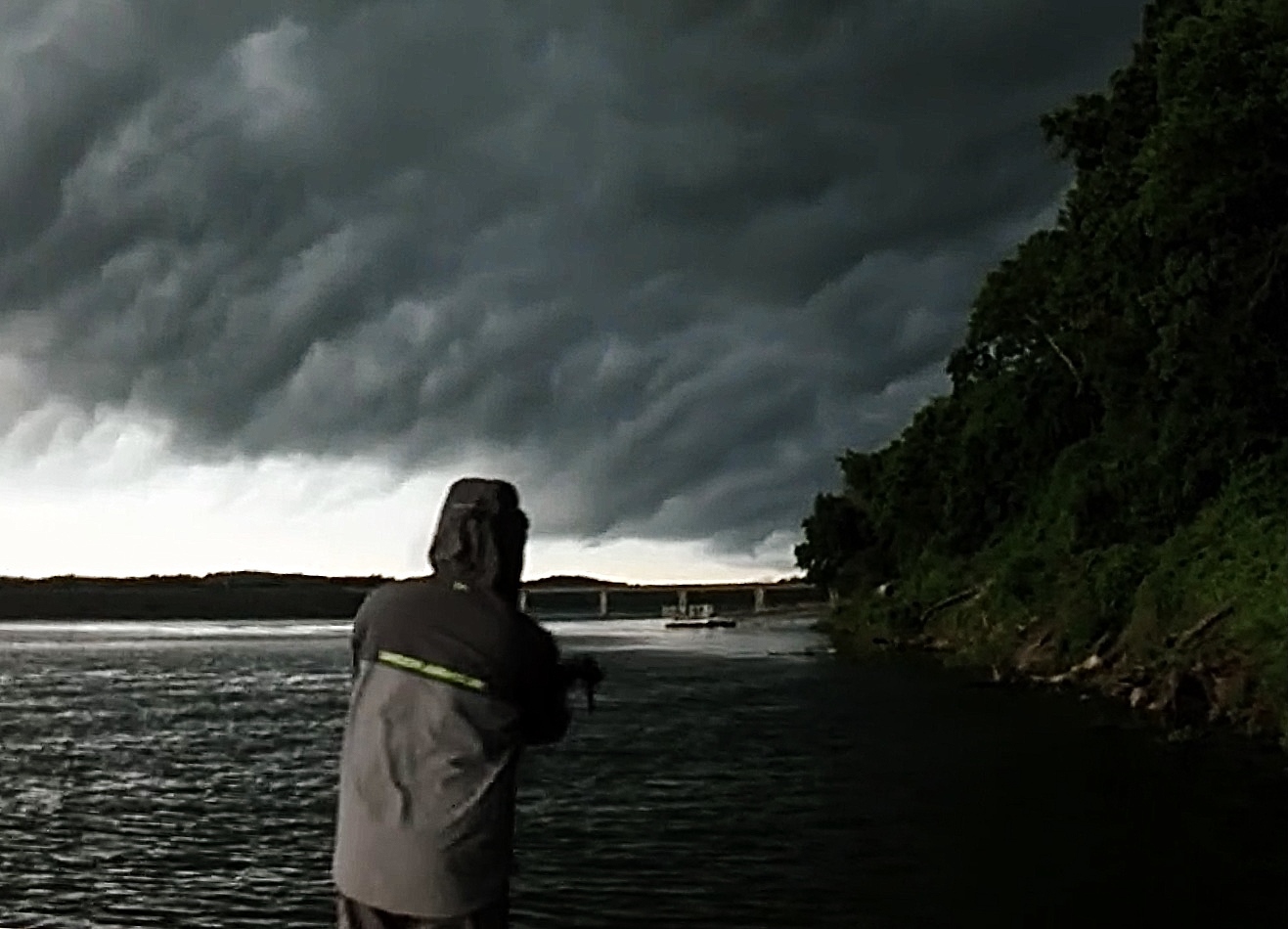
About the time I filled out a limit, a huge thunderhead moved in. With bolts of lightning crashing all around, I raced to the nearest marina for cover. Then came torrential rains. Nearly an hour later, the worst of the storm finally passed and I resumed fishing. That’s when things heated up.
Within minutes, I was connecting with fish. It seemed every bush held one ready to strike. And though I caught and culled countless times throughout the remainder of the day, my best five weighed just over 10 pounds. Yet again, I was left with another disappointing finish … wondering when the slump would end.