2025 Pasquotank River B.A.S.S. Elite
Posted by Bernie Schultz on Apr 17th 2025
New to the Elite Series is the Pasquotank River, a system that flows into the upper part of Albemarle Sound — a massive waterway located along the coast of North Carolina. The only thing separating it from the Atlantic Ocean is a broad stretch of sand dunes called the Outer Banks.
The sound is fed by multiple rivers, any of which could produce a winning stringer of largemouth bass. But because of its close proximity to the ocean, the entire basin is vulnerable to strong winds. And that makes it extremely difficult to move around.
Adding to the challenge is the fact that everything looks so fishy.
The rivers are lined with sawgrass, cypress and bay trees, and docks. But with so much good cover to choose from, sorting out the areas capable of producing a consistent bite can be overwhelming.
Practice Begins
On Day 1 of practice, I drove to the North River with roommates Tim Dube and Mark Menendez. Tim had scouted the area prior to cutoff and felt it was a good bet for all of us to find fish … and he was right.
Moving in different directions, we each caught bass using a number of lures — including buzzbaits, poppers, spinnerbaits, bladed jigs, shallow-running crankbaits, hollow-body frogs and various soft plastics. By noon, both Tim and Mark reported solid catches of 16 to 18 pounds. I was lagging behind with a much smaller creel, but I was getting plenty of bites.
From there, we tried expanding to more areas, but by afternoon the tide changed and the bite seemed to evaporate. At sunset, we ramped out and headed back to the cabin to meet up with our fourth roommate, Will Davis Jr.
Going into Day 2, our spirits were high.
I decided to fish close to the official take-off area on the Pasquotank. At my first stop, I connected with a solid 2½-pounder holding on an isolated bay tree. But that was it. So I moved farther upstream … unaware that I was leaving what would become the winning area.
Upriver, I entered a small creek. It looked perfect, and in one particular bend, I got three bites. One was 7 to 8 pounds. The other two I shook off. It was encouraging, but the longer I stayed, the more other competitors began showing up. Seeing the increase in traffic, I wrote it off completely.
The rest of the morning was spent working big cypress trees along the main river.
Around 1pm, I moved to a large feeder creek close to the sound. Stopping on a row of docks, I detailed each of them without a bite. Moving to an adjacent pocket, I caught two bass, both on a Frog Factory Reed Runner popping frog. One was five pounds.
On Day 3, I decided to go back to the North River with the hope of expanding on what I already knew. But as the day wound down, about all I found was a small creek with a blown out bridge. There, I coaxed a couple of 14-inch keepers with a Shimano Macbeth crankbait.
At 3 o’clock, I decided to pull out and return to the cabin to prepare my tackle for the competition ahead.
Tournament Time
Drawing out boat No. 98, I sat and watched as most of the field exited take-off … most headed south toward the mouth of the Pasquotank. Only a few ventured upstream to the north. When my number was called, I passed through checkout and began the long run to North River.
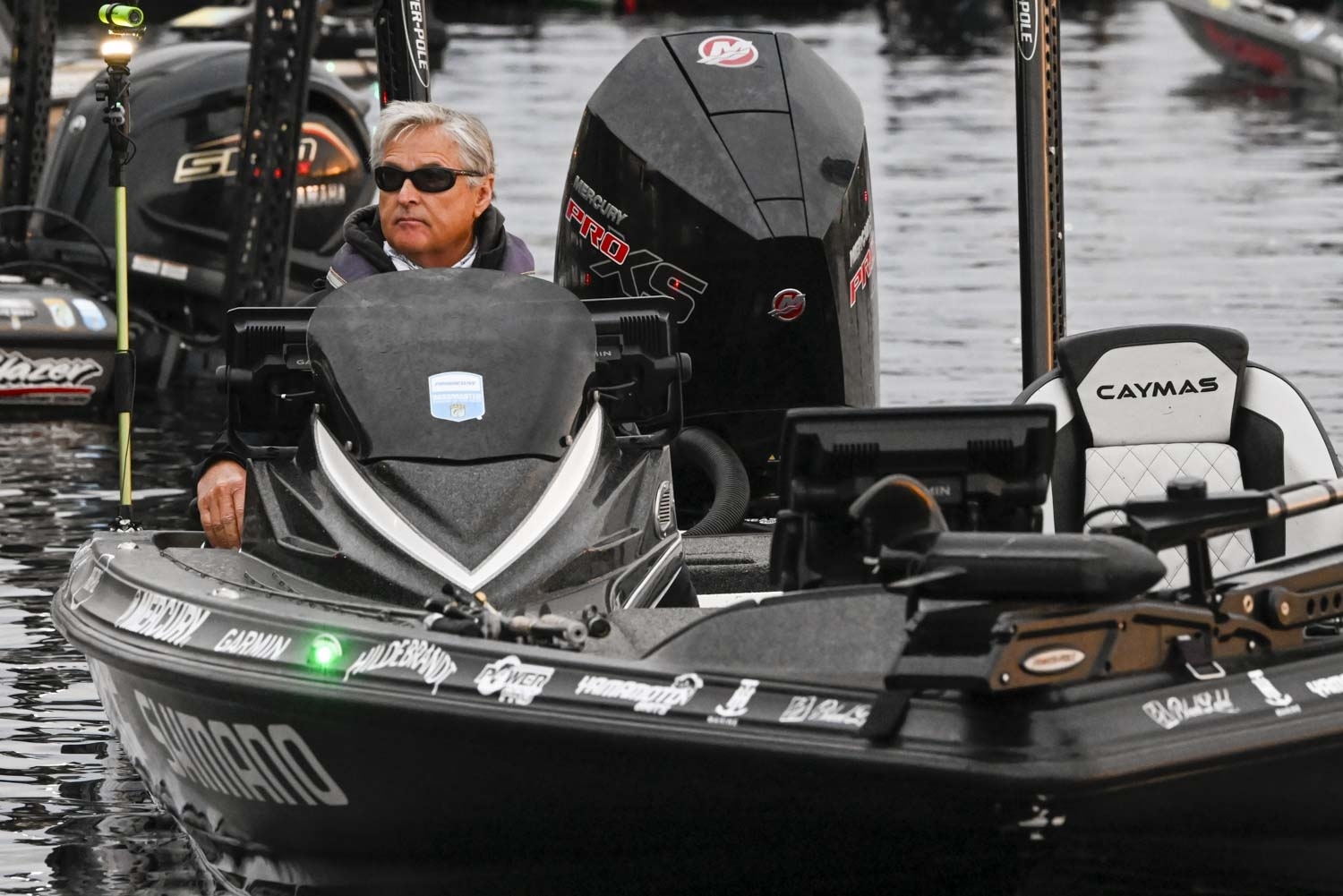
The ride started out bumpy and then became more challenging as I approached the sound. The waves were stacking up, wind against current. Eventually I rounded the point separating the two rivers and made my way into the creek that held the most numbers of fish in practice.
When I arrived, it looked perfect. Only one other boat was on the stretch I wanted to fish, and that was my roommate Tim. He was in the first flight with a half hour head start. I asked how he was doing and he said he hadn’t caught anything yet.
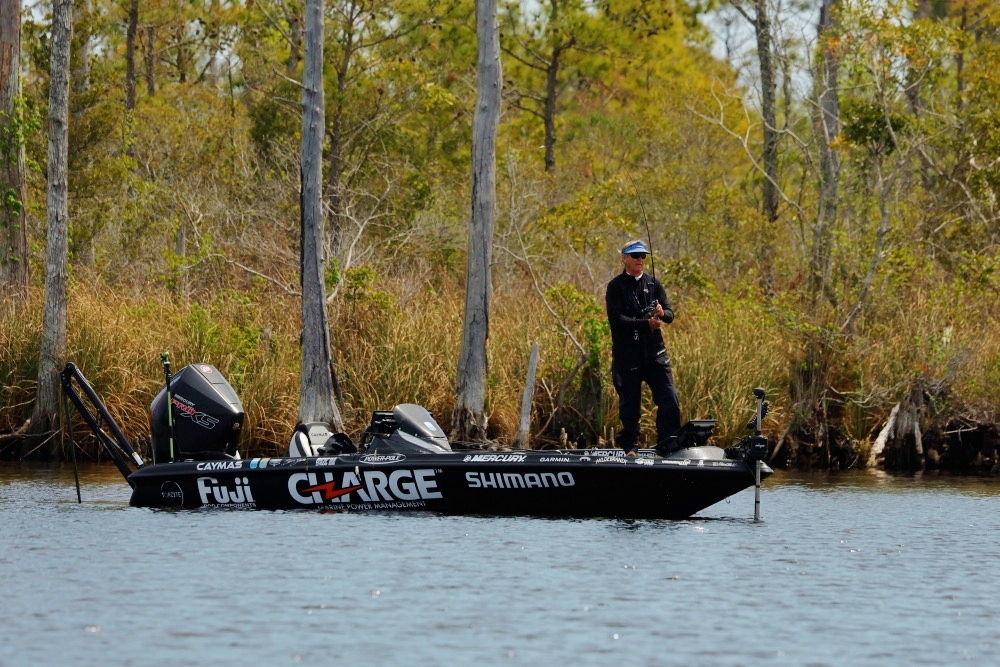
I worked in the opposite direction, hoping he had somehow missed something. But after three hours of rotating baits, all I caught were two small keepers and a 3-pounder. I tried making another pass, but the fish just wouldn’t fire.
I tried moving to the opposite shoreline, but that proved futile as well. All the while, the wind was gaining strength. Concerned about the long run back, I decided to abandon that area and move to the small tidal creek with the blown out bridge, where I caught my fourth and final keeper.
Back at the scales, I registered a mere 8½ pounds of bass. Surprisingly, the cut was right at 11 pounds. I knew if I could stage a strong comeback, I could easily make it to the weekend.
One Last Chance
The next morning the flights reversed and I was boat No. 5. The skies were gray and rain was in the forecast. Assessing that, I felt topwaters were in order.
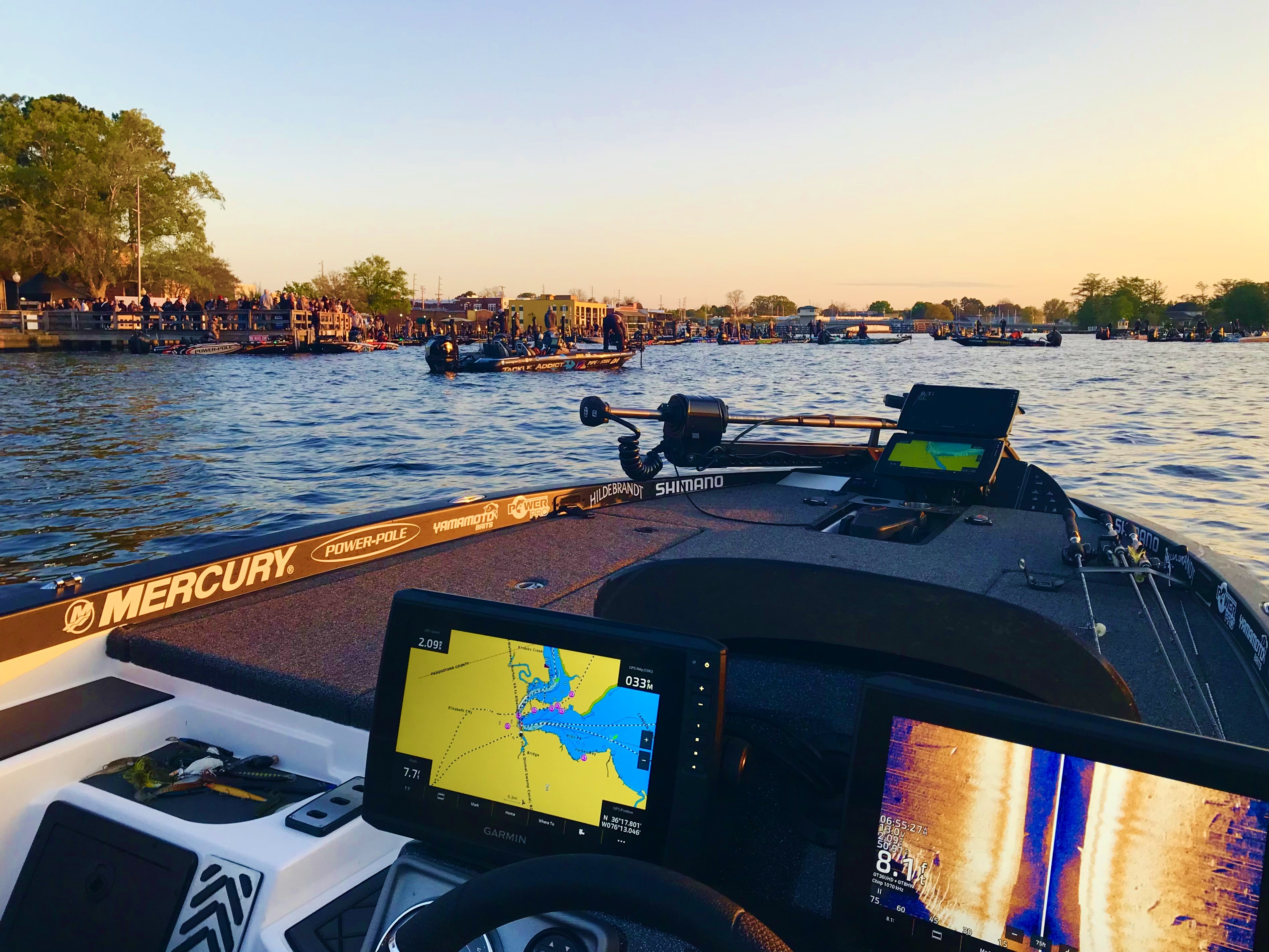
Tied to my rods were two different types of buzzerbaits — a SqueakEasy and HeadBanger, both of which I designed for Hildebrandt. Next to them were a Reed Runner Popping Frog and a Shimano World Pop.
When the tournament director called my number, I proceeded through checkout and headed straight to the area where I started on day 1. Forty-five minutes later, I set the boat down.
Starting with the squealer first, I cast to every promising piece of cover within range. But after thirty minutes without a sniff, I switched to the clacker. An hour later, it was apparent neither buzzbait was going to work. By then the rain had started and I still believed a topwater approach was the way to go. So I switched to the World Pop, then the Reed Runner frog. But they, too, failed to provoke a surface strike.
Rather than cycling through any more lures, I decided to switch areas.
An hour passed and I had nothing to show for the effort, so I reverted to the Macbeth crankbait and started catching fish. Unfortunately, all but one were short of the 14-inchlength requirement.
It was so frustrating. I caught fish after fish, but they just weren’t long enough.
Disgusted, I pulled the trolling motor and raced to the blown out bridge … hoping to coax a couple more keepers before abandoning North River altogether. Unfortunately, the bridge failed me as well.
Spun out, I began the long run back to the Pasquotank.
Thirty minutes later, I entered the creek where I caught the 5-pound frog fish in practice. Immediately, I noticed the water level was much higher. At first, I thought that would be a good thing. But after thirty minutes of working the best stretch, I realized it was not. I tried expanding the area, but that yielded nothing.
My next and last stop was to a creek close to take-off. It was beautiful. Both banks featured towering cypress trees. The water beneath them was a deep tannin color. It was picture perfect, and I felt it might deliver a miracle. But as the minutes ticked away, it was apparent nothing was going to change the outcome.
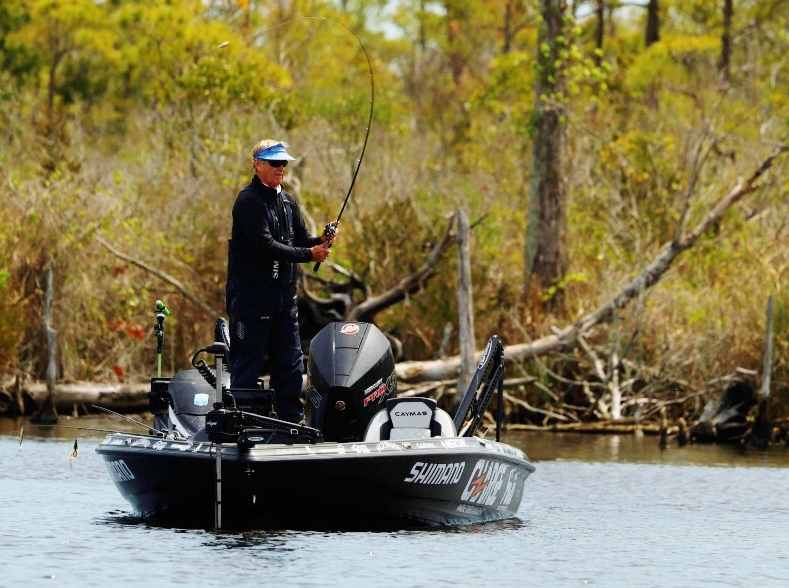
It was one of my worst days in competition, and I was beat — physically and mentally. Even worse, the leader was fishing an area I passed through during practice — a section of river I had written off. It was so disheartening. I somehow managed to miss out on the best area in the entire sound.
Next is Lake Hartwell — an event I’ve been looking forward to since the schedule was announced. Stay tuned…