2025 Sabine River B.A.S.S. Elite
Posted by Bernie Schultz on Jun 10th 2025
The Sabine River is a tricky place to fish. The playing field might be big, but it’s more suited to saltwater species like redfish, trout and flounder. Bass do live there, but in the summer, their numbers are limited … as is their size.
For a fish to count in competition, it must measure a minimum of 12 inches. And therein lies the problem; trying to fill out a limit of keeper-size fish within an 8-hour time constraint.
Don’t get me wrong. You’ll get plenty of bites. But most of them will be 10 to 11-inch non-keepers. Adding to the challenge is the river’s tidal influence and the many miles of non-productive water. When you do find the sweet spots, it’s almost a guarantee others will as well.
Practice Begins
On day 1, I drove to Taylor Bayou and launched at the Highway 73 Bridge. From there I ventured downstream to test some main channel banks.
I started with a Yamamoto Fat Baby Craw, Texas rigged with a 5/16-ounce tungsten weight on 17-pound Mastiff fluorocarbon line. As a complement, I tied on a 3/8-ounce Buckeye Lures swim jig with Yama Craw trailer (both white) and a 3/8-ounce Hildebrandt Tin Roller spinnerbait with tandem willow-leaf blades.
Alternating these three lure choices, I eventually worked my way back up Taylor Bayou, catching small keeper and non-keeper size bass.
Sometime in the afternoon, I moved into the Hildebrandt arm, where I connected with a number of fish relating to wood and undercut banks. By then I had added a Shimano Macbeth Flat crankbait, Chatterbait with Zako trailer and Reed Runner hollow-body frog.
By day’s end, I found two key stretches with good potential. Unfortunately, others were fishing the same water. Although discouraging, it’s just part of fishing the Sabine River.
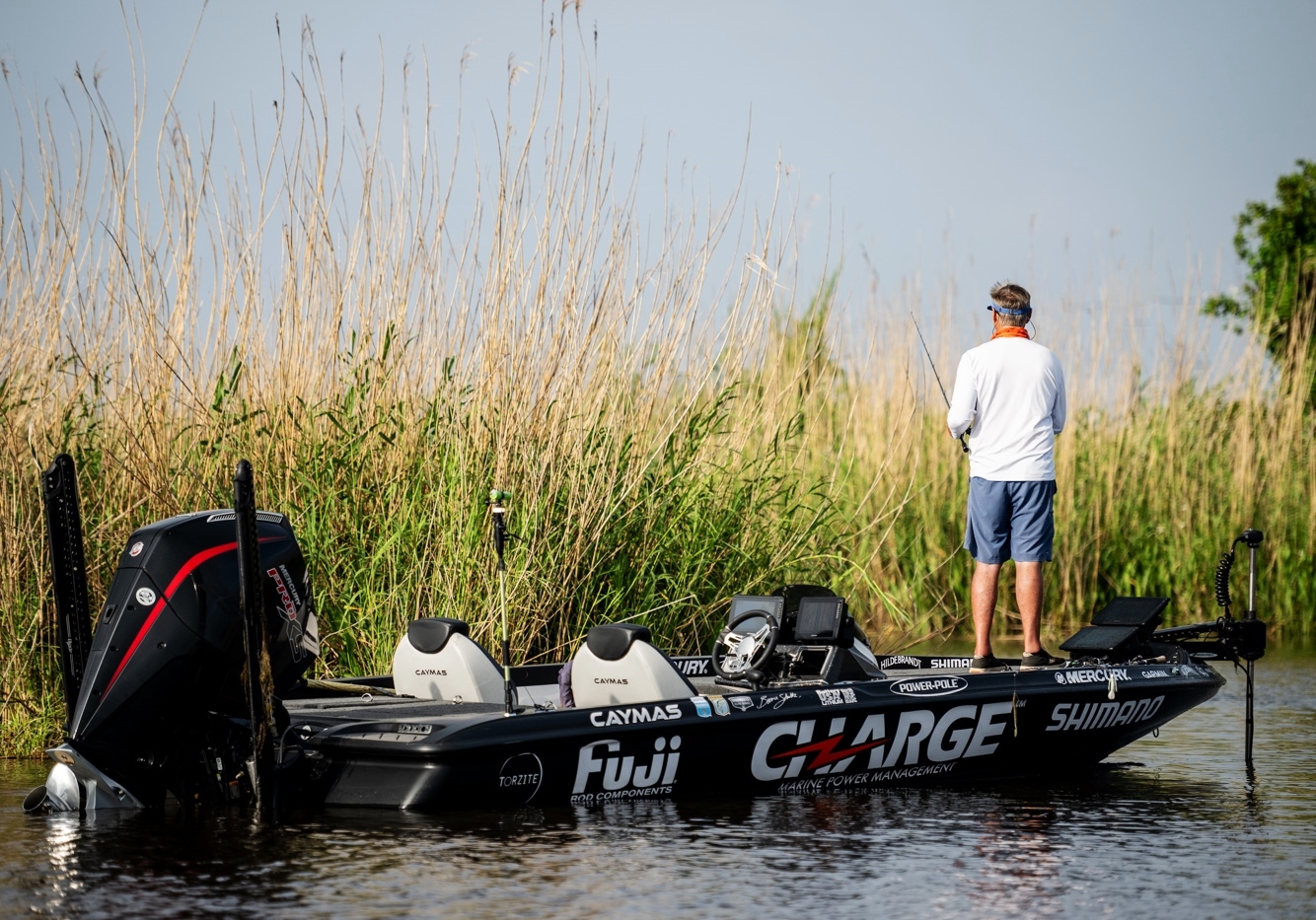
On day 2, I launched at our official take-off site in the City of Orange. From there, I ventured upstream to several backwater areas that produced for me in the past.
Quickly, I noticed the river was high and out of its banks, and heavily stained. It was not the place to be.
Leaving there, I ran to Adams Bayou where I found a tidal ditch full of non-keeper bass. Abandoning that, I moved to another nearby ditch, and that is when I found my starting spot.
It had everything — good depth with various forms of healthy vegetation. There were rafts of hyacinths, dollar pads and stretches of eelgrass ... even milfoil. The only thing the area lacked was size. There was only room for one.
I tried expanding to other nearby ditches and canals, but that was the only place that provided a consistent bite. So, from there I ran to Cow Bayou to continue the search. That’s when I found my backup area — a canal loaded with baitfish. After just a few quick bites, I left and headed back to Orange.
On day 3, I ran to the Neches River, to an area I’ve had success in in the past. But on arrival, I could see the river was flooded out of its banks. Abandoning that, I ran back downstream to a long tidal ditch leading into a backwater pond. Although it looked good, I never got a bite.
The rest of the day was spent in a variety of backwaters, none of which showed any promise.
Tourney Time
The first morning of competition, I sat patiently until my number was called. When my turn came, I exited the take-off area and headed straight to Adams Bayou — to the small backwater slough with all the vegetation.
As I rounded the corner, I saw Hank Cherry in the distance, working in my direction. With him was a camera boat. I went to work immediately, trying to hit the key spots before they got close. When they got within range, we exchanged greetings and Hank continued down the bank.
While he was still in range, I boated two non-keepers. Seeing that, the camera boat decided to lag behind. Minutes later, I boated two keepers, then a third. After documenting those catches, the camera boat left to catch up with Hank.
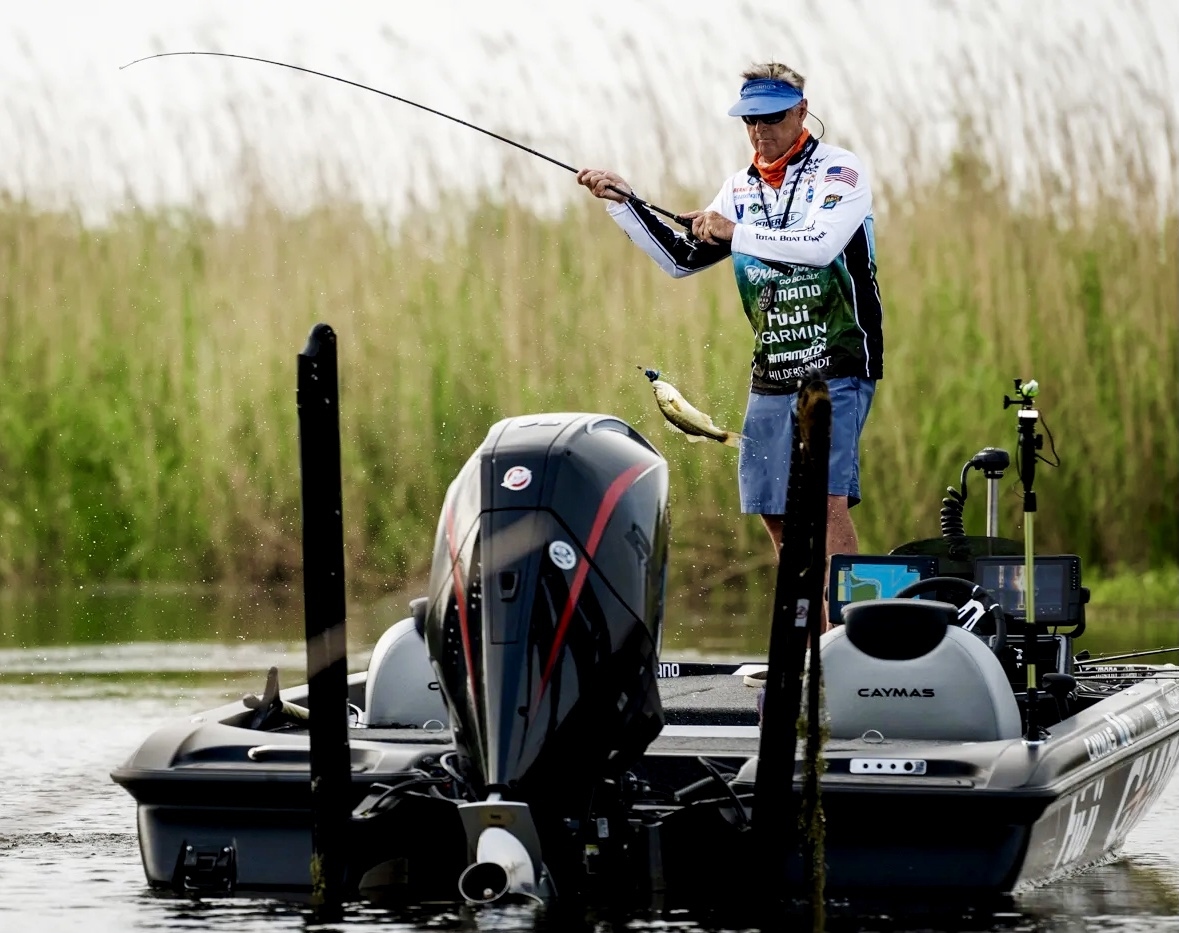
Sometime around noon, I filled out a limit and left for Cow Bayou. I wanted to save something for the next day, and Cow had the potential for better size fish.
While on the run there, I wondered who might already be in the section I wanted. Once I got within range, I could see another boat. It was Joey Cifuentes. Fortunately, he wasn’t on the key stretch. And by the time I dropped the trolling motor, he had already decided to leave.
Over the next few hours, I culled out some of my smaller fish, then headed to weigh-in with a solid 9-pound stringer of Sabine River bass.
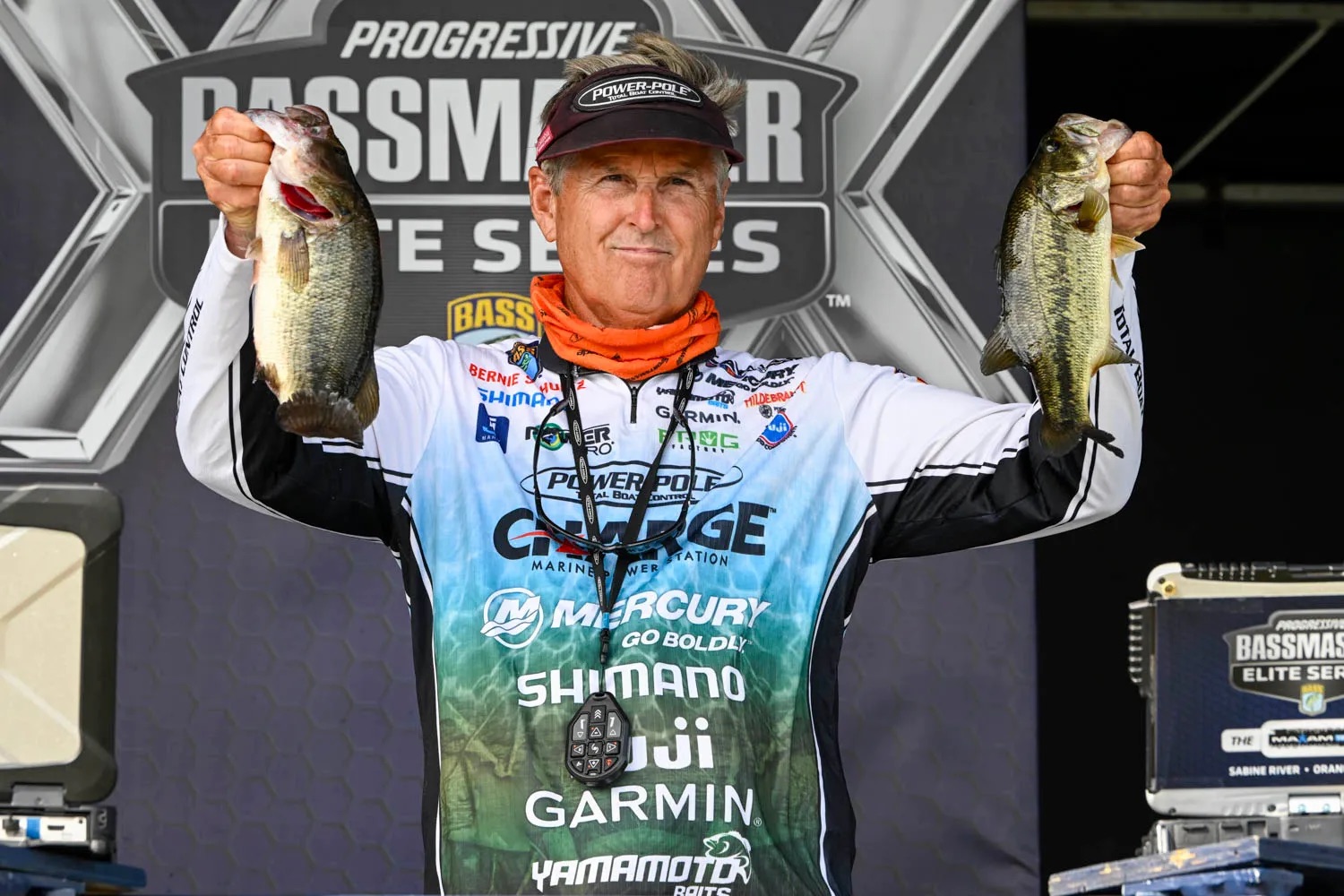
Tourney Day 2
Sitting in 14th place, my focus was on moving up the leader board. And with an earlier take-off number, I knew I could get to Adams Bayou first. When my number was called, I raced straight there to start where I left off the day before.
Soon after deploying the trolling motor, two other competitors showed up. One was Hank, the other Gussy Gustafson. Fortunately, neither crowded in. But even with the space I needed, all I caught over the next few hours were non-keepers.
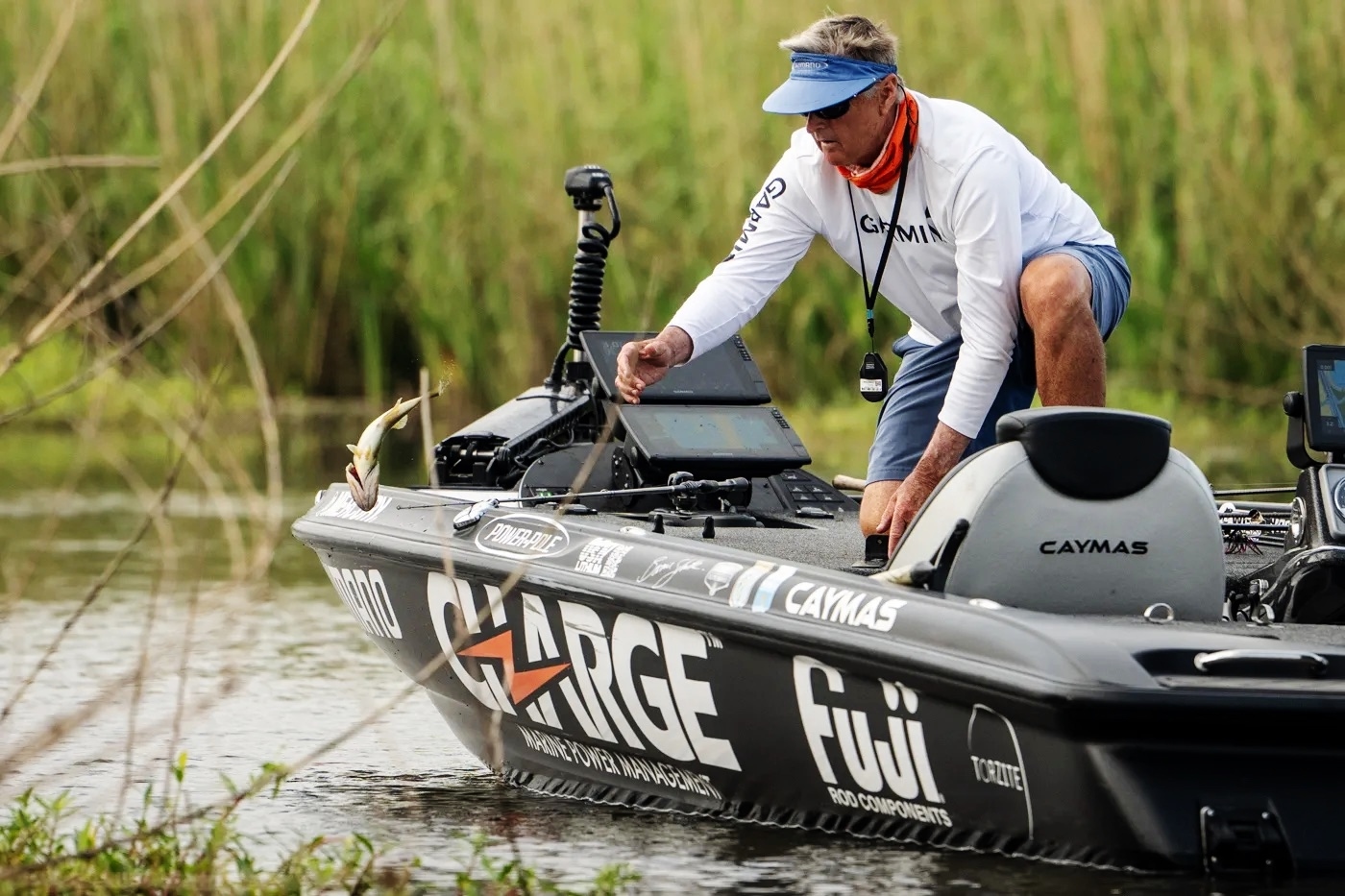
Finally, around 10:30 a.m., I boated my first scorable bass — a 1-pound rail. An hour later, I gave up and left for Cow Bayou, hoping to make up some ground. But once there, the same issue plagued me — non-keeper after non-keeper. Just as it was in Adams Bayou, I was getting plenty of bites. Just not the size required.
Sometime in the early afternoon, I boated a bare keeper. But that was it. In desperation, I ran back to my starting spot in Adams, only to find two other anglers occupying the best area. Seeing that, I ran further upstream to a row of cypress trees. Again, I caught non-keeper fish. And before I knew it, time had run out.
Back at weigh-in, my two fish combined for a whopping 1 pound, 13 ounces. Posting a two-day total of 10 pounds, 11 ounces, I fell short of the cut. Once again, the Sabine River snatched a good finish from my grasp.
Follow Bernie Schultz on Facebook and Instagram, or through his website.