2026 Bassmaster Open — Kissimmee Chain of Lakes
Posted by Bernie Schultz on Feb 17th 2026
When Florida’s Kissimmee Chain was announced as site of the first Bassmaster Open for 2026, my mind began to race. I have so many great memories of fishing there. It’s where I won my first statewide draw tournament, back in the 1980s, and there’s no telling how many checks I’ve made there since. It’s also where I weighed one of several 10-pounders caught in national competition.
I love how these lakes lay out, and how they fish. They fit perfectly in my wheelhouse.
The chain consists of five major lakes — Toho, Cypress, Hatchineha, Kissimmee and Tiger — all connected by natural or manmade waterways. And all hold the potential of producing a winning stringer of bass.
Ahead of the 30-day off limits, I decided to spend some time on lakes Cypress, Hatchineha and Kissimmee. My plan was to eliminate as much water below the lock as possible, then focus the official practice days on Lake Toho — the northern most lake and site of our official launch.
After touring each of the lower lakes, the only one that gave me any confidence was Kissimmee. There, I found bass staging in the shallows on one particular stretch of mixed eelgrass and dollar pads. Although I got a number of bites, it was a long way from the north end of Toho, and it required passing through the lock … something I was hoping to avoid.
Official Practice Begins
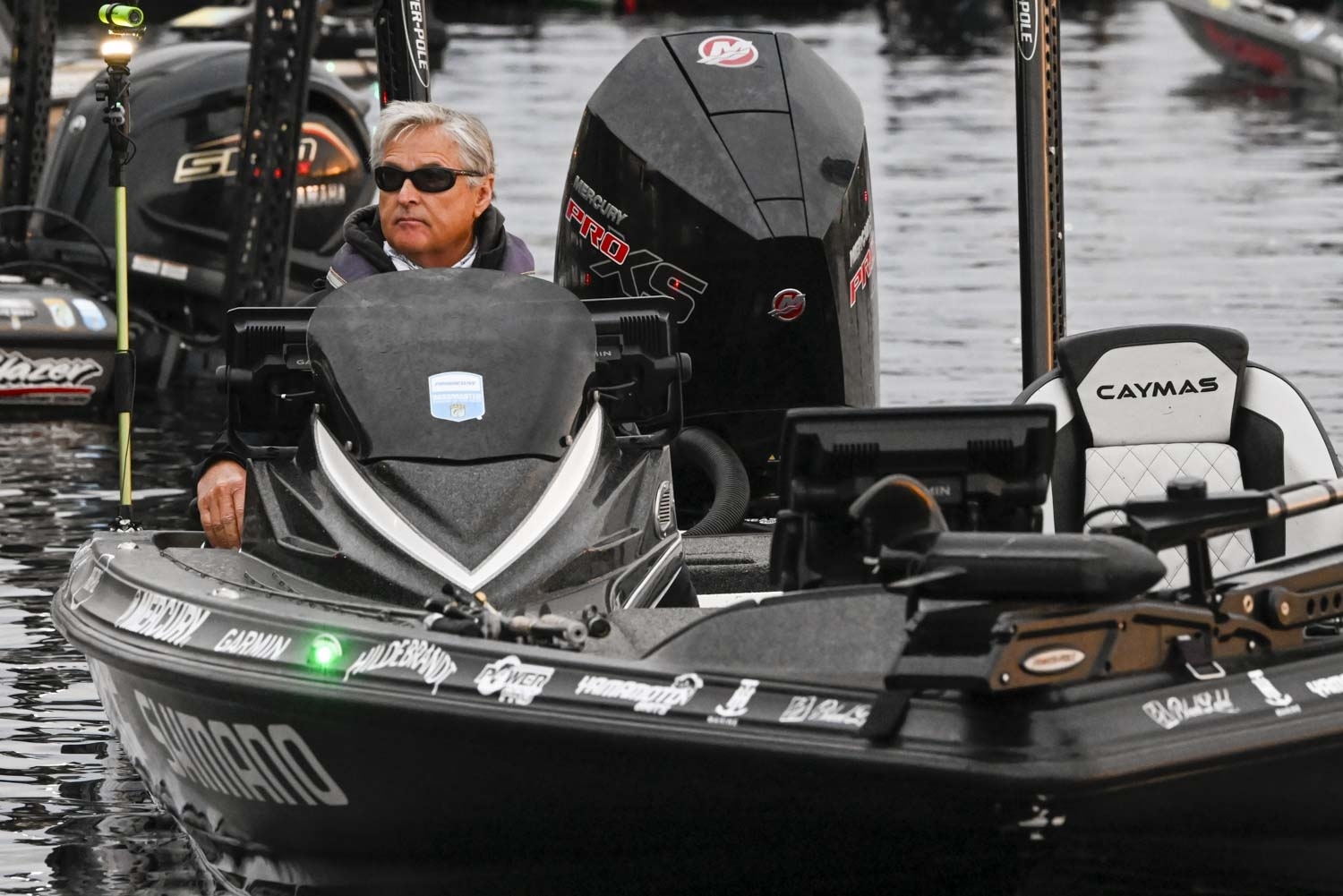
When the tournament date arrived, I decided to spend the first morning of practice at the northern end of Lake Toho. Launching at Big Toho Marine — our official take-off site — I began fishing within 200 yards of the ramp.
The morning was calm, but chilly. Despite a passing cold front, the water temperatures remained above sixty and I expected the fish to be somewhat active.
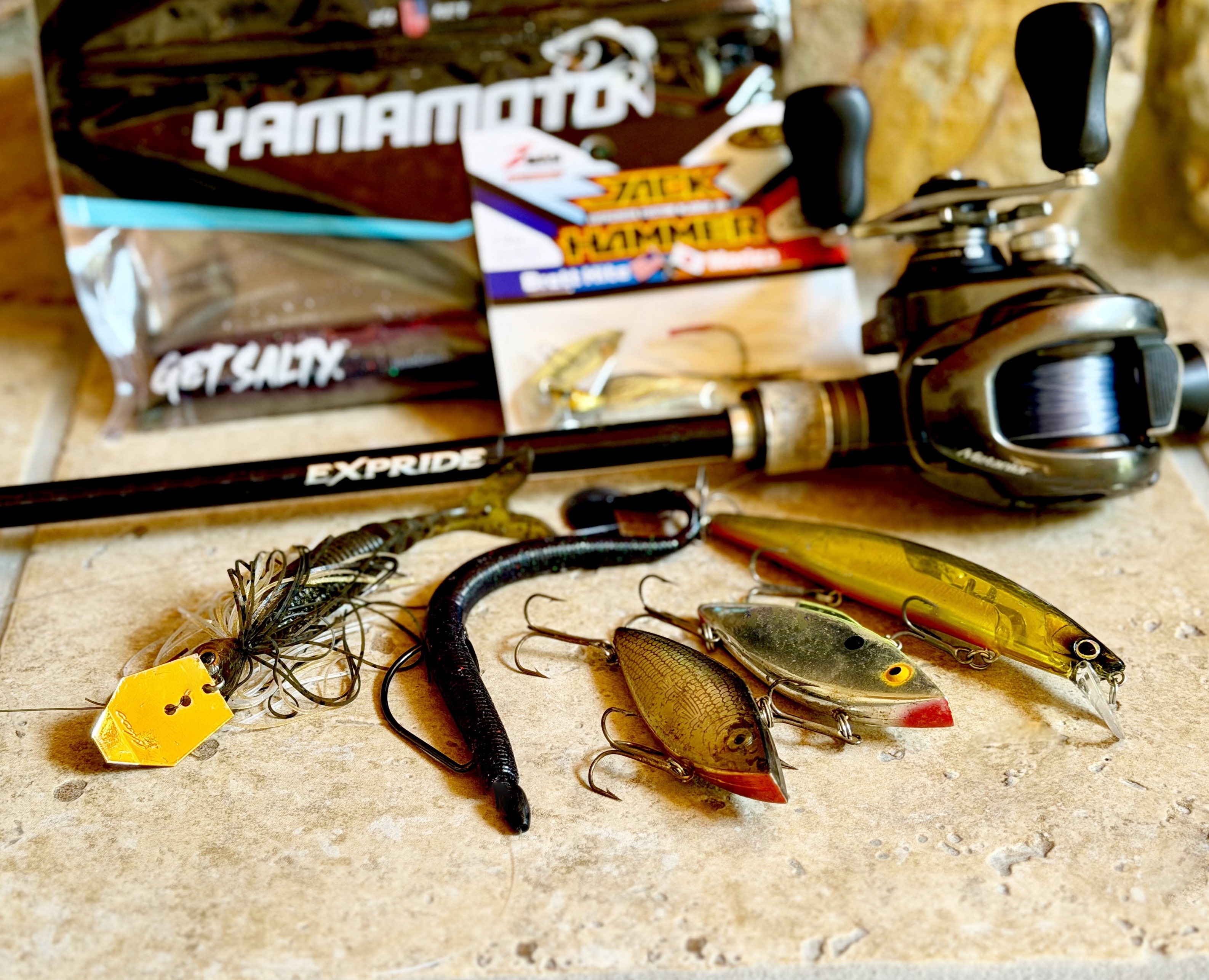
An hour into the day, I noticed birds diving on a distant point of emergent vegetation. Quickly, I pulled the trolling motor and raced to their location and, in just a few casts with a ½-ounce Bill Lewis Rat-L-Trap, I connected with a couple of solid keepers.
Filing that away, I spent the next few hours traversing the entire flat, hoping to find more schooling activity. Unfortunately, I never did.
Next, I ran south toward the lock, to a massive field of submerged hydrilla. Concentrating on the deepest edge, I started with the lipless, then tried a number of
other lures. Among them were a Shimano World Minnow jerkbait and Z-man Chatterbait with Yamamoto Zako trailer — both in natural gold coloration.
By this time, the wind was beginning to blow and I felt the bite might improve. But that wasn’t the case. In fact, it got much tougher.
Sometime around noon, I found an area of mixed peppergrass and dense hydrilla. There, I caught several fish on the bladed jig. As a complement, I reeled a lightly weighted Speed Senko through the sparser areas. Both baits produced and my confidence was beginning to improve.
On day-2, I launched again at Big Toho Marina to scout the north end for schooling bass. This time, my roommate Cliff Prince joined me to broaden the search. But, for whatever reason, the fish didn’t school for either of us. And no seagulls or terns were in sight. Seeing that, we decided to run south to the lower end of the lake.
That’s when things started to happen.
Cliff stopped 200 yards out from the edge of the Kissimmee grass, in a field of submerged hydrilla. I targeted an inshore section where the two grassbeds met. Focusing on the void between them, I quickly connected with a number of decent fish — most reacting to the Speed Senko and World Minnow. It was a lengthy stretch with numerous sweet spots. Even better, I never saw another angler fishing there.
The rest of the day was spent fishing inside the Kissimmee grass, mostly along well-defined kicker trails offering a mix of scattered reeds and lily pads.
On the final day of practice, Cliff and I opted to trailer down to Kissimmee. I wanted to revisit the stretch that produced so many bites a month earlier. When I reached my first waypoint, I noticed the water clarity had changed. Apparently the result of the passing cold front, it had turned to a dingy brown color. Even worse, many of the dollar pads were gone. Still, I scoured the area anyway
Working my way south along the shoreline, I noticed the water clarity gradually improving. Rounding a soft point of emergent vegetation, I got my first bite — a 2-pound male. A few casts later, I connected with a 6-pound female. She engulfed the Speed Senko, after running it down from 10 feet away.
A few minutes later, I scored one about three pounds. At that point, I decided to pull the trolling motor and scout for other similar areas. But by day’s end, that one short stretch of eelgrass was all that produced.
Competition Time
The first morning of competition, I launched at Big Toho Marina and assumed my position in the take-off order. Approximately 30 minutes later, my number was called and I entered the checkout line. Once clear, I raced to where the bass schooled on day-1 of practice.
Combing the area thoroughly with the Rat-L-Trap, I managed only one small keeper. While contemplating my next move, I noticed a flock of gulls resting on the water 200 yards away. I reasoned they must be near some baitfish, so I pulled the trolling motor and ran to their location. Minutes later, I connected with a 5½-pounder. With that one in the box, I fired a cast to the same location and scored one weighing three pounds.
The next hour was spent fishing the entire area, hoping to fill out my limit. However, I never got another bite. Seeing the morning slipping away, I decided to run south to the hardline of Kissimmee grass and try there.
Upon arrival, I noticed a boat on one of my key spots. Running past him, I settled into an area approximately 200 yards away. As soon as I dropped the trolling motor, that angler left. At that point, I had the entire stretch to myself. Outside of me, about 200 yards away, was Cliff and two other boats. I didn’t give them much thought, however. Instead, I went to work on what was in front of me.
Alternating between the Speed Senko and World Minnow throughout the day, I culled to a 12-pound stringer, which placed me just inside the cut. Cliff, on the other hand, hit pay dirt — weighing a 26-pound limit and taking over second place.
At dinner, we talked about our day. He suggested I fish offshore near him, but I felt I could survive repeating my own game plan … and I didn’t want to mess up his chances of winning the event.
One Last Shot
The next morning I took my turn through boat check, then ran to where I caught the 5-pounder on day 1. Unfortunately, after two hours of seining the area, all I managed was one 13-inch keeper. I never located the schools of bait and the birds were nowhere in sight.
My next move was to the south.
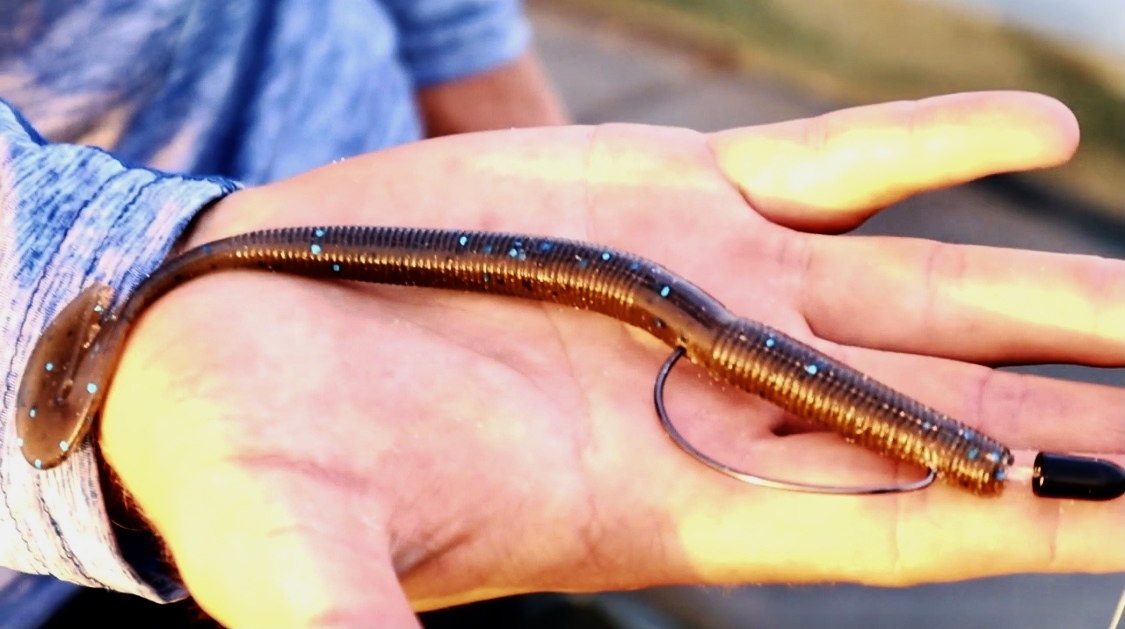
Before starting on the same stretch of Kissimmee grass, however, I opted for an offshore boat trail through a field of thick peppergrass. Fishing a lightly weighted Speed Senko, I slowly dragged the bait through open holes in the grass.
Within range, I noticed boat after boat beginning to move in on Cliff. It was hard to watch. The day before, he and two other competitors had the entire area to themselves. Now there were twenty other boats battling for the same water … as if his 26-pound, day-1 stringer was an invitation to join in.
I felt his pain.
Around 10 o’clock, I had only three keepers in the livewell. Discouraged with the peppergrass pattern, I decided to move back to the edge of the Kissimmee grass. Within minutes, I caught a solid 2½ pounder on the Speed Senko. Shortly after, I scored another slightly smaller.
Moving along the edge of the hardline, I recalled a 4-pound fish that followed my bait on day 1. Reaching its location, I made several lengthy casts hoping for a quick connection. And just as I was about to give up, I made one last toss past a clump of reeds and a fish exploded on the worm. It was the 4-pounder!
With that one in the box, I knew I had a chance at making the cut. Slowly but surely, I culled to another decent stringer of fish.
Back at the scales, they weighed 11 pounds, 15 ounces. Watching as each angler crossed the stage, I waited anxiously for the outcome. It was close … real close. In fact, it came down to the very last man to weigh in.
To my surprise, I survived to collect the last check by a mere ounce. My hope was to make the top-10, but last place in the money was better than nothing. And I knew 150 other anglers would have gladly taken my place.
Now it’s on to the next one — Lake Eufaula in Alabama.
Stay tuned!
Follow Bernie Schultz on Instagram, Facebook or through his website.