Rods & Rigs - Dialing In My Spotted Bass Faves
Posted by Gary Dobyns on Nov 4th 2019
By Gary Dobyns
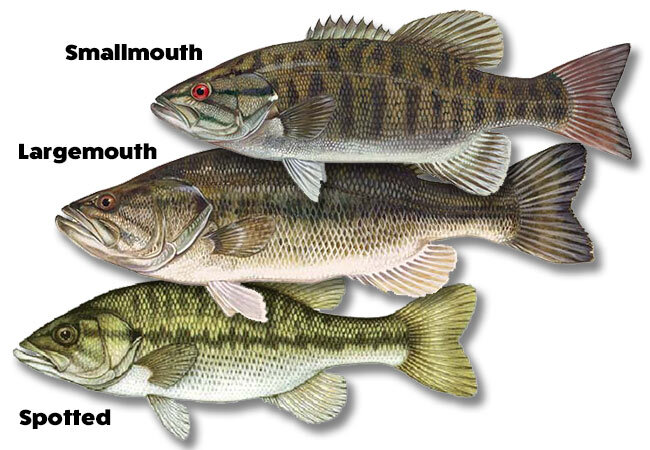
Of all the black bass species we target, I love chasing spotted bass the most. I mean these fish are so much fun, I just can’t get enough. I think that’s because they are so aggressive. Also, they’re a schooling fish, so when you find one, you almost always find a bunch of them.
The Western waters where I’ve spent most of my life have plenty of spotted bass in many different scenarios. I’ve fished for many of them, but I have a few particular scenarios that I enjoy.
Long Flat Points
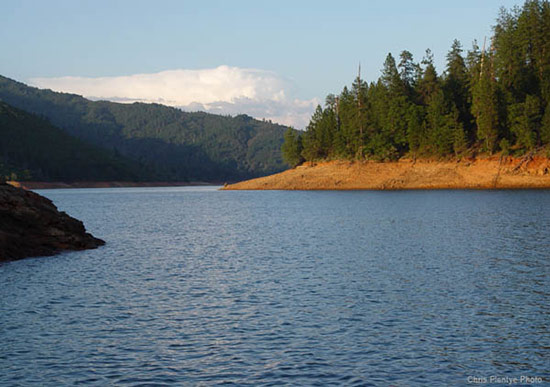
On lakes like Shasta, for example, spotted bass will often move onto those points to feed because they can push the bait up shallow and have an easier time catching them. While they’re on the points in maybe 10 feet of water, you can catch them several ways from spinnerbaits to Yamamoto Zako swimbaits.
But here’s an important point: Once the spots move off the shallow upper end, that doesn’t necessarily mean the game is over. In my experience, those fish usually don’t leave the area; they just slip into deep water and suspend. That means they’re still catchable. Largemouth and smallmouth are tough to catch, but spots are much more cooperative.
When those spotted bass move off the points, one of my favorite ways to fish for them is with a topwater and my favorite bait for that is a Super Spook. There’s something about that side-to-side walking motion that will call those fish up from considerable distances to nail that bait.
I like to fish my topwaters on a Dobyns Champion 734 baitcasting rod with 40-pound braid and a short fluorocarbon leader that keeps the bait’s from hook from tangling with the limp main line. I can throw that bait a country mile on braided line and all I do is tighten up on them to get a good hook set.
Spotted bass are notorious for missing a topwater bait, but if you just keep working it, they’ll come back. Plus, they’re a schooling fish, so there’s hardly ever just one of them. So, if one of them misses the bait, he’ll come back for it, or his buddy will.
A lot of times, I’ll line up my boat with that point, but I’ll stop a couple hundred yards out and I’ll fish my way in. In a deep canyon lake, my boat might literally be in 200 feet of water and I’m throwing a topwater because those fish are very catchable.
In this scenario, a lot of guys will count down a lipless bait or a Zako. Those fish might be sitting 10 feet below the surface, so you can count the bait down to them and then burn it through the school.
You can catch them a lot of different ways, but the key is when they move out off those long, flat points, they’re sitting out there and they’re completely catchable. When they move in shallow to feed, they’re more aggressive, but spotted bass will always eat.
I should also point out that a jerkbait is another great option for spotted bass because you can cover a lot of water. Whether they’re up shallow, or suspending off the point, I can use that jerkbait to figure out where they are and just keep catching them.
Saddles

When you have adjacent island tops, I’ve always called the deeper space between them a saddle. The bottom slopes down from one island top and comes back up to the other one. You find a lot of these on Central to Northern California lakes like Oroville, Don Pedro, Berryessa and Shasta and they are great areas for big spotted bass.
I’ve tried a lot of baits in this scenario and I will always have a nail-weighted 5-inch Senko on my deck. This bait works well in shallow water or deep water, so I can catch fish in 2 feet of water or 50 feet of water. The key is that it falls like a bullet and that triggers those reaction bites.
I’ll start by fishing the sides of the saddle first and then progress into the deeper water. They’ll be somewhere in there; I just have to figure out where that is. If I determine they’re in 10 feet, then that will be my first cast, but I won’t leave a saddle until I fished both sides and the middle of it. Even when you’ve got some fish up shallow, you may catch fish right out of the gut of it.
I like green pumpkin laminate and watermelon Senkos for fishing these saddles and I’ll rig the bait with a 3/32- to 1/8-ounce nail weight and a 1/0 Aaron Martens Gamakatsu Dropshot/Split shot hook. The important part about rigging the nail-weighted Senko is to always face the hook point up — away from the weighted end. This will ensure a solid hook set in the top of the fish’s mouth.
I like an O-ring because it gives the rig better action, while it preserves the bait. You might catch six or seven fish on one Senko, but if you run a hook through the middle of it, you’re going to get one bite and you’re done.
Even more important than bait preservation is that, with an O-ring, the hook is on the outside of the bait and that gives it much better action. That bait will stand up and that bait is just wagging its tail. The thing about a Senko is that it’s always fishing.
I fish my nail-weighted Senkos on a Dobyns Campion 733 Spinning rod with 8-pound fluorocarbon. I like spinning gear for this technique because I’m more efficient. I can pick up line quicker on a bite, so I reel out all the slack before I swing.
Shoreline Cover
By far, one of my favorite spotted bass scenarios occurs each spring when the fish follow rising water into flooded willows. This is so much fun — you can often catch 20 spots out of one tree and you might get a bonus largemouth, as well.
There are several ways you could approach this, but I’ve found that there’s no better bait than a wacky-rigged Senko. That bait wiggles all the way down and you rarely reach the bottom before getting bit.
Most of the time, I’m using a 733 spinning rod with 8-pound fluorocarbon, but in heavy cover, I’ll use a 742 baitcaster with 10-pound fluorocarbon. Baby bass is a great color for this technique. You toss the bait in there, you let that line curl up on the water and then you watch that line rip off when one gets it. This is so addictive!
Closing tip: However you catch spotted bass, do your best to not release them where you’re fishing because it seems like this shuts down the school. If you can, put them in your live well and motor away from where you’re fishing before letting them go. You’ll catch more spots this way.