Roland Martin — Summer Worm Specials
Posted by David A. Brown on Jul 27th 2020
By David A. Brown
You can’t discuss bass fishing royalty without quickly mentioning Florida legend Roland Martin; and Roland Martin can’t discuss summer fishing without quickly mentioning his fondness for Yamamoto worms. From primary baits to back-ups, learning from his soft plastic presentations will help you put more fish in the boat.
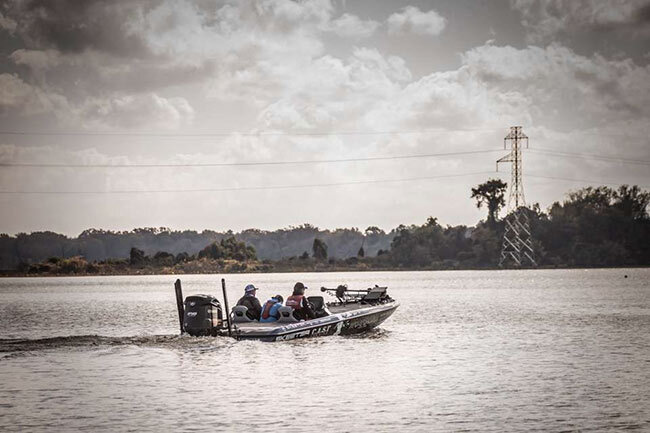
For starters, let’s look back a couple of years to the PanAm Bass Championship on Lake Okeechobee; an event that Roland Martin and his son Scott Martin won by slowly dragging lightly-weighted Senkos past reed heads. Power-Poling down, they’d make precise casts to the targets and work their baits back to the boat at a glacial pace — about 1 1/2 to 2 minutes per cast.
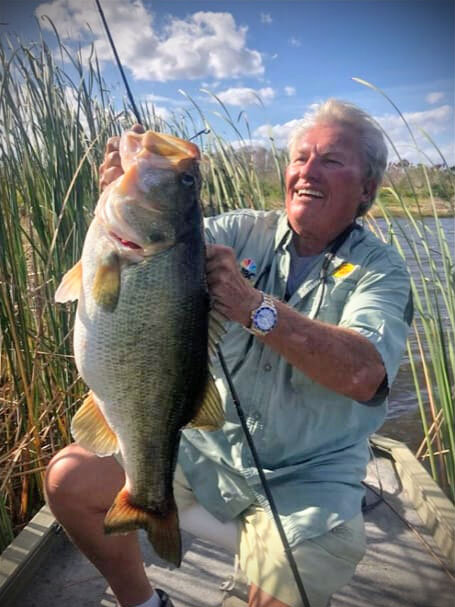
That February tournament was primarily a spawning deal, but remember that Florida bass can potentially spawn in just about any month of the year. Moreover, the techniques Martin and his son used are worth remembering anytime you’re facing a tough bite.
Here’s a look at Martin’s primary summer worm techniques.
Backup Plan: Noting that he throws a lot of topwater baits in the summertime, Martin said he always keeps an unweighted 5-inch Senko (297 green pumpkin) on deck, in case he needs to follow up a missed bite. Often, a fish sufficiently motivated for a surface attack will keep looking for what it missed and reaching into the water column resembles wounded, vulnerable prey.
“I always have that Senko right at my feet and ready to throw the instant I see a swirl or a miss,” Martin said. “Any color will work, as long as it’s the 297 green pumpkin. The second you see that swirl, just drop that unweighted Senko and you’ll get hook up after hook up.
“The big mistake people make is that they have a worm somewhere in the boat, maybe in their tackle box or laying on the back deck and it takes them several seconds to get it into operation. You can’t do that; it has to be instant. If you have that Senko at the ready, you’ll really increase your topwater action.”
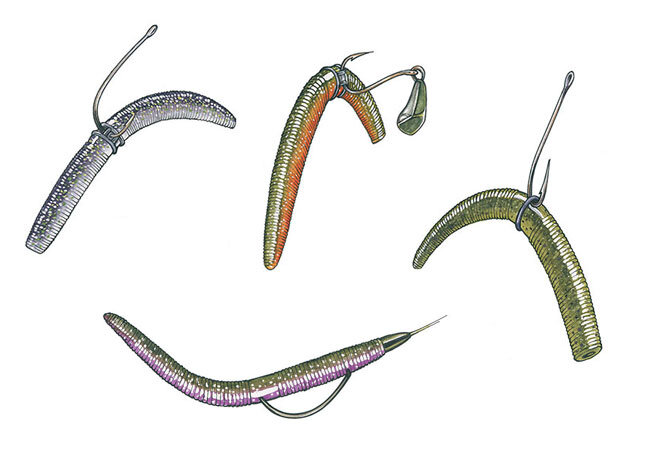
Martin rigs his 5-inch Senkos on a 4/0 Gamakatsu SuperLine EWG hook because he’s often fishing 50-pound braided main line around heavy brush and cover where he needs a hook that won’t straighten. Essential to the technique, he said, is understanding where the attacking fish came from and where it’s likely going.
“A lot of times, the fish will swirl but they may keep coming toward you; they’ll keep stalking the bait, even though they don’t take it,” Martin said. “Sometimes, even though the fish swirled 30 feet way, they may now be 20 feet away. So don’t throw short of them; throw at least to the spot of the initial boil.
“Sometimes, you throw where you saw the swirl and he doesn’t hit it. You pull it four or five feet and he doesn’t hit it; but you pull another four or five feet and he hits it. That’s because the fish is coming in the direction that the lure was moving.”
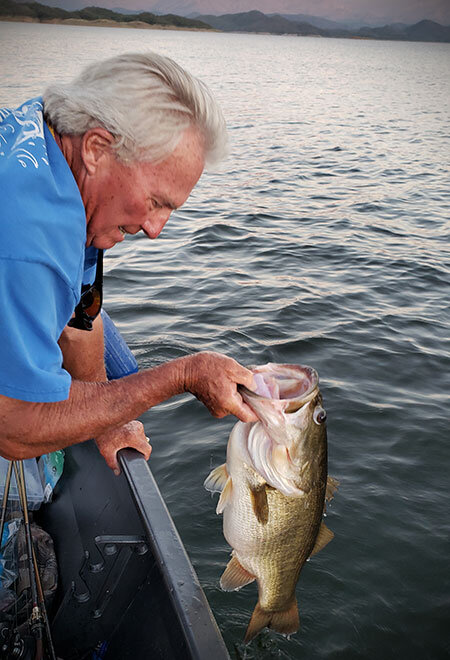
Martin likes a moderately-paced straight retrieve that leverages the Senko’s enticing wiggle. Allowing occasional pauses lets the bait fall — often the point at which a fish inhales the worm.
“A lot of times, you’re throwing at a target like the edge of a weed line, a point or a log and that’s where the fish was to start with,” Martin explains. “If it was an ambush point, you have to realize he was in the shade to begin with and he might have gone back into the shade again; that’s where you want to throw the worm, so it sinks into the shade.
“It it’s just open water, that’s one thing, but if it’s an ambush point that you can clearly define, you should treat it like an ambush point should be treated. The chances are, if the fish came out of the shady part of an ambush point, you want to throw your backup cast right there, working the Senko back toward you with a gliding motion.”
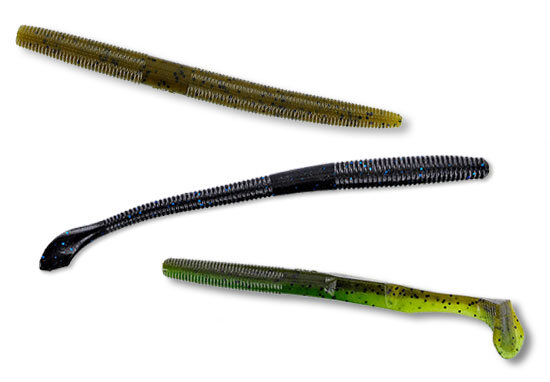
A Kut Above: For swimming through grass, Martin likes a 7.5-inch Yamamoto Kut Tail Worm on a 5/0 Gamakatsu SuperLine EWG hook because he can make long casts to reach possibly spooky fish. Preferring black, black blue flake and watermelon red, he’ll add a light weight to smoothly traverse the shallow vegetation.
“I fish a lot of big flats with underwater hydrilla and lily pads,” Martin said. “I’ll also use the 6.5-inch Kut Tail Worm. It’s like anything else, there’s no 100 percent rule for size, color or anything. You have to try different things and once you get into a combination of factors, then you go with it.
“A lot of times, I’ll throw out the Kut Tail and let it hit bottom. I’ll pick my rod up, swim it for 5-10 feet, let it hit the bottom again and repeat. A lot of times, they take it off the bottom.”
Get Your Kick: When Martin needs a little more commotion in his swimming worm presentation; maybe searching a broad area to identify the active zones, he’ll switch to a Swimming Senko. Working with a range of sizes, he’ll make long, downwind casts and swim the bait at a slow speed, relying on the bait’s boot tail to create fish-tempting motion.
“I’ll hold my worm rod (7-foot medium-heavy Favorite Fishing Pro Series) at a 45-degree angle and as soon as I feel the strike, I’ll stop reeling and just go forward with the rod to give about two seconds of slack and then set the hook good,” Martin said. “I like a longer rod handle and I use a rod cushion on the butt so I can anchor the rod in my stomach and really set the hook good.”
WORM CARE
Roland Martin’s lifetime of angling experience has taught him much about bait management. The well runs deep, but he pared off a few pointers:
Extreme summer heat can soften worms and make them more prone to tearing. Prevent this by storing baits in the coolest section of your boat. Avoid leaving bait packages exposed to direct sunlight, but if you forget and find your baits getting baked, a few minutes in an ice chest will return them to fighting form.
As far as storage options, there’s nothing wrong with placing loose baits in plastic bait trays, but Martin prefers grouping baits by style and color in storage bins. He believes an extra layer of protection ensures that his baits remain ready to go.
Lastly, Martin offers these tips for bait longevity: “I carry Super Glue and if a bait only has a little tear, I’ll add a little drop and that gives me another couple casts with the bait. Also, a Senko has a front end and a tail end. If the bait’s front end gets worn, turn it around and rig it through the tail end. That way, you can get more casts out of your worm."