Yelas's Old-School Fall Pattern
Posted by David A. Brown on Dec 3rd 2020
By David A. Brown
Seinfeld had Monk’s Cafe, Friends had Central Perk, Cheers had, well, Cheers. Like fall bass anglers, fans of these popular TV shows saw regular scenes of dining indulgence taking place at local gathering spots where familiar faces were dependably present.
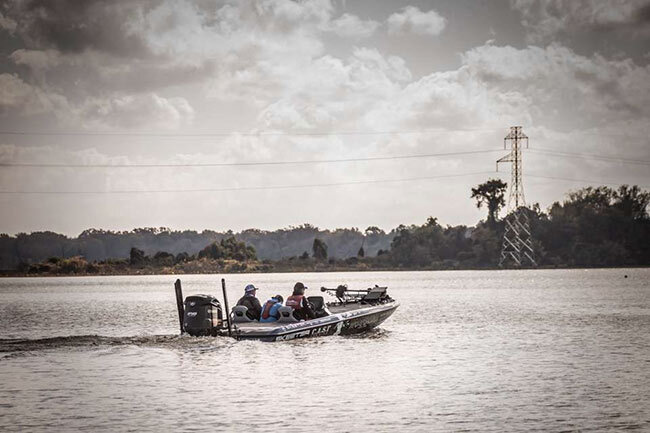
When it comes to the year’s last quarter, particularly in Texas, Jay Yelas won’t hesitate to stake his fortunes on an old-school pattern with equally dependable appeal. It’s not that he doubts or disdains more modern tactics; he just knows for certain that he can always run upriver in the fall and catch plenty of quality bass around shallow cover.

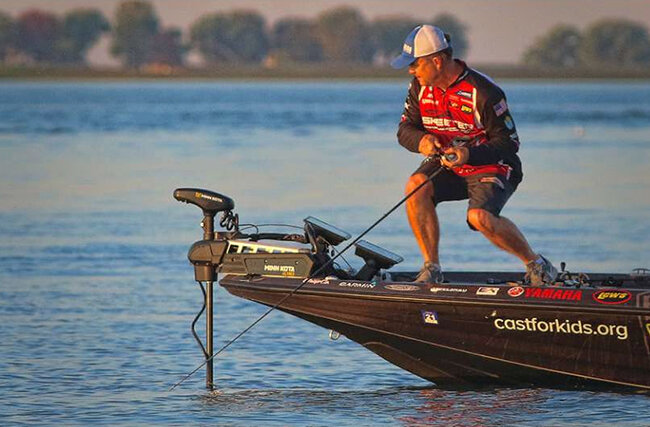
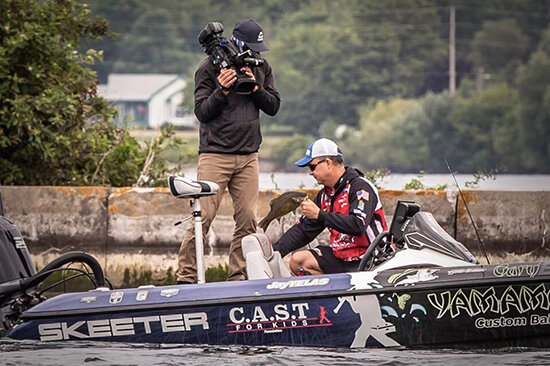
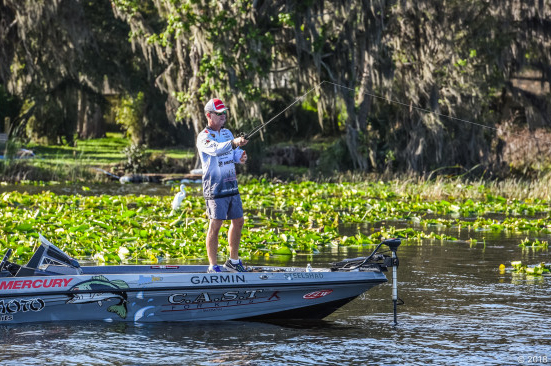
Making his home in Lincoln City, Oregon, Yelas spent several years of his life in East Texas, so he knows well this pattern — one that also works throughout much of the south. Employing this game plan, he recently placed third at Toyota Bassmaster Texas Fest on the renowned Lone Star giant factory, Lake Fork. While the lake’s higher end fish eluded him, Yelas steadily hammered out consistent daily productivity.
“It’s a really good way to catch fish in East Texas in the fall,” Yelas said. “There’s something about those Texas lakes that makes this an efficient way to catch them.
“For decades, that’s all we knew. Now, (Texas Fest winner) Patrick Walters has introduced the fishing world to a new way to catch fish in the fall; by using (electronics) to look for fish suspended in timber. But just because you can catch them that way doesn’t mean they’re not still going to be in the backs of creeks and rivers in the fall.”
The Setup
Noting that a certain percentage of fish will always make the trip way upriver this time of year, Yelas said the shallow migration of fall baitfish is the engine that makes this pattern run. Along with the food, he looks for areas with lots of ambush points.
“Typically, this pattern takes place where you have stained water, which has a lot of algae the shad eat,” Yelas said. “The fish will set up on whatever cover is available. Typically, it’s wood, but it could be rock — riprap, a rocky point, an isolated boulder.
“It could even be vegetation like grass or lily pads. In the fall, vegetation’s typically my last alternative because it’s dying off in the fall, so fish don’t use it like they do other times of the year. I think the dying vegetation depletes the oxygen in the water and the baitfish leave the grass.”
The other key ingredient — the travel lane.
“The prevalence of creek channels is a big deal in the fall,” Yelas said. “Those creek channels are like highways for the fish. Obviously, the bigger tributary arms are all going to have a creek channel; but where I was catching them at Lake Fork, it was a bay adjacent to the main river.
“The fish were not near a creek channel, but in other scenarios, that channel is a great habitat feature. When it gets cold, the fish can pull back to the creek channels. When it gets warm, they pull up on the flats to feed.”
How to Catch ‘Em
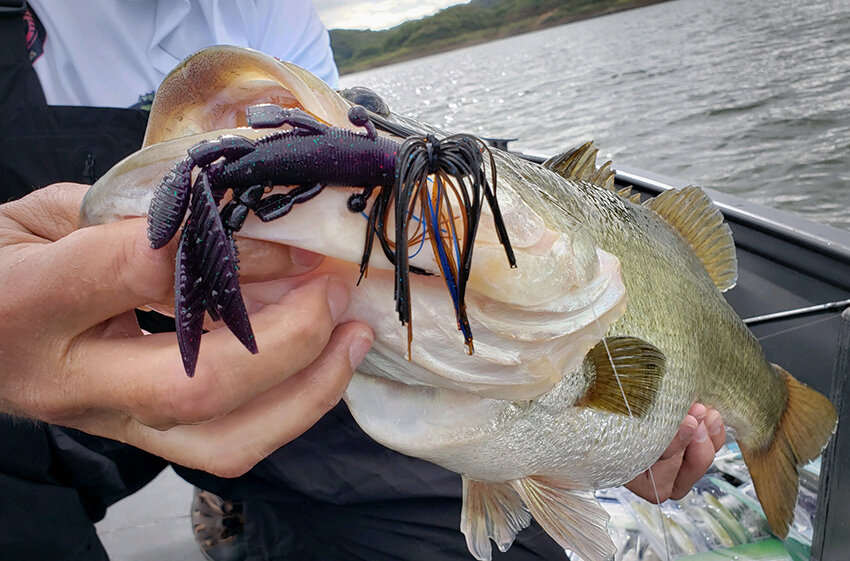
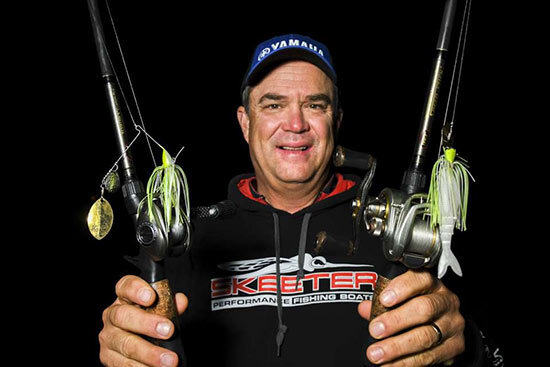
Yelas caught his Lake Fork fish on an MGC Tackle spinnerbait with a chartreuse/white skirt and a 3/8-ounce white/chartreuse ZMan ChatterBait JackHammer with a white Yamamoto Zako trailer. He also pitched a 1/2-ounce jig with a Yamamoto Flappin’ Hog trailer.

“I really love that Flappin Hog because it skips well under docks,” he said. “That jig and Flappin’ Hog combination is a good big-fish bait. Sometimes, they want a bait that’s on the bottom and sometimes they want a bait that’s swimming through the water column.”
In this fall scenario, Yelas will also use a squarebill and a 5-inch Senko — Texas or wacky rigged. As he notes, it’s all about using the most efficient bait for a certain type of cover.
“If it’s a low-hanging dock, I can’t get a spinnerbait or a crankbait underneath there, but I can sure skip a Chatterbait or a jig under there,” Yelas said. “But if I come up to a brush pile, if you get a Chatterbait within 5 feet of a brush pile, it’s going to hang up in it. So you have to use your weedless baits.”
Find the Stand-out Spots
When the bite’s on, Yelas knows that just about any piece of cover could deliver keeper bites. However, he’s always on the lookout for a sweet spot like the laydown that produced all four days of Texas Fest.
“That laydown happened to be on a subtle, rounded point and it was the only laydown on a point in the creek, so it was a unique feature,” Yelas said. “There were several docks with brush around them where I caught fish on multiple days; but that laydown was definitely the key spot.
“I caught a 12-pound catfish on this spot and I caught white bass there, so it was full of life. When you’re fishing, it’s good to get bit. I’ve seen that happen on other lakes in the fall where there’s one key spot that you can keep going back to and it keeps producing.”
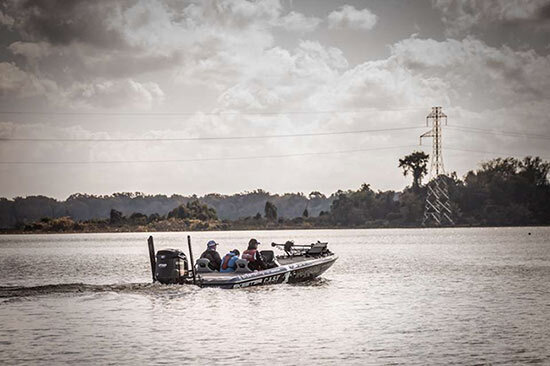
Yelas admits that while he immediately liked the look of his Texas Fest honey hole, that laydown surprised him with more productivity than he thought possible. The tree sat approximately 100 feet from shore, but it was in only 18 inches of water; however, its isolation probably contributed to its appeal.
“There were other trees, stumps and a dock near that laydown, but I never caught anything off of those,” Yelas said. “But they were vertical and this one laydown was more of a horizontal (profile). It was a piece of standing timber that had broken off and was just lying there.
“The fish just loved that spot; I caught a 5-pounder off that in practice. I was disappointed thinking that one was a resident fish; I had no idea this spot was the corner cafe where they were all coming to eat every day.”
Whether you find the locally-favored diner that attracts near patrons daily, or maybe it’s just a bunch of food trucks with less traffic; Yelas’ fall creek pattern is undeniably productive. Put in the time to locate the prime spots and you’ll keep the rods bent.