Nixon's Spring Faves
Posted by David A. Brown on Mar 25th 2020
By David A. Brown
One of bass fishing’s most decorated anglers, Larry Nixon owns a well-deserved reputation for being able to catch ‘em every month of the year. But ask The General his favorite season and the answer comes without hesitation.
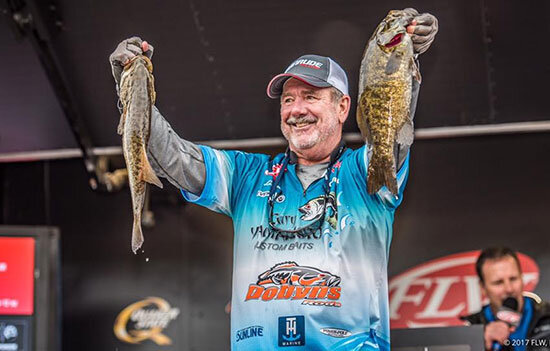
“There’s no doubt that spring is the absolute best and finest time to be bass fishing,” Nixon said. “Ninety percent of the fish are in shallow water that time of year. It varies a little bit, depending on the part of the country you’re in; but there’s no doubt in my mind spring is the most fun time for me, because it allows fishermen to use lots of baits.”
To maximize the opportunity, Nixon advises keeping a close eye on the key variables. Regardless of what the calendar says, fish still need certain comfort levels, so staying on top of the seasonal progression is paramount.
“To me, water temperature and weather are the most important things in trying to figure out springtime patterns,” Nixon said. “It seems like you’ll get on a warming trend and the water temperature gets up around 60 degrees and all the fish are chewing. That’s what I plan for — I look at upcoming weather forecast and I plan my rigging for what I think is going to be happening on the body of water I’m planning on fishing.”
Here’s a look at Nixon’s top springtime baits.
DOUBLE TAIL GRUB (Deep)
For early spring, especially in the clear mountain lakes of Tennessee and the Ozarks region, Nixon relies on the 4-inch Grub for tempting transitional fish over rocky bottom. Especially in the natural shad color, this twin bait’s subtle, yet enticing action boasts a diverse appeal.
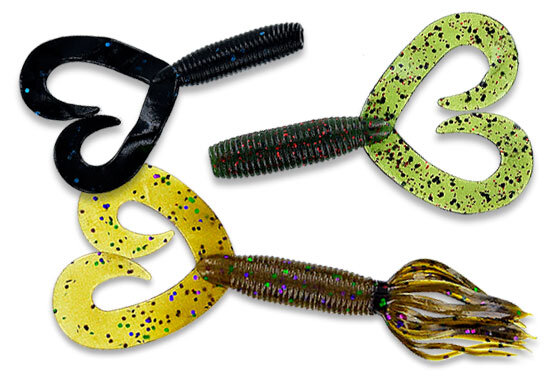
“You can catch all kinds of fish from walleye to crappie, but you can waylay the smallmouth and largemouth when they’re setting up down here in about 18-30 feet,” Nixon said. “They’re wanting to come in, but they’re still cold. The water’s 47-52 degrees and you have cold fronts every three to four days and they know it’s not time to move up.”
Nixon rigs his Double Tail Grub on a 3/16- to 1/4-ounce ball head jig, lets his cast carry all the way to the bottom and then slow rolls the bait back to the boat, as he would a swimbait. A methodical retrieve that bumps the bait across the rocks does a good job of tempting fish that are still focused on shad, prior to the crawfish emergence.
“The attractive spot is usually the rocky drop-off point or hump closest to the bend in the river or creek,” Nixon said. “The channel holds them in that area and the structure they use is something with a deep channel swing close to it.
“It can happen all over the lake; this bait just gives you a lot of options. You can run from the dam to wherever the water starts changing color. This is one of the first patterns I look for.”
HULA GRUB
Rigging his bait on a 1/2- to 5/8-ounce football head — 3/8 around docks — Nixon throws this skirted double tail bait for fish moving out of those deeper areas and heading into the channel swings. Areas where deep water comes closest to the bank are ideal, but Nixon notes that success hinges on not getting ahead of the fish.
“Usually, they’ll be on one end or the other of the channel swing,” he said. “This is really not the time of year to fish bluffs, but what you do is start where the deep water hits the bluff and then work the opposite direction. Usually, the fish are pretty close to the bank, because after they come out of that deeper water, then they start to look in and think about spawning..”
Nixon casts his Hula grub directly to the bank and fishes it all the way down to about 20 feet. Typically, when the bite is on, he’ll end up consistently catching fish in about 8-17 feet.
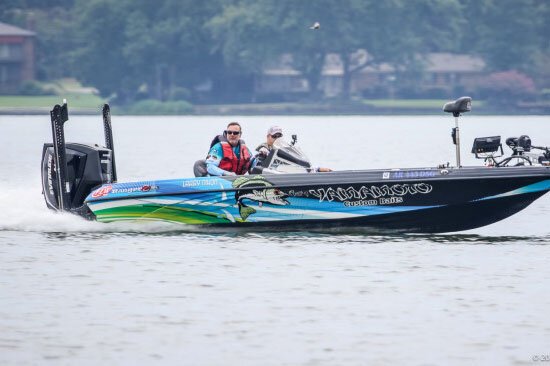
“You just follow the slope of the bank down,” he said. I will lift and fall, lift and fall; but I more or less keep that Hula Grub thumping on the bottom all the way down that drop.
“I like any shade of green pumpkin, cinnamon brown and cinnamon purple. If the water’s dirty, go to black or black/blue. That’s one thing about the Hula Grub — it has bulk and even if the water gets stained, it’s still an excellent choice.”
DOUBLE TAIL GRUB (Shallow)
Somewhat akin to his Hula Grub tactics, Nixon will also use the 4-inch Double Tail Grub on a 1/4 to 5/16-ounce finesse head. This one gets the call when he’s looking for fish on their way back to the bedding areas.
“I use so many Double Tail Grubs; this really is just a fish-catching lure,” Nixon said. “You put it on a jig and then you can expand on your cover. You can move away from these channel swings and follow the bank as it goes back toward pockets and spawning areas.
“You can crawl that jig up the side of those sloping points where the fish are going to what I call ‘flatter water.’ You may be sitting in 20 feet, throwing to 3 or 4 feet and the fish might be in 5-6 feet of water. It’s not like just fishing it down vertically; you cast it out and cover more bottom terrain.”
While the 4-inch Double tail works well for most lakes, Nixon upsizes to the 5-inch model on a 1/2- to 5-8-ounce football style head when he’s around bigger fish. Here, it’s all about keeping the bait in the strike zone.
“I get a lot of bites on a heavy jig in shallow water,” Nixon said. “I’m not really concerned with how fast it sinks to the bottom; I want to stay in bottom contact.”
5-INCH SENKO
Calling this his favorite Yamamoto bait, Nixon described the Senko as: “Absolutely the fish catchingest bait ever invented. Everywhere in the country, you read tournament results and about half to three quarters of the anglers are using a Senko.
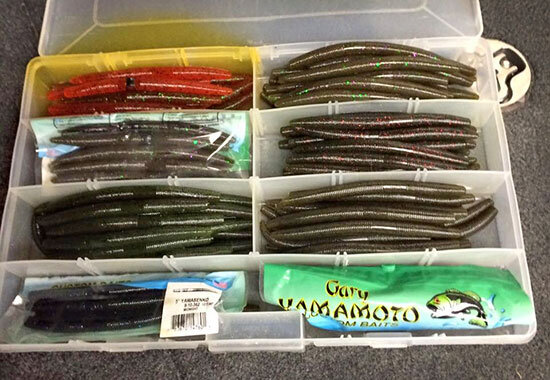
“Anytime bass are in less than 10 feet of water, it is just a go-to bait. I don’t care whether you cast it unweighted, wacky-rigged, or if you put a 1/4-ounce weight on it and fish it Texas-rigged.”
Nixon said his most common spring presentation is a Texas rig; either unweighted, or with a 3/32-ounce weight. Throwing this bait on 8-pound fluorocarbon, he’ll typically use a dead-sticking technique.
“This is my favorite way because I’m a patient fisherman,” Nixon said. “The clearer the water is and the more pressure the fish see, I’ll tend to go wacky style. It’s also a very patient presentation where you just throw it out, give it slack and watch that line and let it dead stick all the way to the bottom.z
“There’s nothing a bass hates worse than something that’s just sinking down really, really slow and won’t go away. It’s an easy meal and they’re guarding so much in that shallow water, their mindset is: ‘This is my territory. Either get out of here, or I’m gonna kill you.’ They guard that little area and if the bait sinks anywhere near that area, they’re gonna get rid of it.”
Nixon also notes the Senko’s effectiveness for blind casting spawning flats, as well as flipping and pitching. “It’s just an excellent bait for putting it anywhere you think a bass may be sitting."
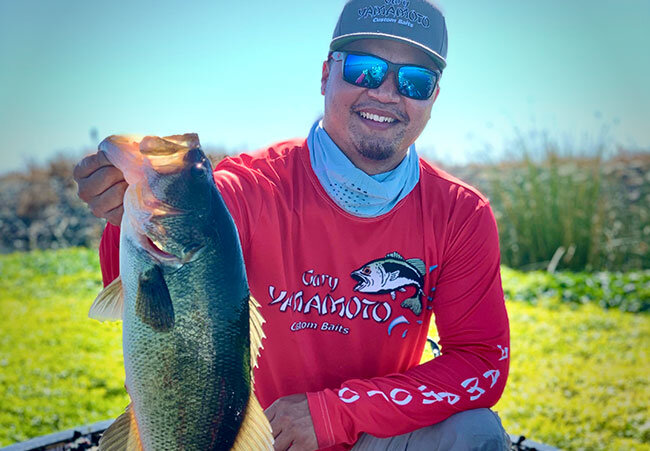

Luke Johns is a relatively new member to Team Yamamoto. He’s been fishing the Wild West Bass pro-ams, team events, and college events, and is now fishing the Pro-Ams and the Apex Tour. He’s definitely an angler you’ll want to keep an eye on.