Jigs Hold Prominence in Monsoor's Game Plan
Posted by David A. Brown on Aug 11th 2020
By David A. Brown
*All photos courtesy of flwfishing.com
Tom Monsoor has a lot of crankbaits; several thousand, by his estimation. He has every style and color imaginable — some of which would fetch a tidy sum on the antique market. Despite this mini museum of crankbait collection, Monsoor’s tough bite go-to is actually a jig.
“It’s a good strategy when you don’t have anything working the way it’s supposed to,” Monsoor said.
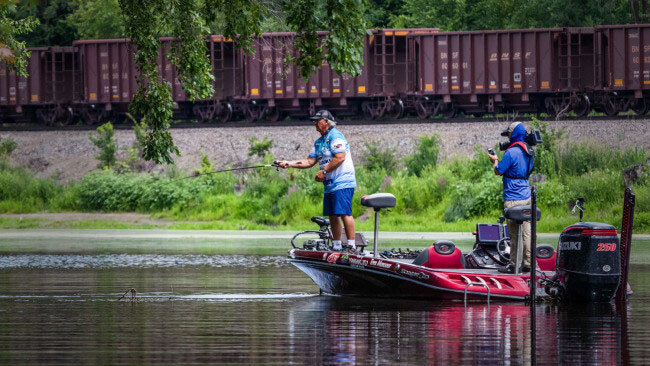
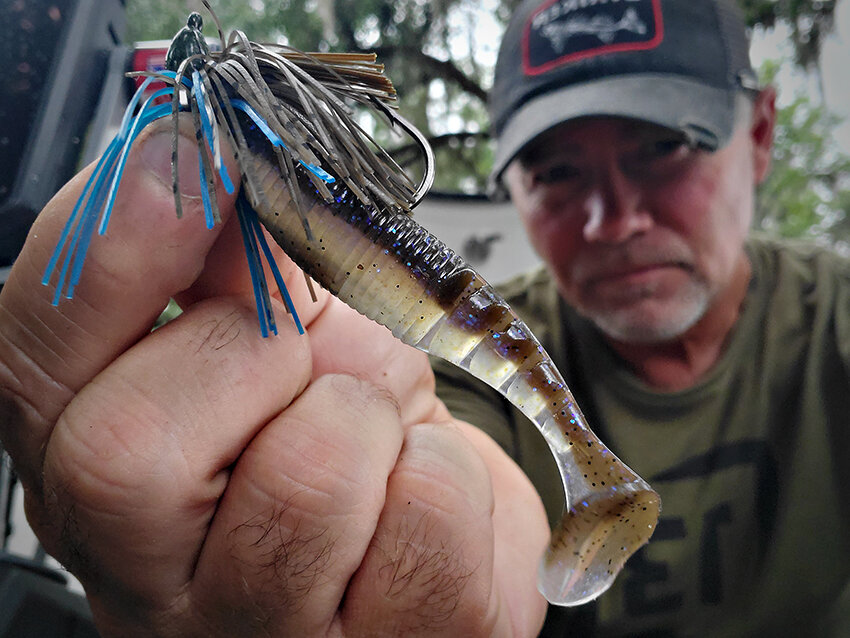
Interesting, but this is not a new concept; Monsoor’s been a jig devotee for several decades. So much so, he makes his own signature series baits and recently employed three different styles in his victory at the Tackle Warehouse Pro Circuit Super Tournament on the Mississippi River.
“I was fishing anything and everything I ever caught a fish on because all of my good stuff that I found in practice didn’t produce a bite the first morning of the tournament,” Monsoor said. “At noon that first day, I said ‘This ain’t working,’ so I picked up those three jigs and went fishing.”
EVERYDAY GAME PLAN
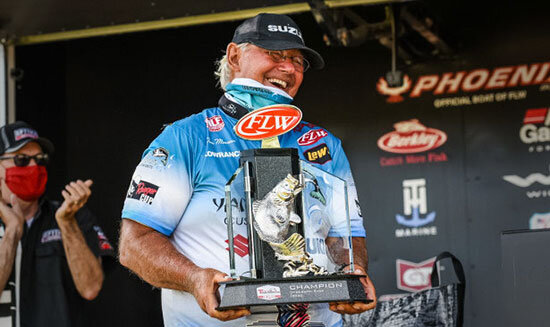
The tournament details — including the fact that the 71-year-old Monsoor became the oldest angler to win a Pro Circuit event — has been well reported, so we’ll focus on his broader strategy of jig fishing. For starters, Monsoor’s trio of tried-and-trues naturally includes the swim jig for which he’s considered a local legend on his Upper Mississippi home waters, along with a football jig and a finesse jig.
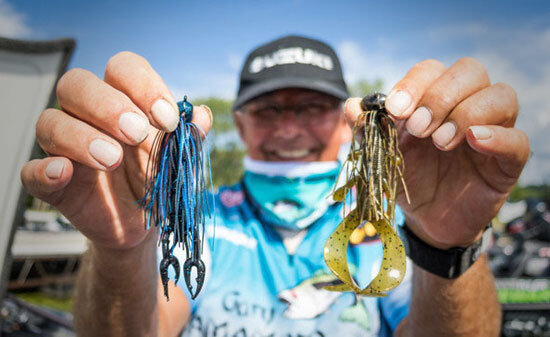
“Those three lures will catch ‘em from zero to thirty feet,” Monsoor states. “I relate jigs to crankbaits. There’s a million different crankbaits; different depths, sizes, everything. To me, a jig is the same thing. I have a jig for on top of the grass for any depth.”
Here’s how Monsoor breaks down his jig program.
Football Head: For eight to twelve feet, he uses a 1/2-ounce jig and often pairs it with a Yamamoto Cowboy trailer. Noting that his choice may not be the most mainstream of options, Monsoor’s convinced it fits his objective.
“Most people haven’t figure this out yet, but the Cowboy is the ultimate football trailer,” Monsoor said. “It has bulk and two big paddle tails. This gives you a big profile for a big fish, but it catches a lot of fish, too.”
Tipping his cards a little, Monsoor shared one of his best-kept secrets: His most effective football head technique — swimming. Not the same depth range as his traditional swim jig, of course, but he’ll run that bait across the bottom like he’s winding a crankbait.
“Everything likes this — smallmouth, largemouth, it doesn’t matter,” Monsoor said.
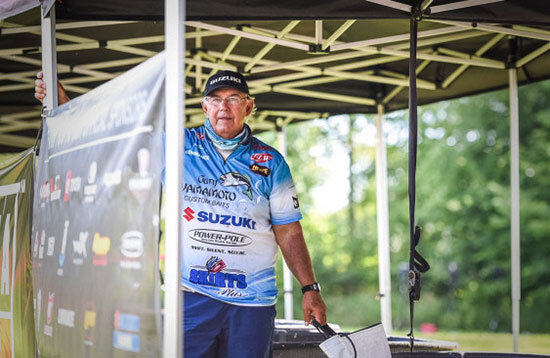
Yamamoto Pro Tom Monsoor waits at the tanks.
Tracing this technique back about 30 years to an event on Beaver Lake, Monsoor said he’d been catching fish on a 1/2-ounce swim jig in 30 feet of water when he had an epiphany: Why wouldn’t this technique work with a football head, which will also allow him that bottom rumbling action when he wants it?
Explaining his jig proclivity, Monsoor says: “You throw a crankbait, say 150 feet, how long does it take before that crankbait hits bottom? At 120 feet? So, you’ve lost 30 feet of your cast already; and then when it comes up, you lose another 20-25 feet when you’re coming up.
“If you’re lucky, you’re only getting 100 feet of that 150-foot cast on the bottom. When I throw that football jig (150 feet), I’m getting 145 feet out of it, because it goes right to the bottom and stays there until I lift it to bring it back to the boat.”
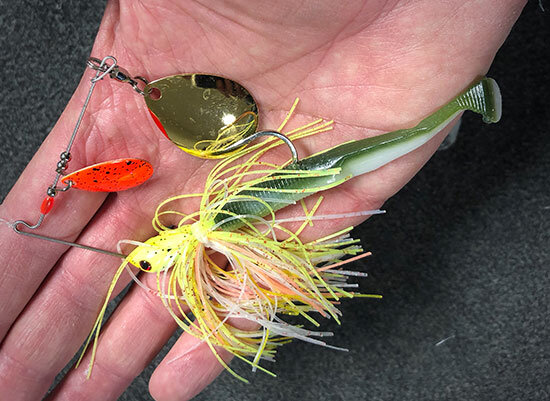
Swim Jig: For his signature technique — one he’s largely credited with pioneering — Monsoor is fishing in six feet or less. Preferring black/blue, white or green pumpkin on the hardware, he’ll pair his swim jig with a 3.5-inch Yamamoto Swimming Senko.
“I use that (trailer) ninety percent of the time; it’s just a perfect little bait,” Monsoor said. “It’s one of the best trailers there ever was.”
With his signature swim jig available on tacklewharehouse.com, under the Humdinger brand, Monsoor uses this technique for more aggressive shallow to nearshore presentations. He’ll run it over and through grass, probe laydowns and use it to cover broad areas to dial in the sweet spots.
Finesse Jig: Calling his petite jig the Bitsy Bug (not to be confused with a national brand’s model), Monsoor likes the Yamamoto Fat Baby Craw for a trailer — a package he finds equally tempting to spotted bass, smallmouth and largemouth. His main target — shallow gravel bars.
“My finesse jig only weighs about 5/16-ounce and that’s perfect for 6-12 feet,” he said.
Monsoor trims some of his finesse jigs with a short, bristly color for that ultra-stealthy look in clear water. Most of the time, however, he’ll go with a full skirt and swing for the big bites.
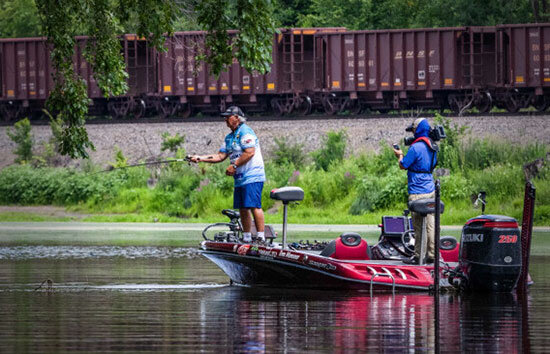
Describing his finesse jig technique, Monsoor said: “It’s a lot of crawling, dragging; keeping contact with the bottom. You want to be feeling those rocks and clams because they always seem to bite where you’re bouncing along the bottom and feeling that stuff.
“It’s just like a crankbait — when you’re digging bottom, you get bit.”
MAKING HIS POINT
For all of his jig uses, Monsoor starts with a sturdy, high-quality Gamakatsu hook. Investing in the right foundation, he said, gives him a greater advantage.
“The hooks I use are 50-60 cents each — who puts that on a jig?” Monsoor said. “If you want a good hook, you have to make your own stuff.
“I’ll try every different hook (option) to see which one the fish can’t throw when they jump, which is the sharpest, which one keeps its point the longest. I have researched hooks for 30 years.”
No one’s relegating jigs solely to the “tough bite” scenario, but they’re no-doubt a sensible tool for the lean times. Knowing this, Monsoor is dead set on making sure he capitalizes on every bite he earns.
His closing advice: “You just have to keep trying shallow, medium and deep until you figure out what they’re doing.”